Their Stories

Video testimony and personal stories from the first families to leave the Korogocho slum for homes of their own.

The full story

From a single iron-sheet room to a home of their own

Follow the full story of the project as it has developed over the years, and watch video testimony from the first families to move about how their lives have been transformed.

They now have sanitation, clean water, electricity, clean air and a safe environment, as well as security of tenure at a low rent they can afford. They also have new sources of income, the children can safely walk to good schools nearby and others have made good use of new training opportunities.

They also have pride that they have taken part in building their own homes and continue to help with building works.

We are very aware that more than half the 25 families are still waiting for their new homes to be built and that depends on our continuing to raise funds to make their dreams a reality. Please, if you can, help us to fund more homes.

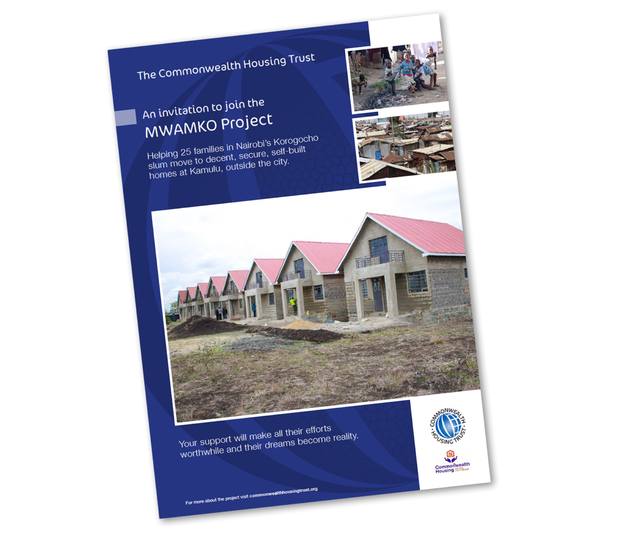
Cover of the CHT e-booklet: An invitation to join the MWAMKO Project.
PDF · 5 MB

The Korogocho E-Booklet

An illustrated account of the MWAMKO project, from the slum to the new site at Kamulu (December 2023).

Download the full story
16
homes occupied in August 2026
9
homes still to be built
Video testimony

In their own words

Recorded just before the first move, three of the first families speak about life in Korogocho, their gratitude and their hopes for the future.

Martha Wangui’s daughters and Maureen

Two of Martha’s daughters and Maureen speak about life in Korogocho and their hopes for the future in their new homes.

Sarah

Sarah shares her thoughts on life for a family of ten in Korogocho, and their delight at the move to the new house in Kamulu.

Joseph Omondi

Recorded just before the move, Joseph tells of the family’s struggles and their gratitude at being part of this important project.

March 2022

A home to go to

As the first five houses neared completion, CHG’s allocation committee set a fair and transparent process in motion, and a ballot decided which family moved into which house.

How the houses were allocated

The committee had consulted the MWAMKO families about the criteria for choosing the first tenants and developed a points system, agreed by the CHG Board. Members applied using a questionnaire about their circumstances and involvement in the project.

Most weighting was given to evident need, both economic and other vulnerability. Active involvement in self-build was also important, as were other forms of contribution such as attending meetings and paying into group funds.

A community that looks out for its own

Eight applications were considered, and the panel’s five recommendations were approved by the CHG Board. Those not chosen had a right of appeal, but no one appealed. The relatively low number of applications was because many people chose not to apply, aware that others were in greater need.

In mid-March a ballot was held on site, with the families present, ensuring a random and fair allocation of specific houses.

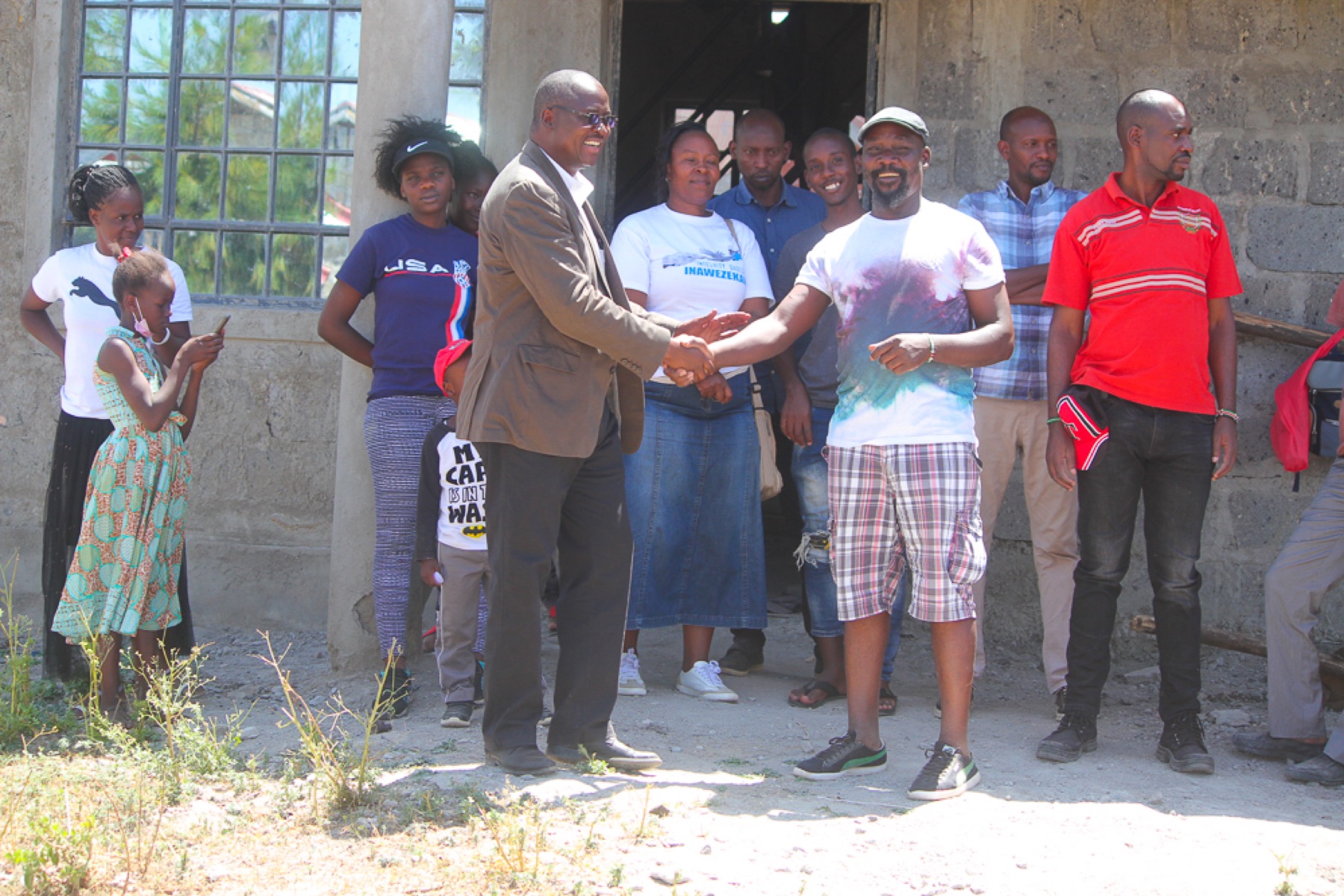
CHG Chairman Harrison Kwach congratulating Tom and his family outside the first house.

House one

Tom

Tom was the first to draw the ballot and was allocated the first house built. He works in community development with intermittent short-term contracts, so his income is small and unreliable. Each day his wife works as a street vendor from 3 to 7 pm, selling dried sardines from Lake Victoria. The eldest two of their six children are studying at university, thanks to government grants.
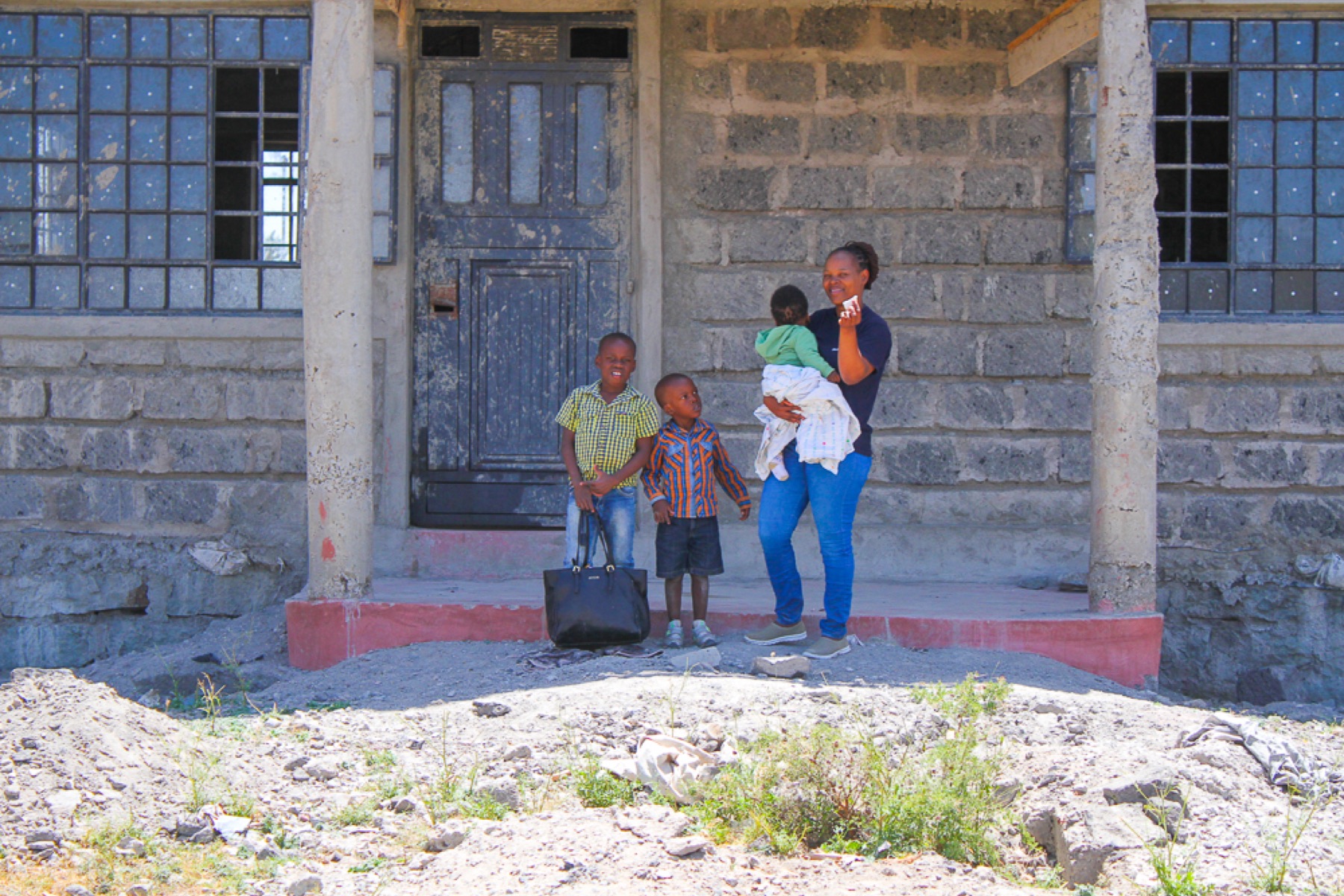
Maureen, a single parent, with her children on the threshold of her new home.

Single parent of three

Maureen

Maureen’s income comes from selling used clothes. She goes early in the morning to the matumba (street market for second-hand clothes) and buys items she hopes she can then sell on the street during the day.

Martha standing outside her corrugated-iron home in Korogocho.

Widow, mother and grandmother

Martha

Martha could not get to the ballot, caught in a three-hour traffic jam, so a friend drew on her behalf. A very active member for a long time, she lives with three daughters and a granddaughter and earns a small income as a street vendor of perfumes, shoes and clothes. Her son Magid was a MWAMKO building trainee, a proficient concrete mixer and widely popular. Tragically, he died in a boda boda (motorbike-taxi) accident.

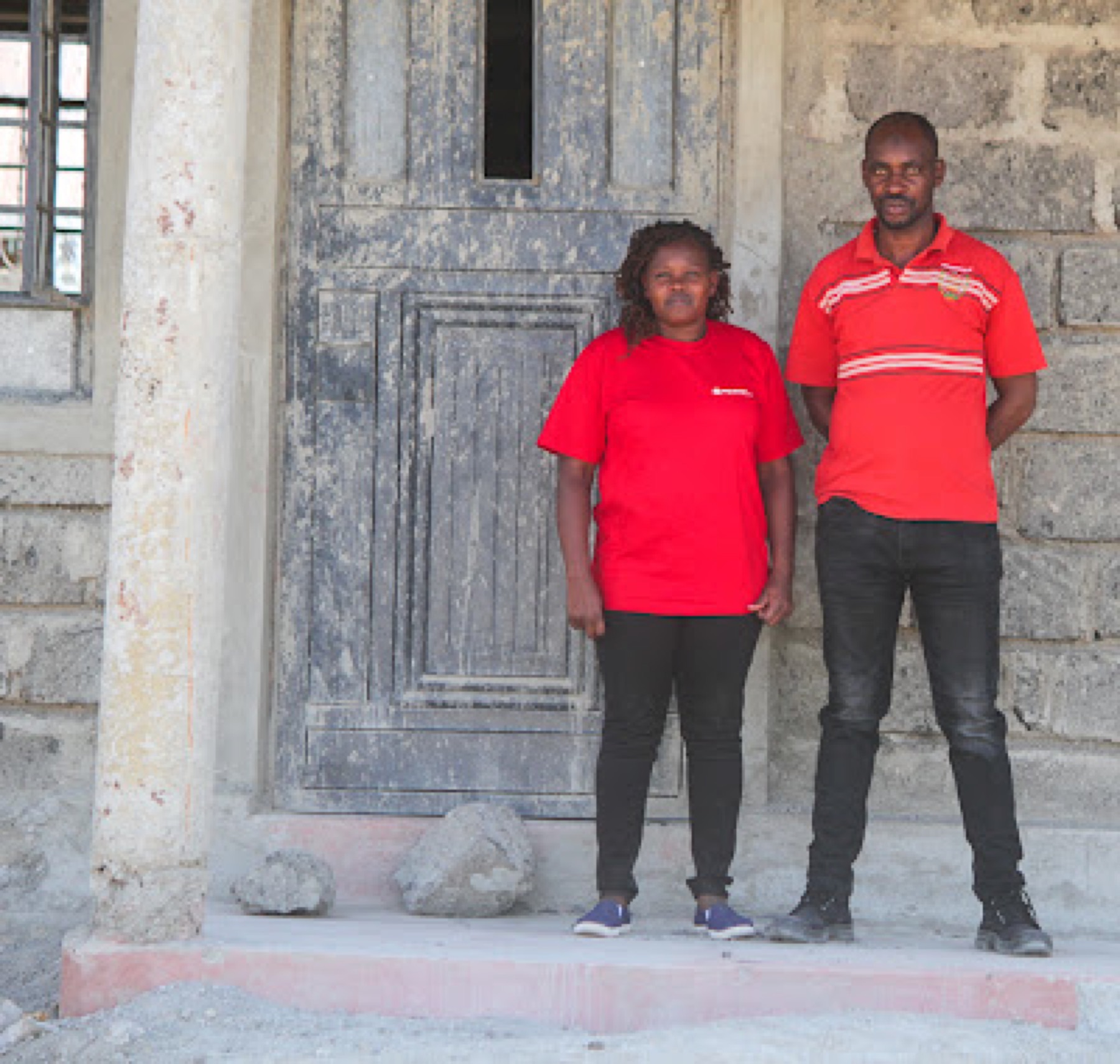
Sarah and Oduor in red tops outside the door of the house allocated to them.

A family of ten

Sarah and Oduor

Oduor does some part-time tutoring in an informal school in the slum for very little pay. With only two state primary schools in Korogocho, unregistered schools have sprung up for children without places. Sarah has casual work as a maid, doing laundry or washing dishes. They have four children, one with epilepsy, and are bringing up four more on behalf of relatives who live up-country, all of them even poorer. This sort of arrangement with extended family in need is very normal.

Despite their difficulties Oduor makes a wonderful contribution to the project, including active self-build participation, involvement in MWAMKO meetings and keeping up his financial contributions.

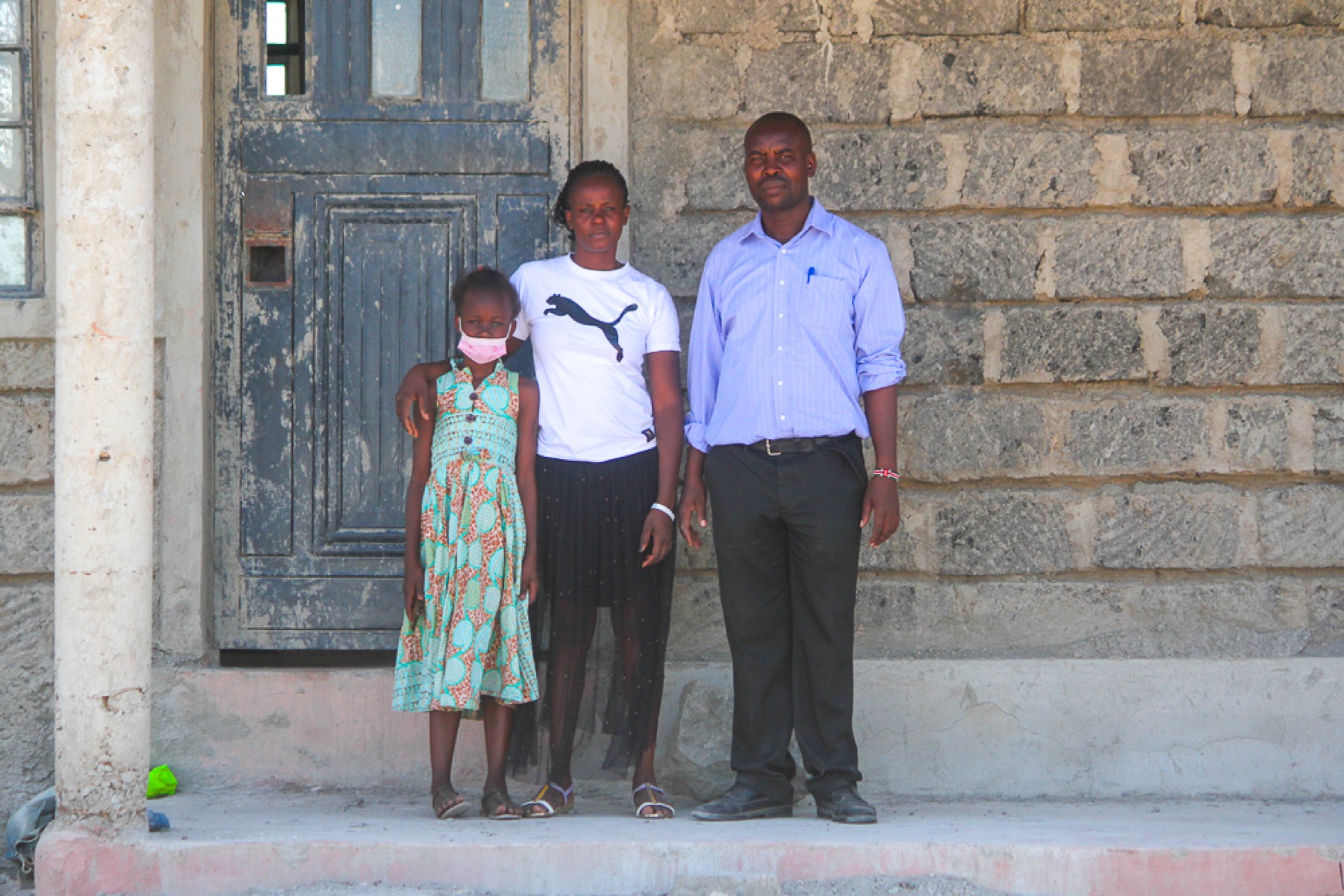
Joseph and his wife outside their new house with one of their children.

Secretary-General of MWAMKO

Joseph

Joseph lived for twenty years in a ten-foot-square tin shack on the edge of the municipal dump with his wife and five children. In December 2021 he had to rent a second shack, having agreed to take in two children of his recently widowed sister. His income comes from a small vegetable kiosk, while his wife sells roast maize on the street, cooked on her own grill.

He has been a very active member of the group for many years. In his video he tells of their struggles and their gratitude that they are part of this important project, looking forward to more houses being built for his neighbours.

Life in Korogocho

Hard-working families, precarious incomes

Most MWAMKO members work in the informal economy and their incomes fluctuate. These are some of their stories.

Mary in a white top outside her home in Korogocho.

Mary’s story

Mary is 33 years old and has lived in the Korogocho slum since she was two. She and her husband have two sons and two daughters. She is one of the most active and loyal group members of MWAMKO. The family depends on the earnings of her husband, a casual construction worker on various building sites in Nairobi.

They live in a 3 m × 3 m room made of corrugated iron sheets, extremely hot in hot weather and extremely cold in cold weather. For this single room they pay a monthly rent of Ksh 2,500 (£17). Given her husband’s meagre earnings and their daily expenses, they sometimes hardly save enough for the rent and many times have fallen into arrears.

She remains very optimistic that one day they will have access to a decent house and be able to raise her family in a clean and safe environment, where she hopes also to enhance their livelihood with work locally.

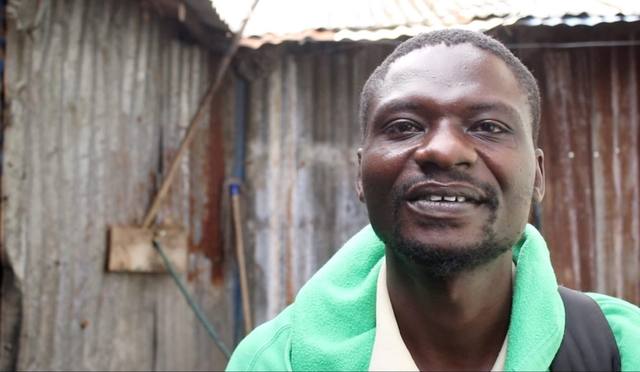
Moses, a plumber, smiling in a green top in front of an iron-sheet wall.

Moses’s story

Moses was born in Korogocho in 1986, one of six children. From age thirteen he was taught plumbing by his father, a skilled plumber and now a senior MWAMKO member. More than twenty years later Moses, too, is a skilled plumber, mainly doing small repairs, unblocking sewer lines, or installing piping and fittings. On a good day he may contract with a construction company and make up to Ksh 2,000 (£15) per day. Sometimes he gets his own contracts, like fitting a toilet, for which he can earn Ksh 6,000 (£40) over two days.

Moses, his brother (also a plumber) and their father are in charge of water and sewerage tasks for MWAMKO. He did the plumbing for the water tower and water pump installation on the site, exemplifying the self-build concept where would-be beneficiaries contribute their skills and other resources to build the houses.

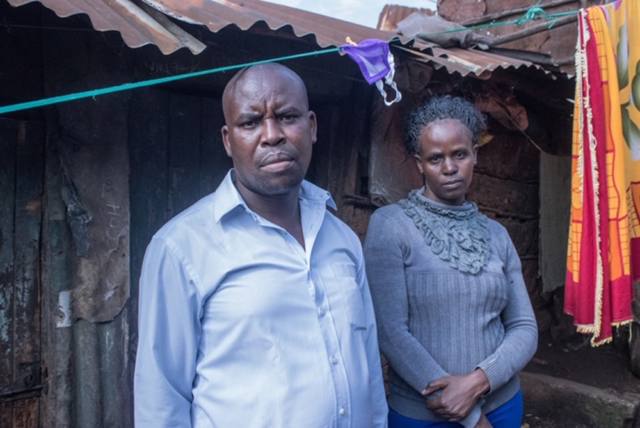
Joseph and his wife standing in front of their home, with washing hanging behind them.

Joseph’s story

Joseph was born and raised in the Korogocho slum over 40 years ago. He has been a very active member of MWAMKO and is currently its Secretary. He and his wife have five school-going children and a new baby. They live in a 3 m × 3 m mud-walled structure with a corrugated iron roof, exceptionally close to the dump site where rents are normally lower, but he still has to pay Ksh 2,000 (£13) a month for it.

To sustain his family Joseph runs a personal mobile greengrocery business outside the slum. He works hard and looks forward to living with his family in a decent house, sharing a dignified future.

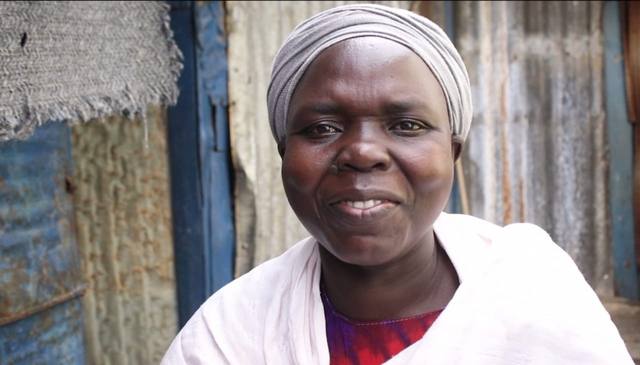
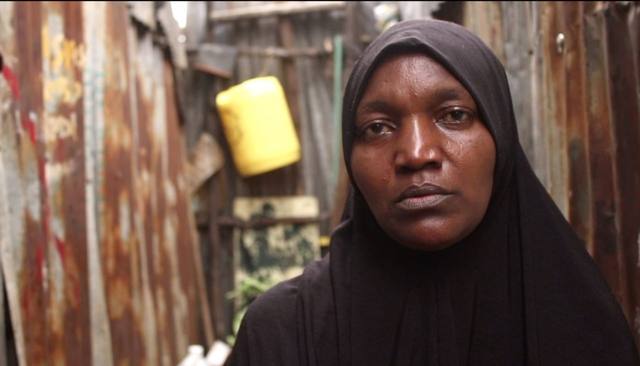
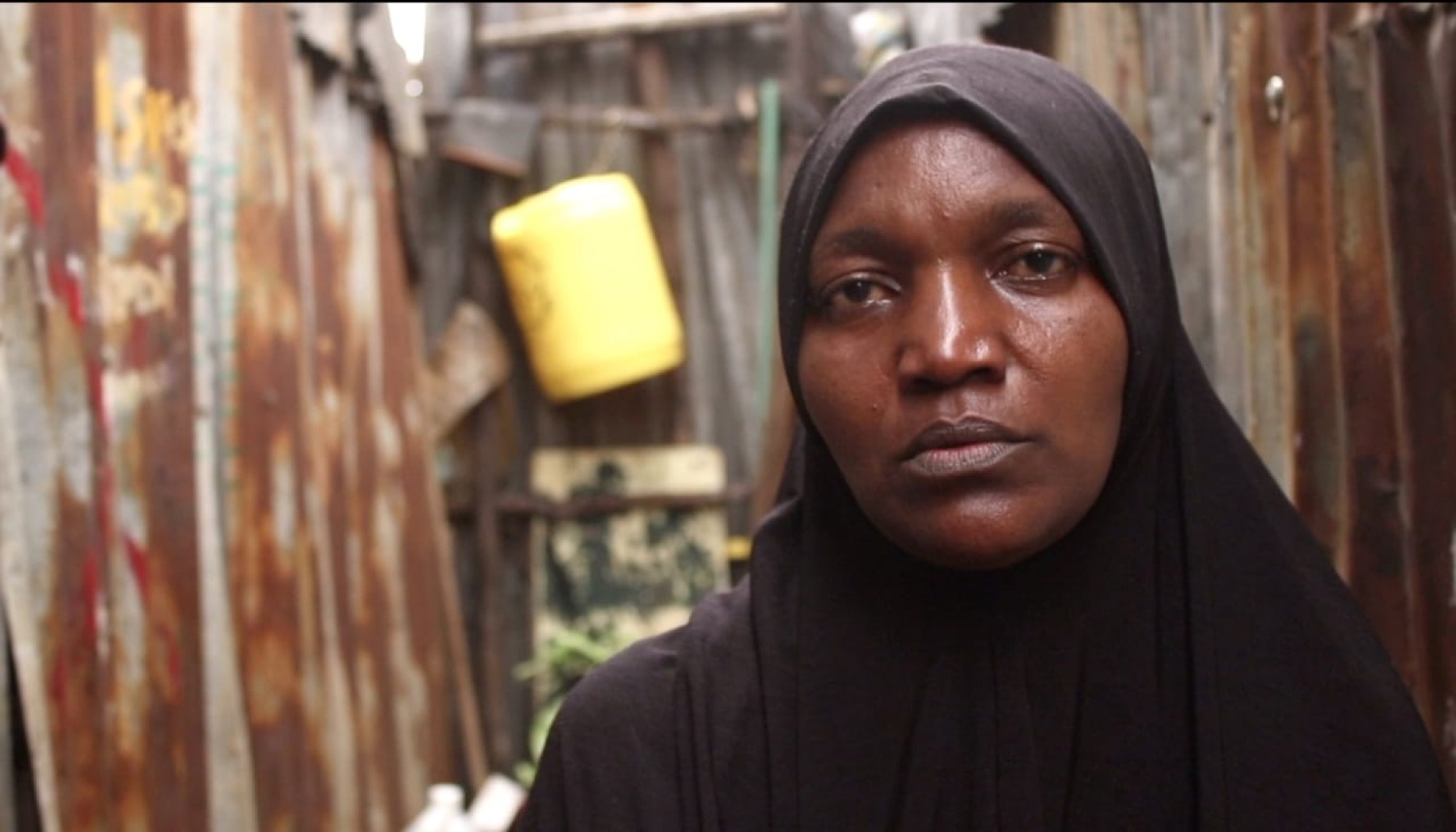
Martha in a dark headscarf standing in front of an iron-sheet wall.

Martha’s story

Martha was born in Kiambu County, where she attended primary school but was unable, through poverty, to proceed to secondary school. She married but her husband later died, leaving her with four children. She lives in a small mud-walled, iron-roofed structure owned by her late husband’s family, who expect and need her to pay part of the Ksh 3,000 (£22.50) monthly rent. She works in a nearby hospital where she makes Ksh 9,000 (£67.50) a month.

Martha is a hardworking widow who has defied all odds to take care of her children and herself. She, like other MWAMKO members, is looking forward to escaping the difficult life that has trapped the hundreds of thousands of residents in the slum.

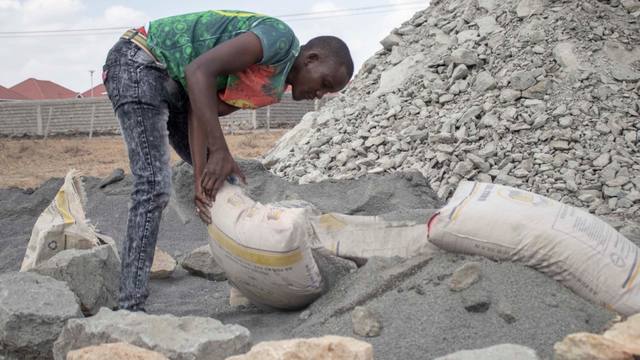
Magid, a young painter and building trainee, mixing concrete at the site in October 2019.

Magid – a tribute to his memory

We were greatly saddened to hear that Martha’s son Magid died in a motorbike accident in February, aged 21. He had become a painter as a result of training arranged by CHG and provided by a large paint company, and had been earning a living doing painting jobs in the Korogocho slum and other local neighbourhoods.

He was to be a painter on the Kamulu site once houses were ready. Meanwhile he became a very enthusiastic member of the construction team, learning on-site how to mix concrete and becoming highly proficient. A very energetic young man, he represented his family in all MWAMKO activities and was very popular among his peers. He is a huge loss to Martha, to his family and to so many others. Our hearts go out to them.

This photo of Magid was taken at the site in October 2019.

Anastacia’s story. Anastacia is the young widowed mother of four young children. In a recorded video she eloquently describes her current situation and her hopes for the future at Kamulu.
Life at Kamulu

New homes, new routines

The families who moved in in April continue to help the project in practical ways, from site security to watering saplings planted in memory of Clifford Dann.

Off to school

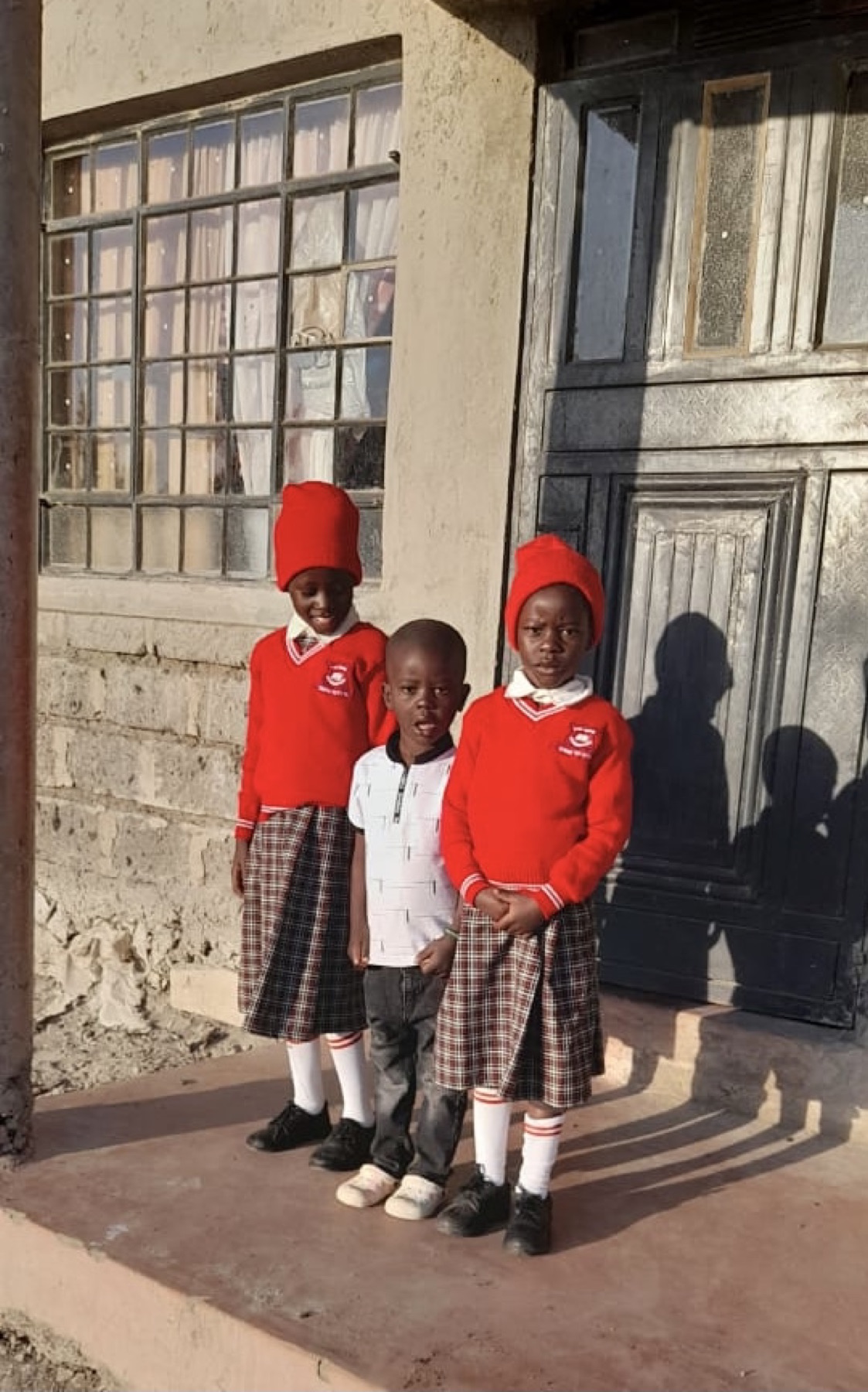
The school-age children attend their new schools, setting off on a daily walk. You may be surprised to see their warm clothing: from June to as late as September is the cold season in Nairobi County, and at an elevation of 1,800 metres the air has a quite chilly, mountain-like quality.

Many of the households are larger than they look. The teenagers in Sarah’s household are thrilled that the family no longer live and sleep all in one 3-metre square room, now having one bedroom for the parents, one for the boys and one for the girls.

Two girls and a small boy in red school uniform outside the family’s new house.
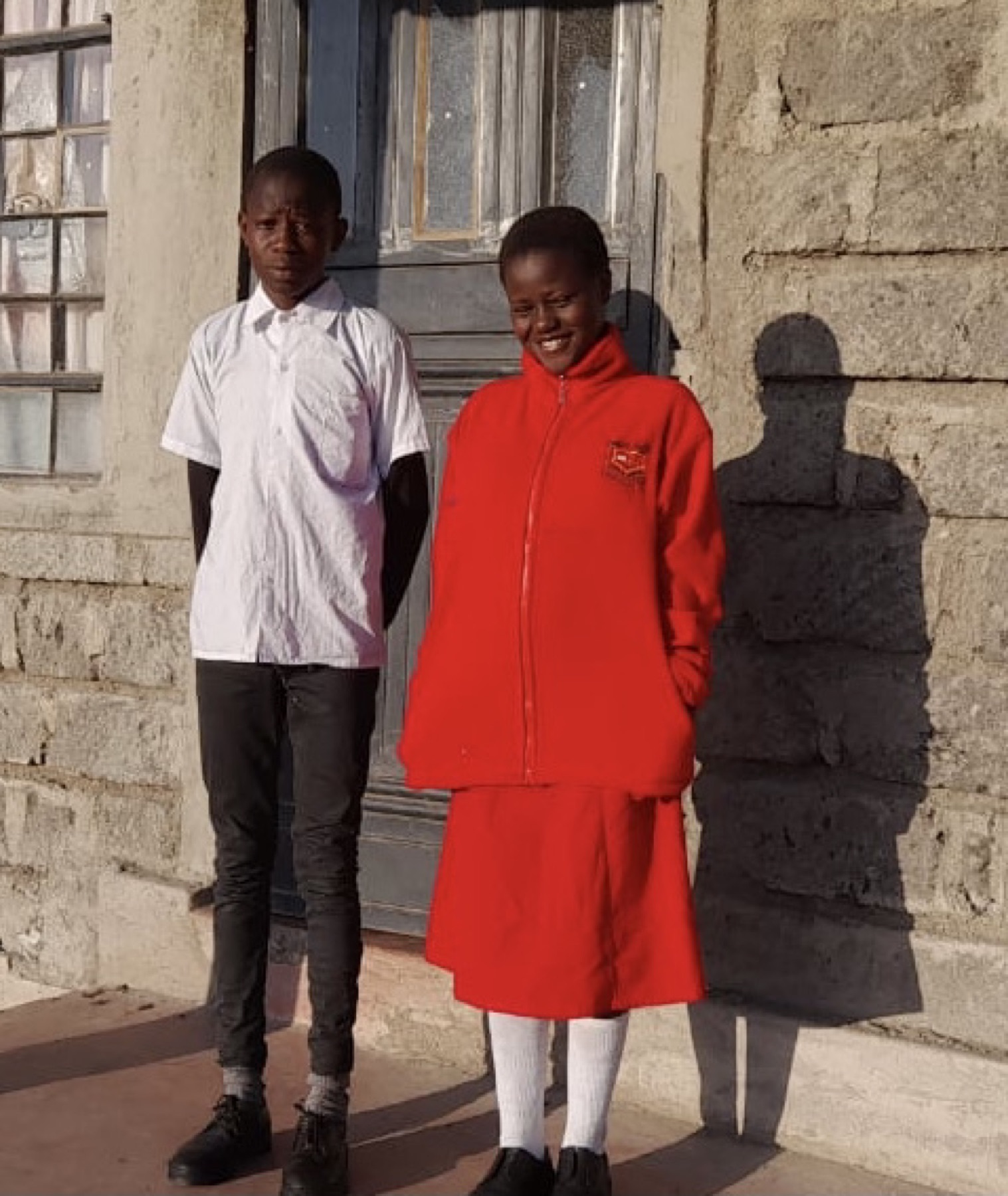
Two teenagers, a girl in red and a boy in white, standing at the front door.
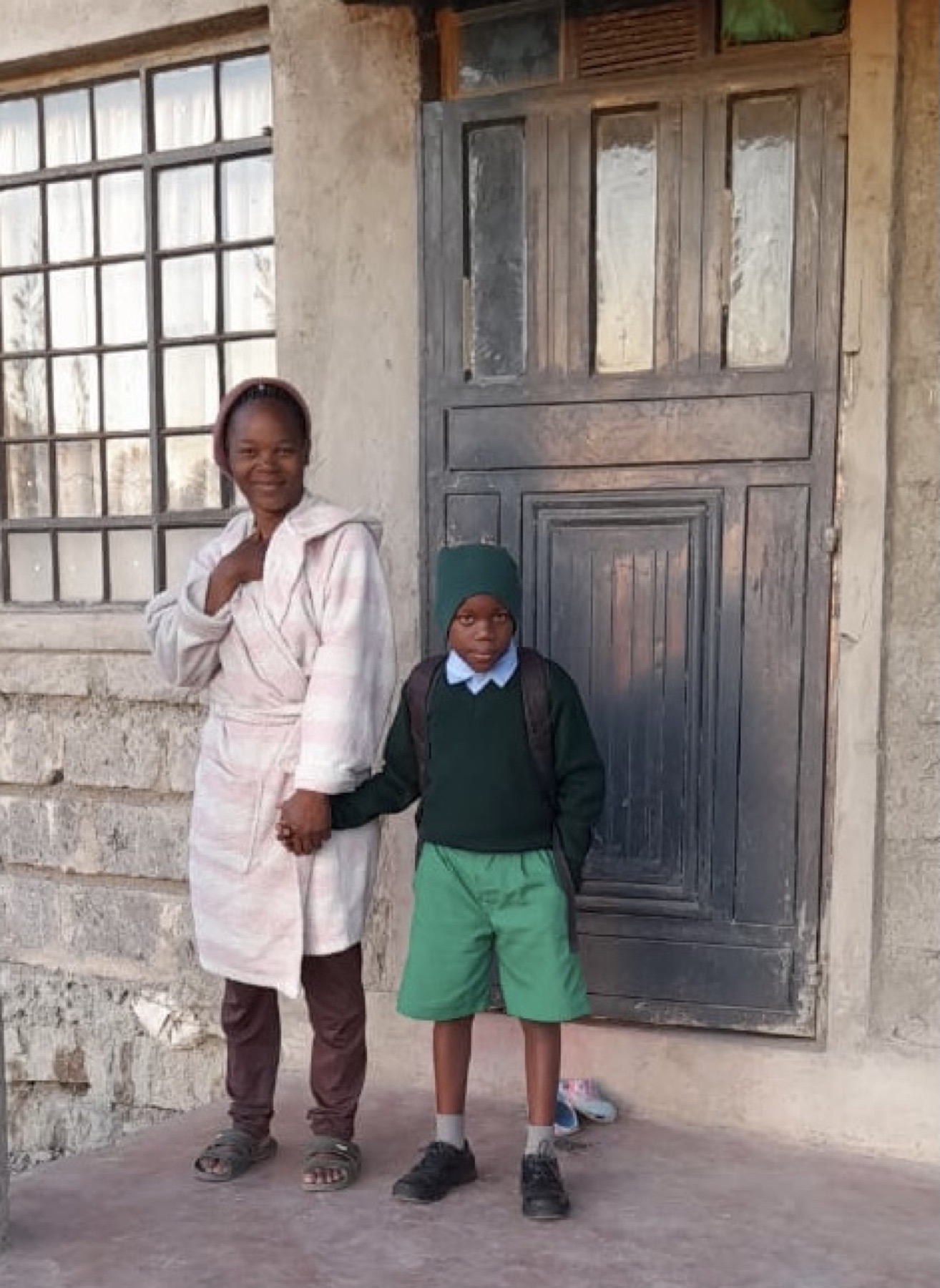
Maureen and her eldest child, in a green school uniform, standing in front of their front door.
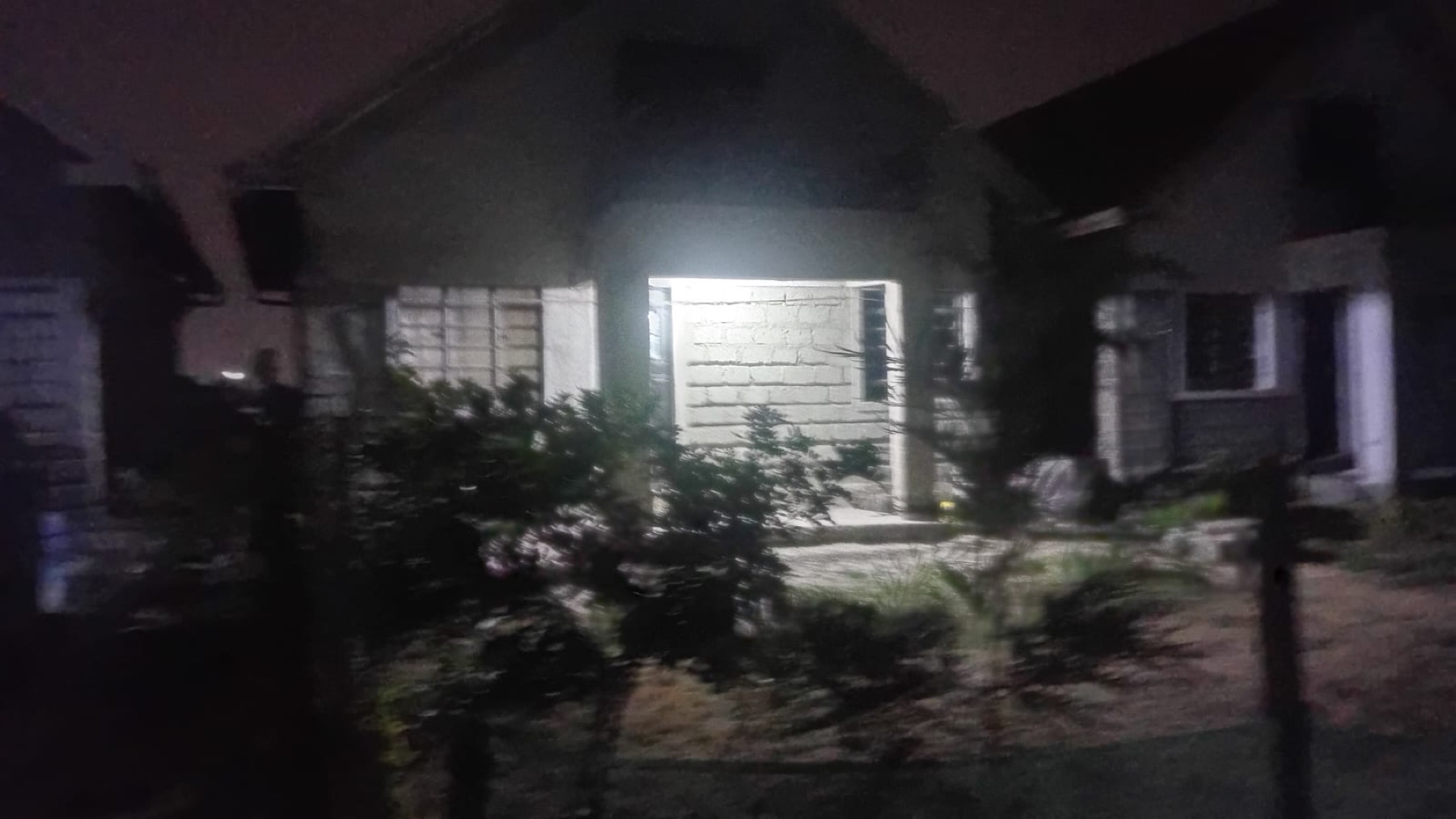
The project houses lit up at night while the surrounding neighbourhood is in darkness.

Mary Wanjiku: “My future is bright now”

Mary carried an extraordinary burden for years as a single mother raising five children, her own three and two left in her care by her sister. Moving into her new unit was a major milestone but, without electricity, nights remained a challenge: relying on a small portable solar lantern, helping five children study in the dark turned every evening into a stressful race against sunset.

Life was transformed when Mary was connected to a shared 10 kW solar micro-grid, splitting clean power with three neighbours. Bright, reliable light now fills her home, and her power expenses will be just half of the main grid tariff. “My future is bright now,” Mary says, proud that her household energy is also contributing to the fight against climate change.

More than half the families are still waiting

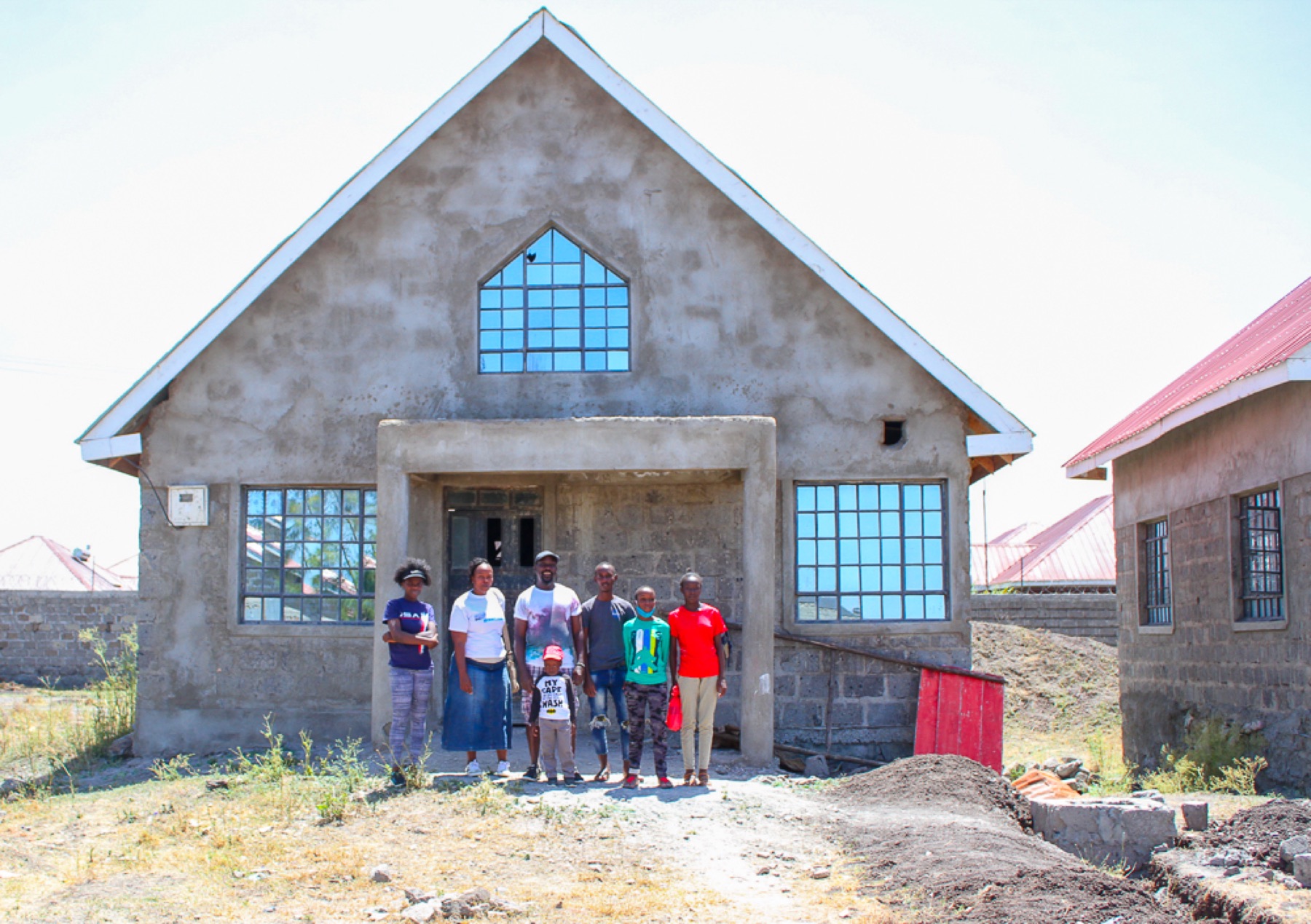
Each home has cost around £10,000 to build. Every donation, large or small, brings the next family closer to a safe, secure front door.

Donate now