
Our aim
The aim of the Commonwealth Housing Trust (CHT) is to provide financial and material assistance for housing projects for people in any of the Commonwealth independent states whose membership is confirmed by the Commonwealth Secretariat.
We seek to assist marginalised communities who are striving to provide themselves with stable, healthy, living environments. More specifically, we aim to support community-led initiatives, particularly projects in areas with acute housing need and especially when they have the potential to provide valuable models for delivery in future projects.
We have minimal overheads and administration costs and depend entirely on donations, grants and sponsorship.
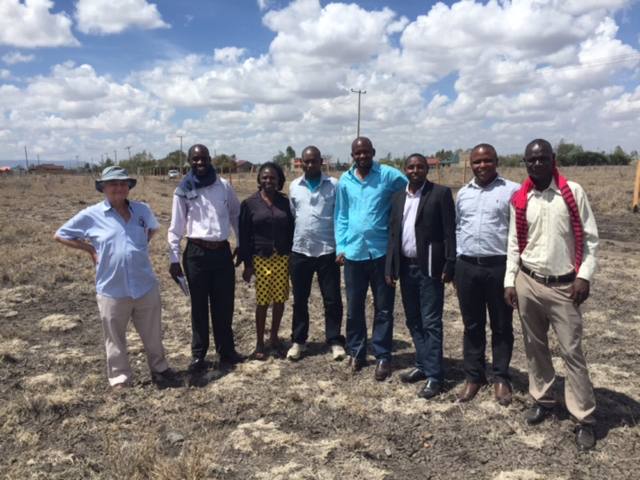
An early site visit by members of MWAMKO and CHG.
How the Korogocho Project began
From the outset, the Commonwealth Housing Trust project in Korogocho, Nairobi, has been conceived as a potential model for supporting people living in slums who want to work together to help themselves in securing decent housing which they can afford.
MWAMKO was founded in 2006 when a group of 25 families in Nairobi’s Korogocho slum first came together to consider how they might help themselves to secure decent homes for their families, away from the slum.
Unlike many rehousing schemes, this project arose from an existing community committed to achieving new homes through self-build, wanting to improve both their lives and their livelihoods.
MWAMKO’s aims and values meshed with those of CHT, who had recently finished a successful project in Gilgil, Kenya.
Over the years CHT has raised funds and provided practical assistance and expertise, collaborating with its local partner group, the Commonwealth Housing Group Kenya (CHG). The CHG committee in Kenya includes representatives from MWAMKO and, like MWAMKO, it is also officially registered in Kenya.
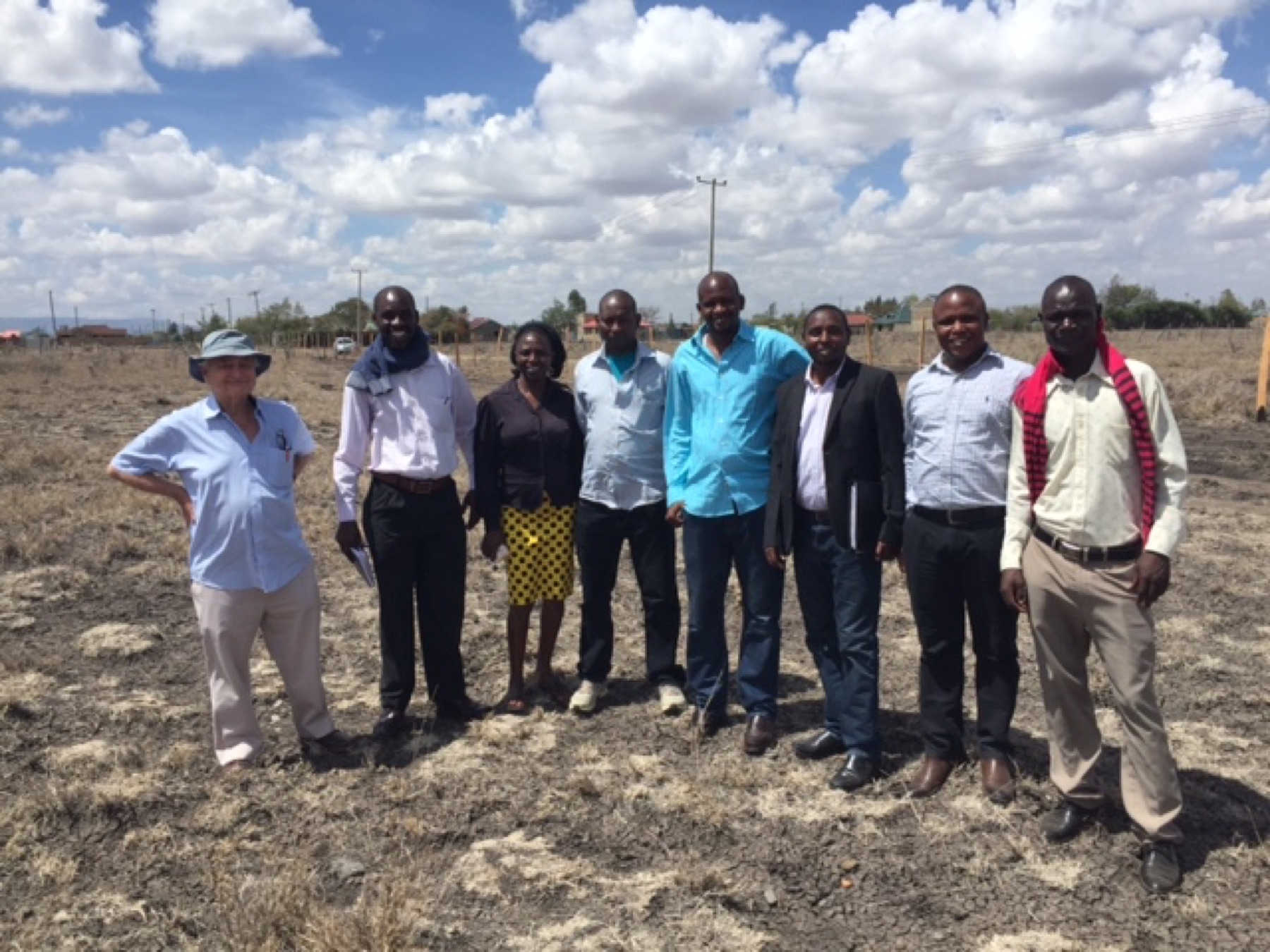
We funded the purchase of a two acre site at Kamulu, twenty seven km from Korogocho, selected by CHG, MWAMKO and CHT together. Rehousing the MWAMKO families is now our main project.
About the MWAMKO families
MWAMKO embraces 25 families, altogether 180 people, including 131 children and some older dependents.
Several families have single parents, one of them a single father. Five members are street sellers, there are casual labourers, a goat seller, some have small shops or stalls, there is a community worker, a social worker, a truck driver, a barber, a plumber, an untrained part-time teacher, a mason and a cleaner.
They are a tribally and religiously diverse group, with households headed by people from twelve different Kenyan tribes. Despite this diversity they have held firmly together throughout, even during the inter-tribal post-election violence of 2008 which badly affected Nairobi’s slums. Their shared values and hopes transcend their differences.
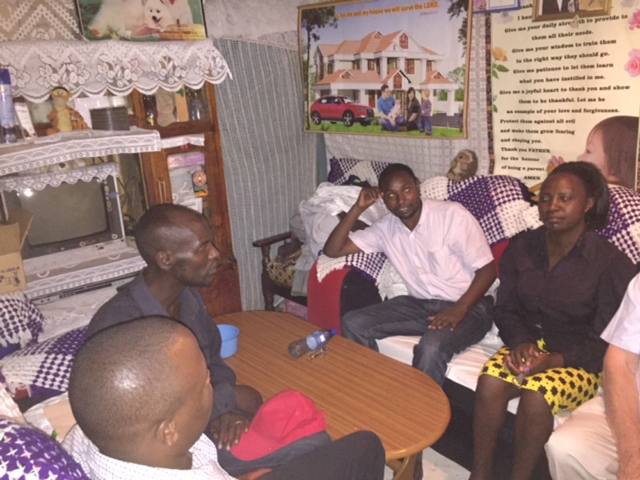
Meet some of the familiesMWAMKO’s contributions to the rehousing project
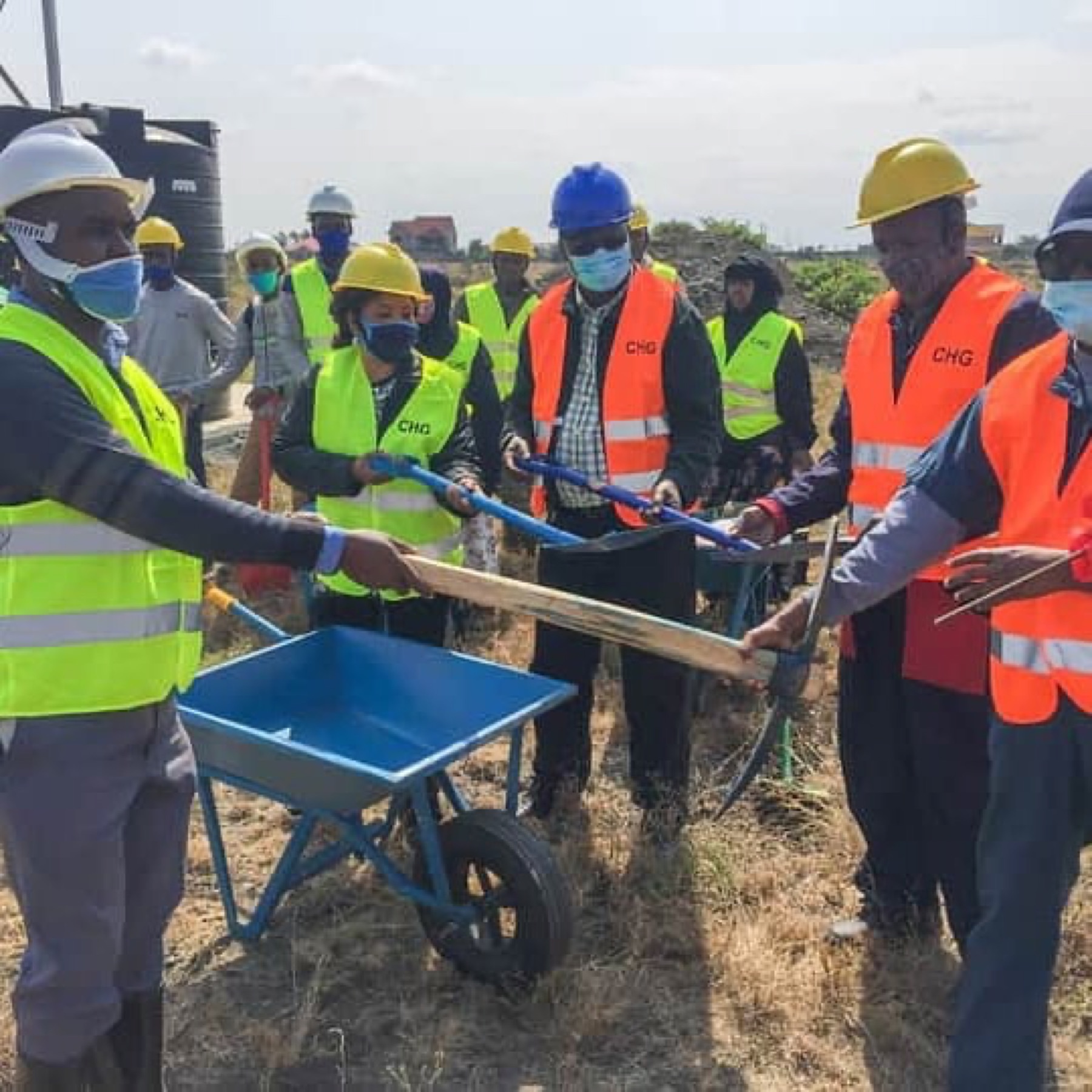
MWAMKO have throughout been active in discussions of the basic house design and how to meet their needs, originally with our founder, Clifford Dann, and later with the CHG Kenya team as well. They fenced the land themselves and even contribute financially. Now family members contribute their labour and skills wherever possible.
Financial
MWAMKO members meet monthly for discussion and to pay monthly subscriptions of KES 500 (current exchange rate: £1 = 151 Kenya shillings). Careful records are kept. Most members have precarious work in the informal economy and their incomes fluctuate. Some months they cannot pay or may even need to withdraw funds from their savings, making up deficits when they can.
- MWAMKO used part of the subscriptions savings fund for materials and tools for their work fencing the site, for permanent on-site security guards and to build the guard hut themselves
- The savings fund also paid for tools for the MWAMKO construction teams now on site
Empowerment through education
Most of the young people in the MWAMKO families had no skills and no jobs, with a youth unemployment rate in Korogocho of 32%.
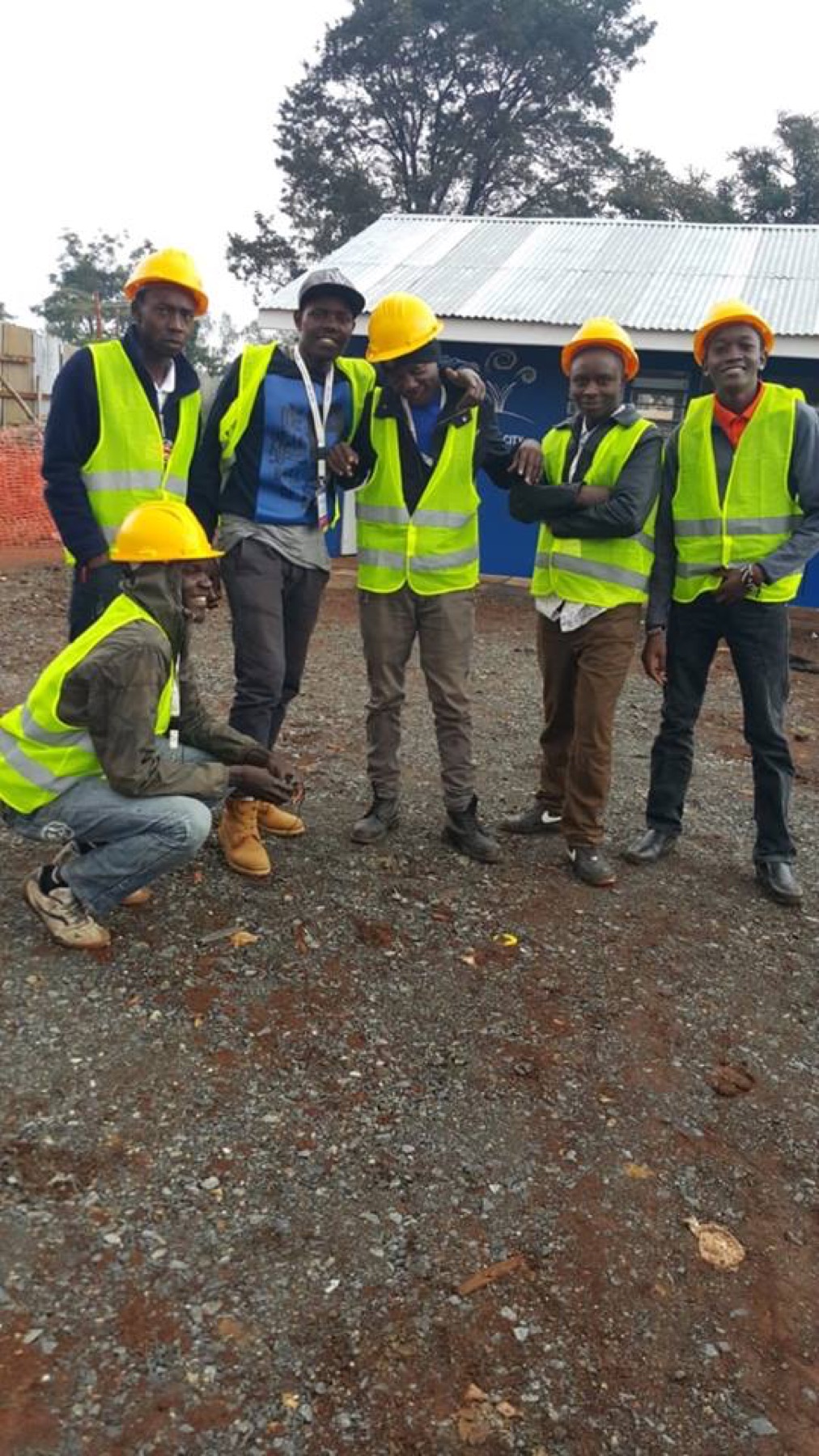
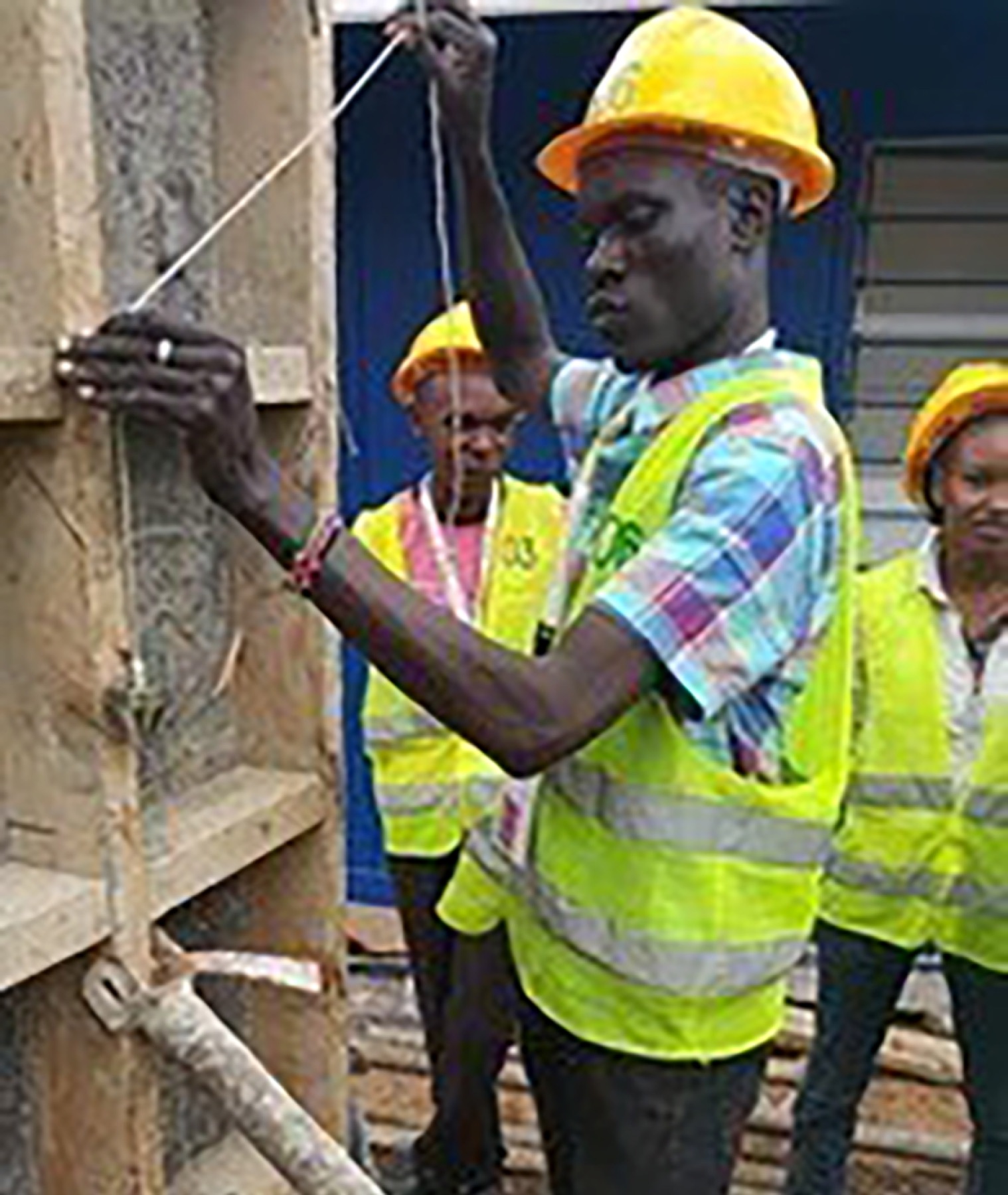
- Twenty five of them have completed construction training with supervised work experience, thanks to a grant from UN-Habitat and support from others, including the Housing Finance Foundation of Kenya and local partners ARC Skills, Sadolin Limited and Alibhai Shariff Limited
- After training in basic electrical work, masonry, plumbing, woodwork or painting they were awarded certificates qualifying them to work in the relevant trade
- Several have worked in construction jobs in the city, gaining much-needed income while extending their skills
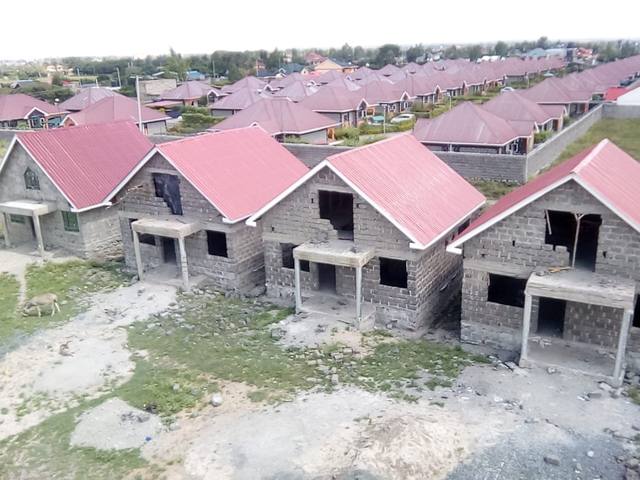
- Two MWAMKO construction teams, supported by other family members, have been working on the site since construction began in July 2020
The future for the MWAMKO families
- Each house will have three bedrooms: one downstairs along with a bathroom, WC, kitchen and living room, and two upstairs
- Each is on a separate plot where vegetables, herbs and fruit trees can be grown, or chickens might be kept
- When they move from the slum to the site at Kamulu the families will have fresh air, clean water, sanitation, a safe environment and secure tenure at a rent they can afford
- They will also live there with dignity, knowing their own great part in making their new lives possible
A letter from Mariam
Thank-you letters regularly arrive from the MWAMKO families. This one, from Mariam, was sent at the end of the year.
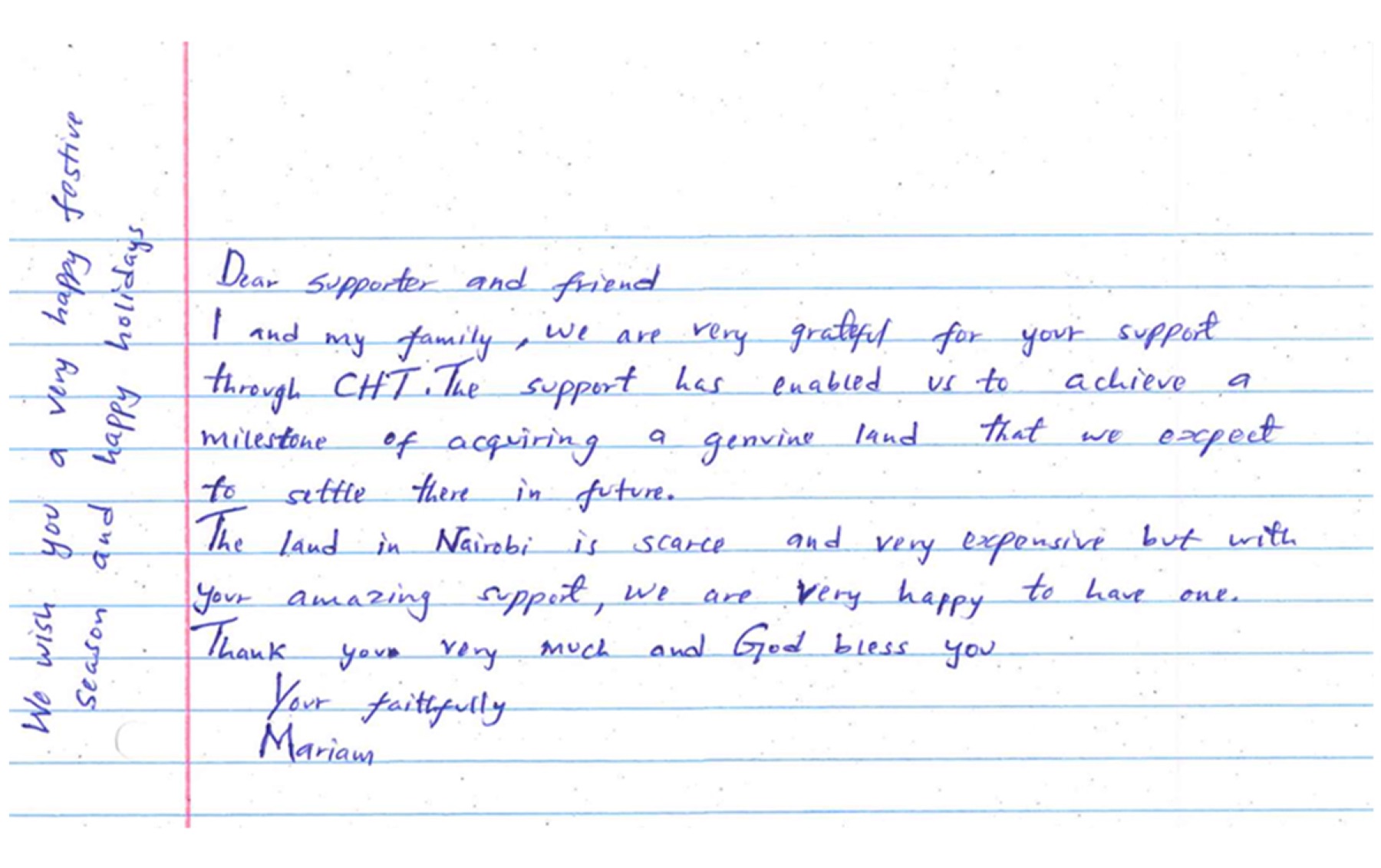
Dear supporter and friend,
I and my family, we are very grateful for your support through CHT. The support has enabled us to achieve a milestone of acquiring a genuine land that we expect to settle there in future.
The land in Nairobi is scarce and very expensive but with your amazing support, we are very happy to have one.
Thank you very much and God bless you.
Yours faithfully,
Mariam
Share in their work and their future
If you would like to share with the families as they work so hard for their future, you can make a donation.
Donate now