Follow the progress at Kamulu, from the first foundations to sixteen homes powered by the sun.
Latest news
The story so far, newest first
The site at Kamulu looks very different now from the empty scrub and grassland we saw when we first went there. In these updates you will meet some of the people who are working so hard to build their own future, and follow their progress from the first water tanks in 2019 to solar-powered homes today.
· 2 min read
Brilliant news - literally!
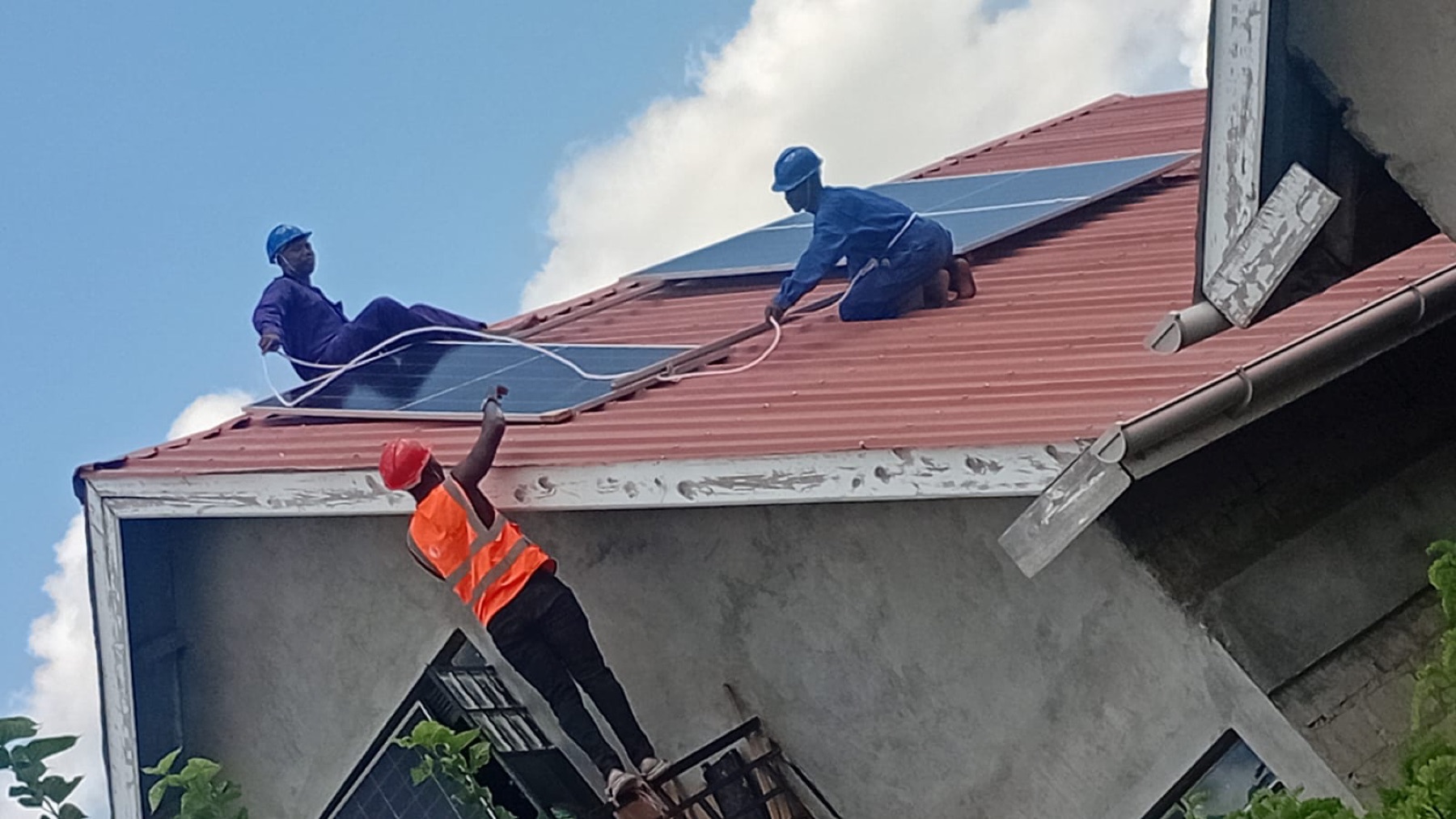
We have received very generous support to install solar panels on all sixteen houses currently occupied, with enough funds in hand for solar for all of the last phase of building - 9 houses more. Thank you…
We have received very generous support to install solar panels on all sixteen houses currently occupied, with enough funds in hand for solar for all of the last phase of building - 9 houses more. Thank you, Prefect Controls, for your interest in our project and for the invaluable financial support and encouragement you are giving us.
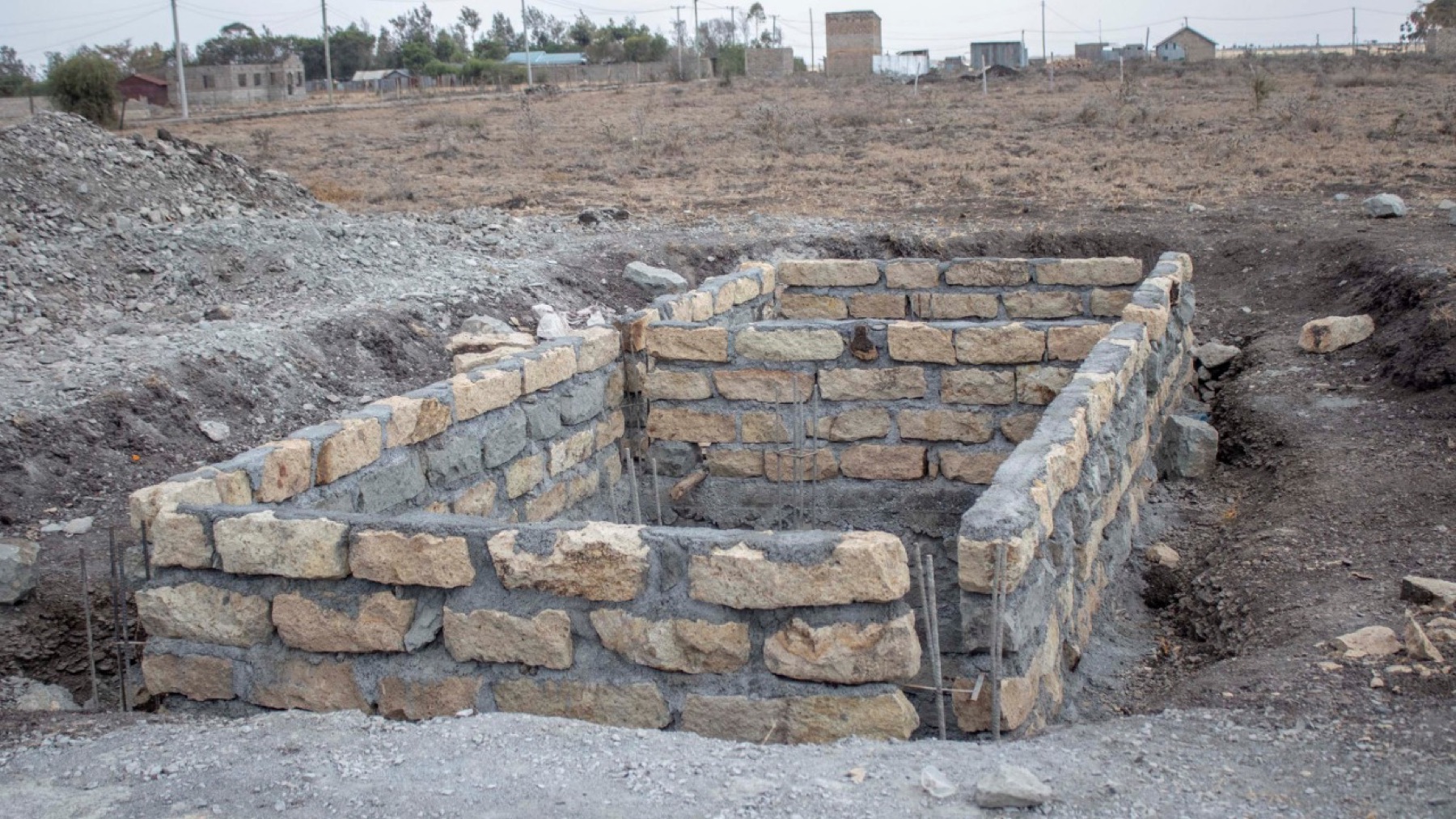
From the start of the project the aim has been sustainability wherever possible and the plan had been to install solar power at the end of the building work. The generous funding Prefect Controls has provided was unexpected and immensely important. We cannot thank them enough! They have said they will fund the solar for the remaining nine houses yet to be built and the first four of these foundations are well underway. The Kenya government now require all new housing to install solar roof tanks for heating water and Prefect are funding that too.
We were able to install mains electricity in the first eight houses but then Kenya Power asked for such an exorbitant amount for a necessary new transformer to support electricity for all the other houses that we could not afford the sum required. As a result the new residents in houses 9 to 16 had no electricity when they moved in - they needed their new homes and made do as best they could. Now they have solar and all is well.
Meters to monitor the use by each family are already installed. Extensive tests have been done to decide the optimal way to share the costs of the power units between the houses. It turns out to be one unit for each four houses, which exactly fits our housebuilding programme
In Kenya the sun sets around 6.30 pm all year round, making many activities difficult. Perhaps most important is the problem for young people of being able to concentrate on their studies.
Our project manager has sent me this description of the transformation of the life of Mary Wanjiku, one of the residents who recently joined the project.
Mary Wanjiku carried an extraordinary burden for years, as a single mother raising five children - her own three and two left in her care by her sister. Moving into her new unit at the Mwamko Housing Project was a major milestone but, without electricity, nights remained a challenge. Relying solely on a small portable solar lantern, basic things like having proper lights and helping five children study in the dark turned every evening into a stressful race against sunset.
Life was transformed when Mary was connected to a shared 10 kW solar energy micro-grid, splitting clean power with three of her neighbors. Bright, reliable light now fills her home, giving her children a safe environment to study well after sunset. Crucially, her power expenses will be just half of the main grid tariff and will provide immediate financial relief, allowing her to redirect vital savings toward essential household needs and long-term family security. "My future is bright now," Mary says, proud that her household energy is also contributing to the fight against climate change.
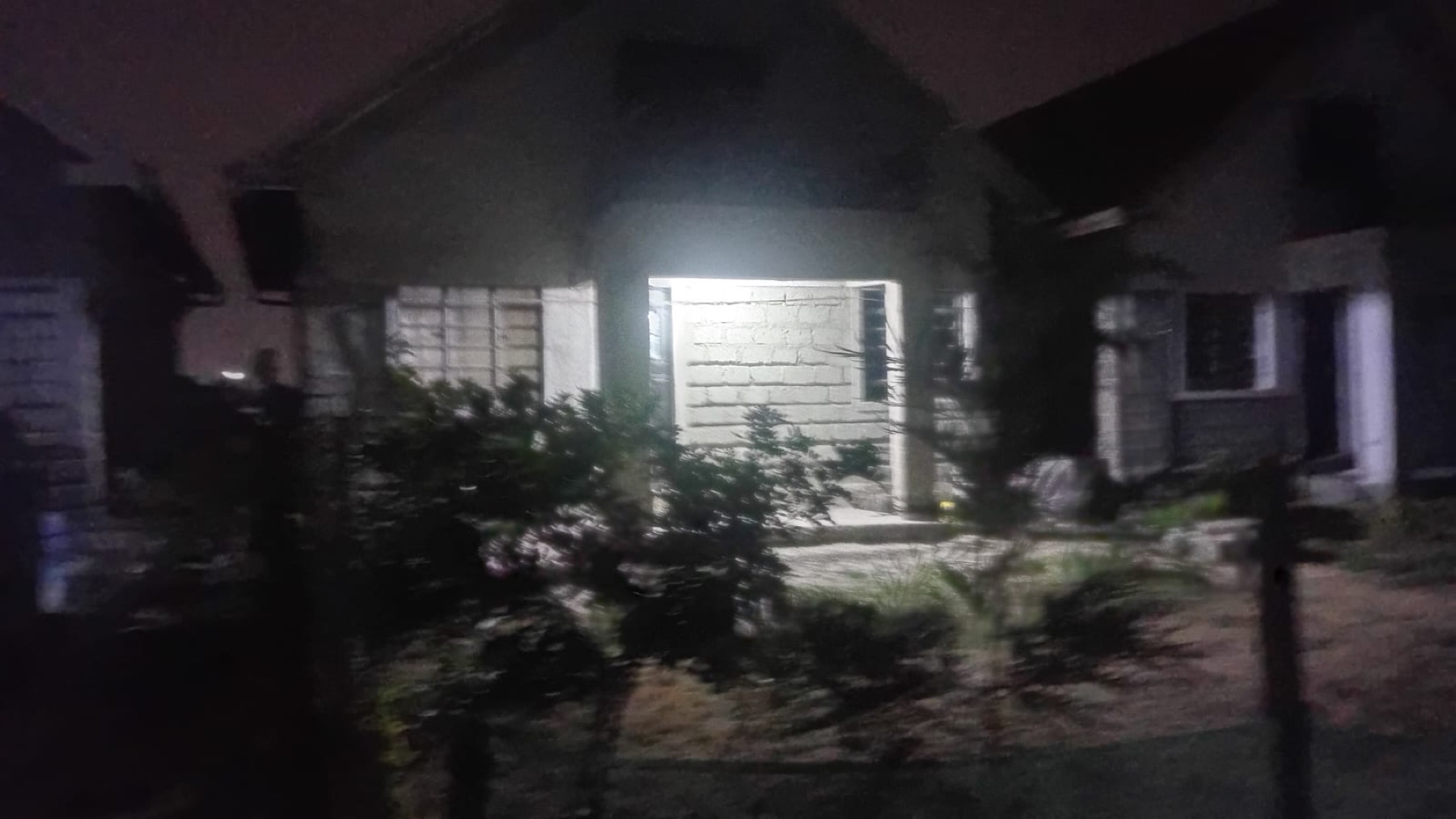
Let the light shine!
A few days after this photo was taken the whole neighbourhood was in darkness because of a power cut, all except our project houses. Our families were very happy!!!
The families who moved in in April are enjoying their new homes. They continue to help the project in practical ways, providing security for the site, help with curing the slab on the latest houses and other…
The families who moved in in April are enjoying their new homes. They continue to help the project in practical ways, providing security for the site, help with curing the slab on the latest houses and other contributions to the work made possible because they are now residents.
Commemoration and thanks at Kamulu
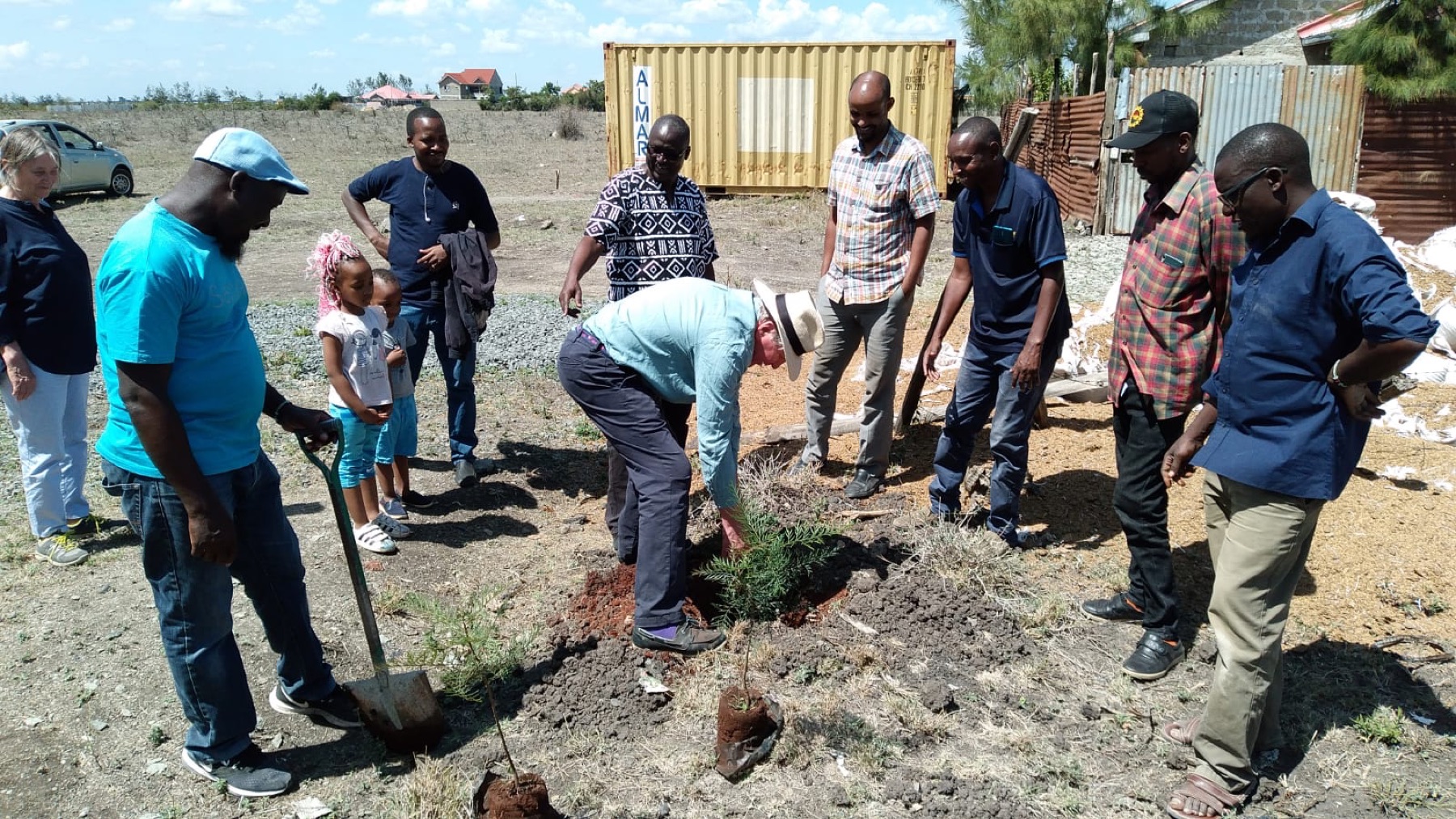
One of these tasks is watering the three saplings recently planted by Robert Neill who came from Ireland and visited the project. He is the brother-in-law of CHT's late founder Chairman and enduring inspiration, Clifford Dann. Robert was invited to plant some tree saplings in memory of Clifford, to commemorate his visit and also to acknowledge help given to the project over the years by the Neill family.
Below, the planting ceremony - with Robert Neill hard at work, watched by members of the CHG Board including Chairman Harrison Kwach (fifth from right) and Project Manager Abdi Mohammed (third from right). In the foreground two more little trees are waiting their turn! This is the first small step towards the greening of the site, with individual gardens to be created and the planting of many more trees, many of which will acknowledge the help and financial contributions of supporters
Off to school
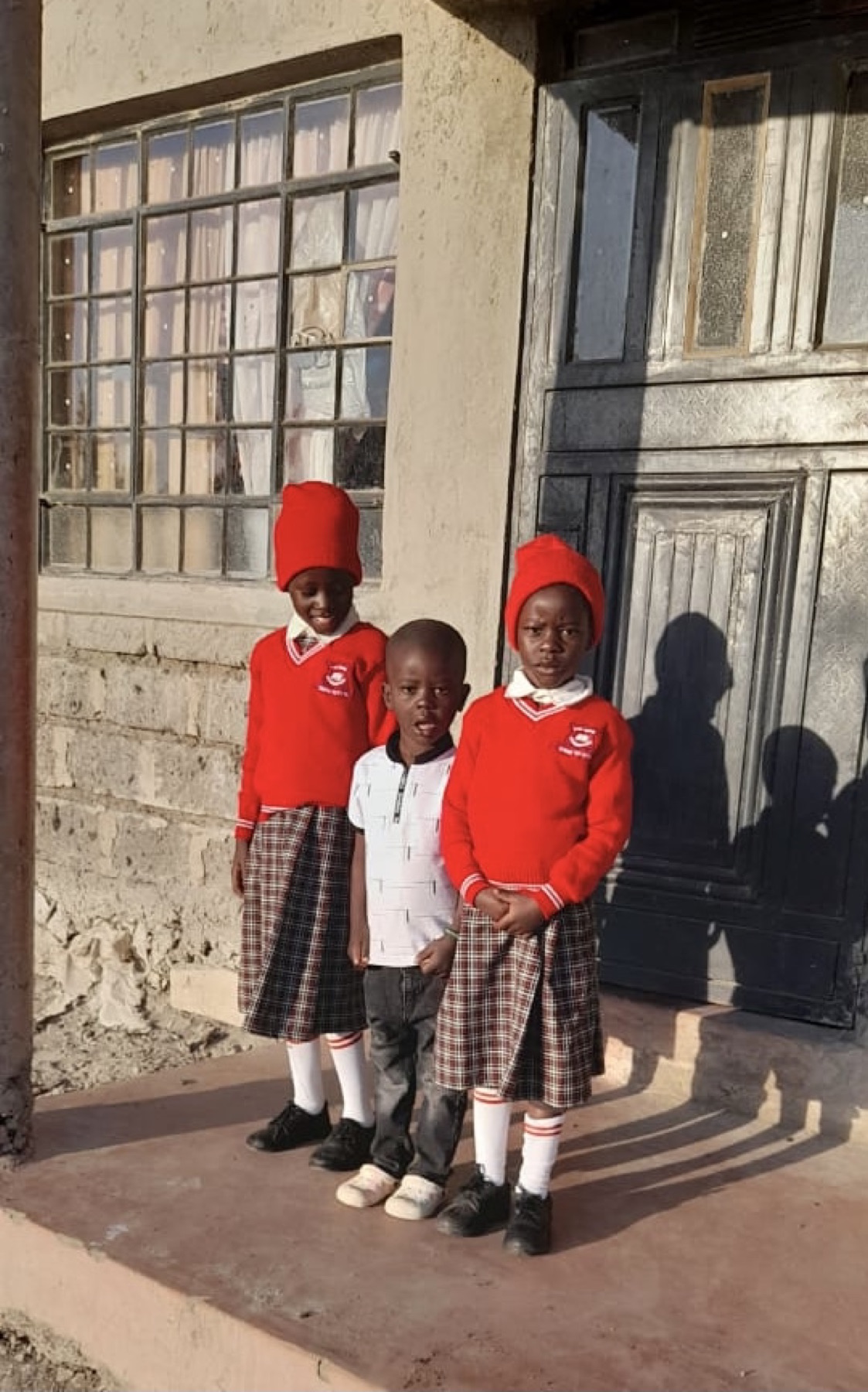
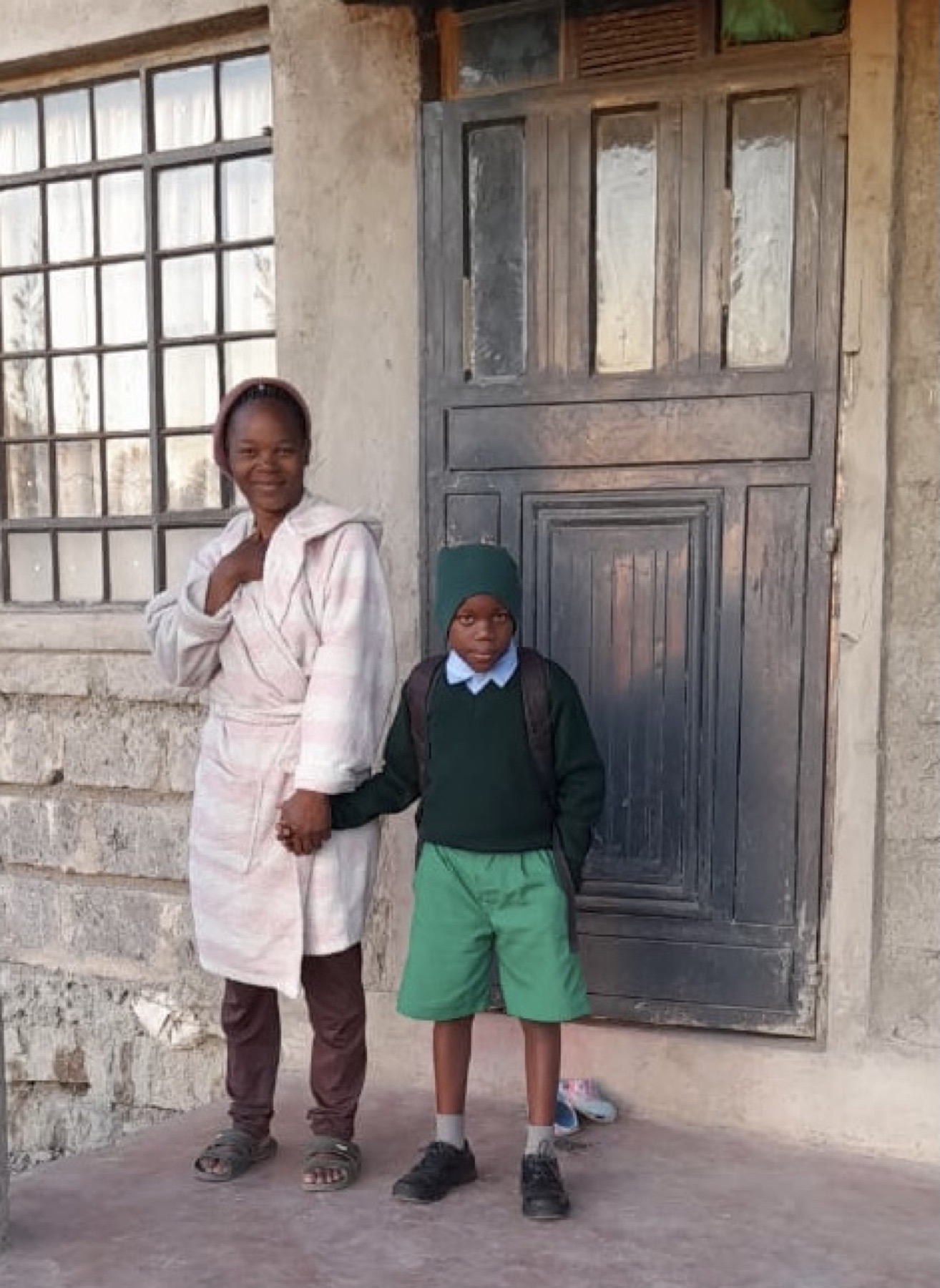
The school-age children have been attending their new schools for a few months - see some of them, below, as they set off for their daily walk to school. You may be surprised to see their warm clothing! From June to as late as September is the cold season in Nairobi County. Nairobi, although not so far from the Equator, is at an elevation of 1800 metres and at this time of year the air has a quite chilly, mountain-like quality.
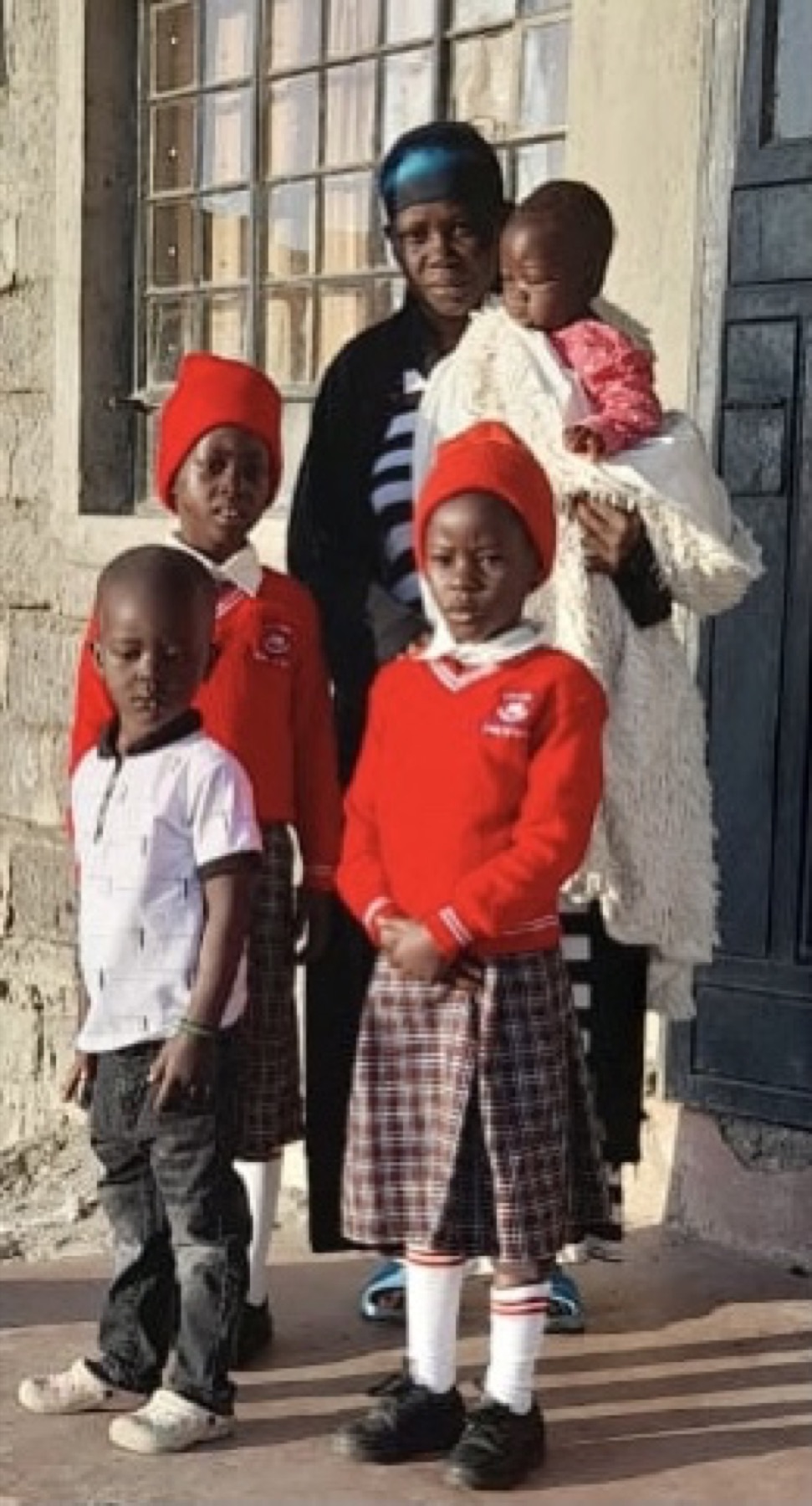
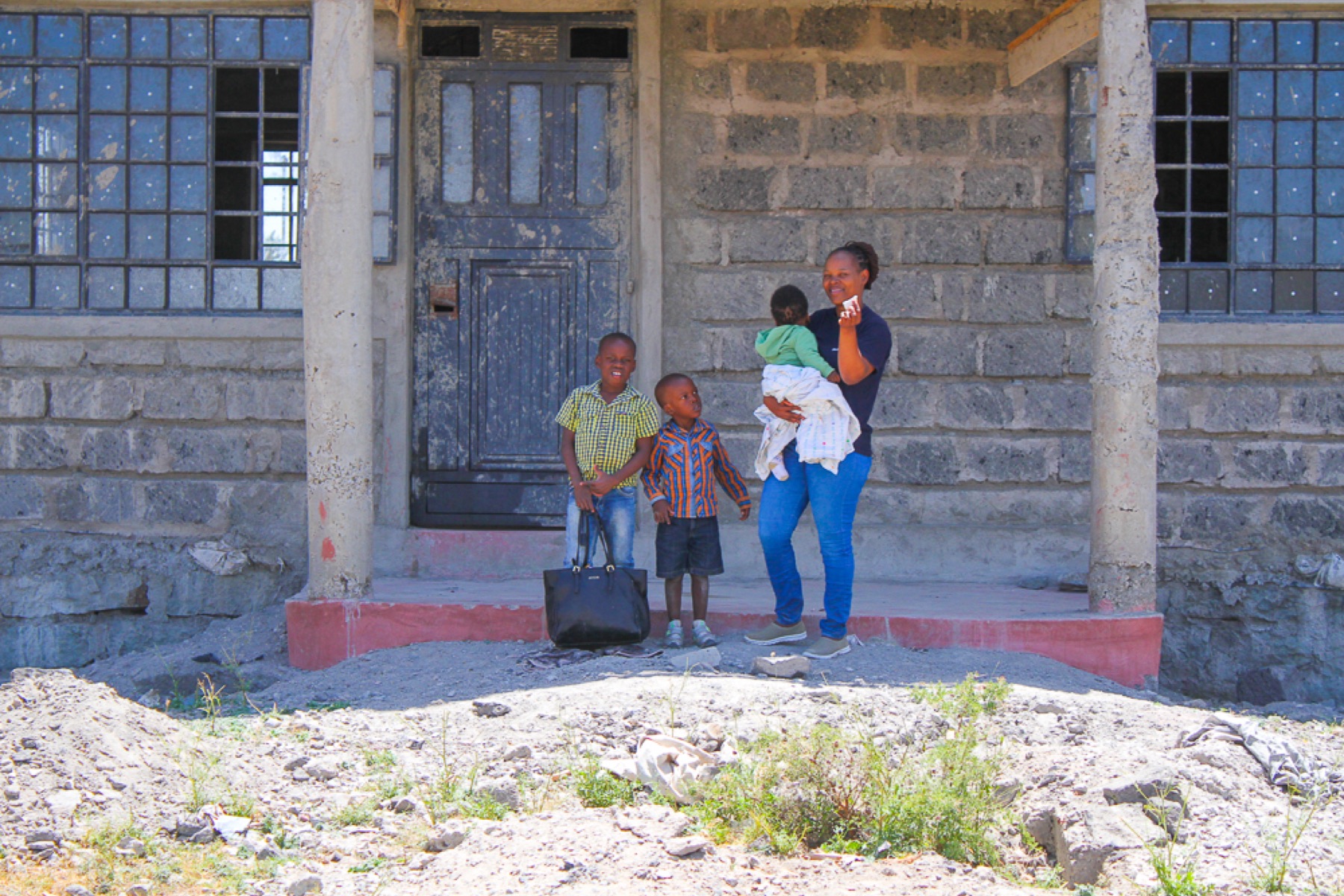
Only two of the three children, below, are on their way to school. The little boy was very keen to join his sisters in the photograph! They are three of Sarah's four children - the fourth is still a baby, seen in the lower photo,
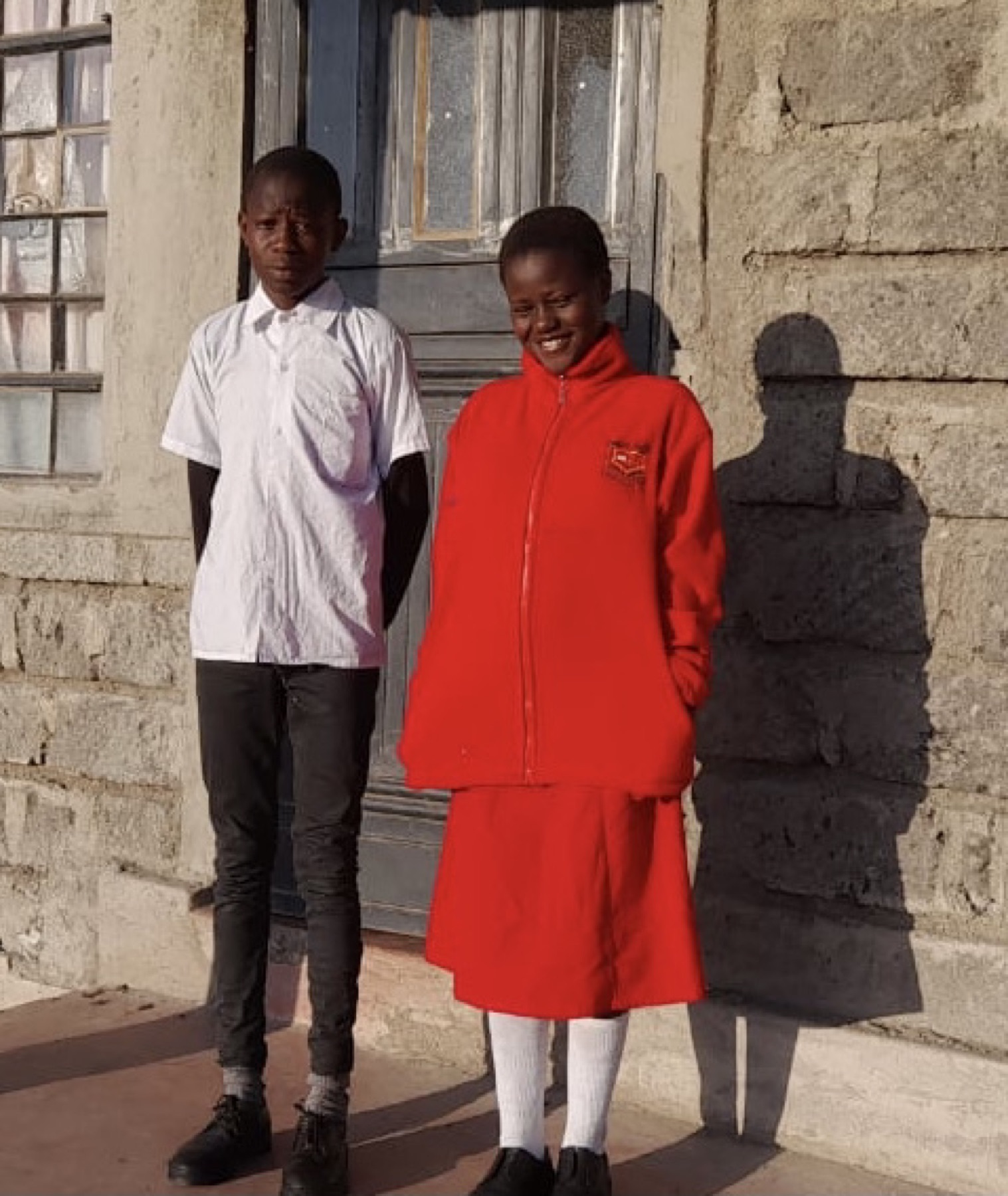
The two older children, below, are also part of Sarah's household, where she looks after them long-term for her sister who lives up-country (see Sarah's video in For five families the future is now). They are two of the teenagers she mentions who are thrilled that the family no longer have to live and sleep all in one 3-metre square room, now having one bedroom for the parents, one for the boys and one for the girls.
And, lastly for now, Maureen is about to set off with her eldest child - the other two are too young for school yet. As you can see from the uniform, he attends a different local school.
Housebuilding update
When the first five families moved in work was beginning on house six, and then house seven was built, and now house eight is almost done.
These latest three houses were all possible thanks to the generosity of three separate donors each giving funds for a complete house. The MWAMKO members and the managing team of CHG (Kenya) have shown time and again that if they receive funds they directly put them to good use. And of course, all donations are greatly appreciated, of whatever size. Taken together they all combine to build houses. If you would like to help you can do so by clicking the 'donate' button.
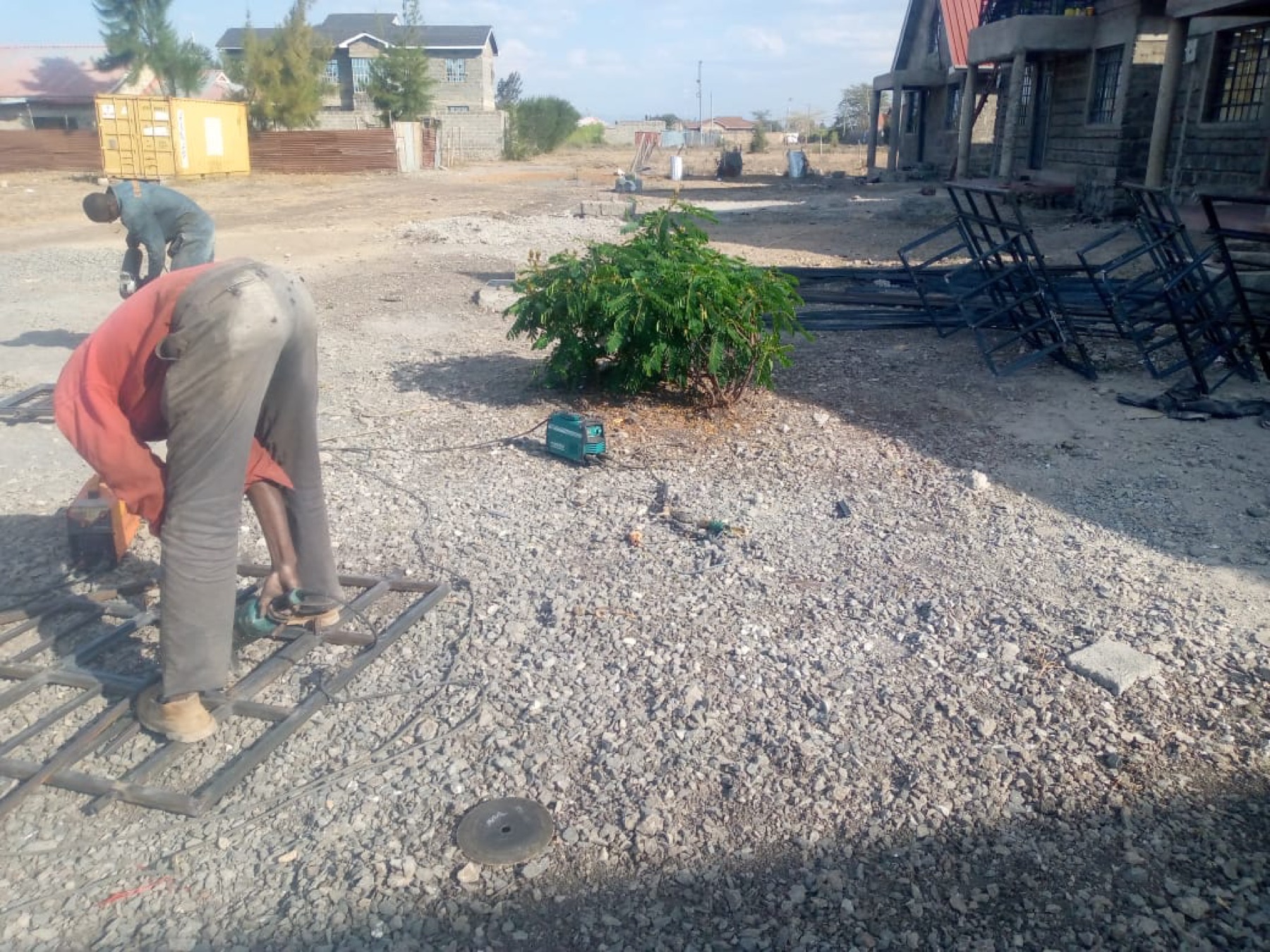
As with the previous group of houses, they are not quite completed but all brought to the same stage so that economies of scale can come into play, purchasing in quantity and also making doors, windows and fittings on site at the same time. Right now the metalwork for the doors and windows is being carried out by a professional metalworker onsite with help from the building team when needed - a more economical solution than contracting out the work.
Throughout, the Project Manager and the CHG (Kenya) Board have put enormous effort into using funds efficiently and wisely, following local fluctuations in commodity prices, identifying and using reliable suppliers directly, without incurring the costs of intermediaries - a great advantage of self-build.
Once completed these three houses will soon be occupied after following the same allocation procedure as before.
Seeing is believing
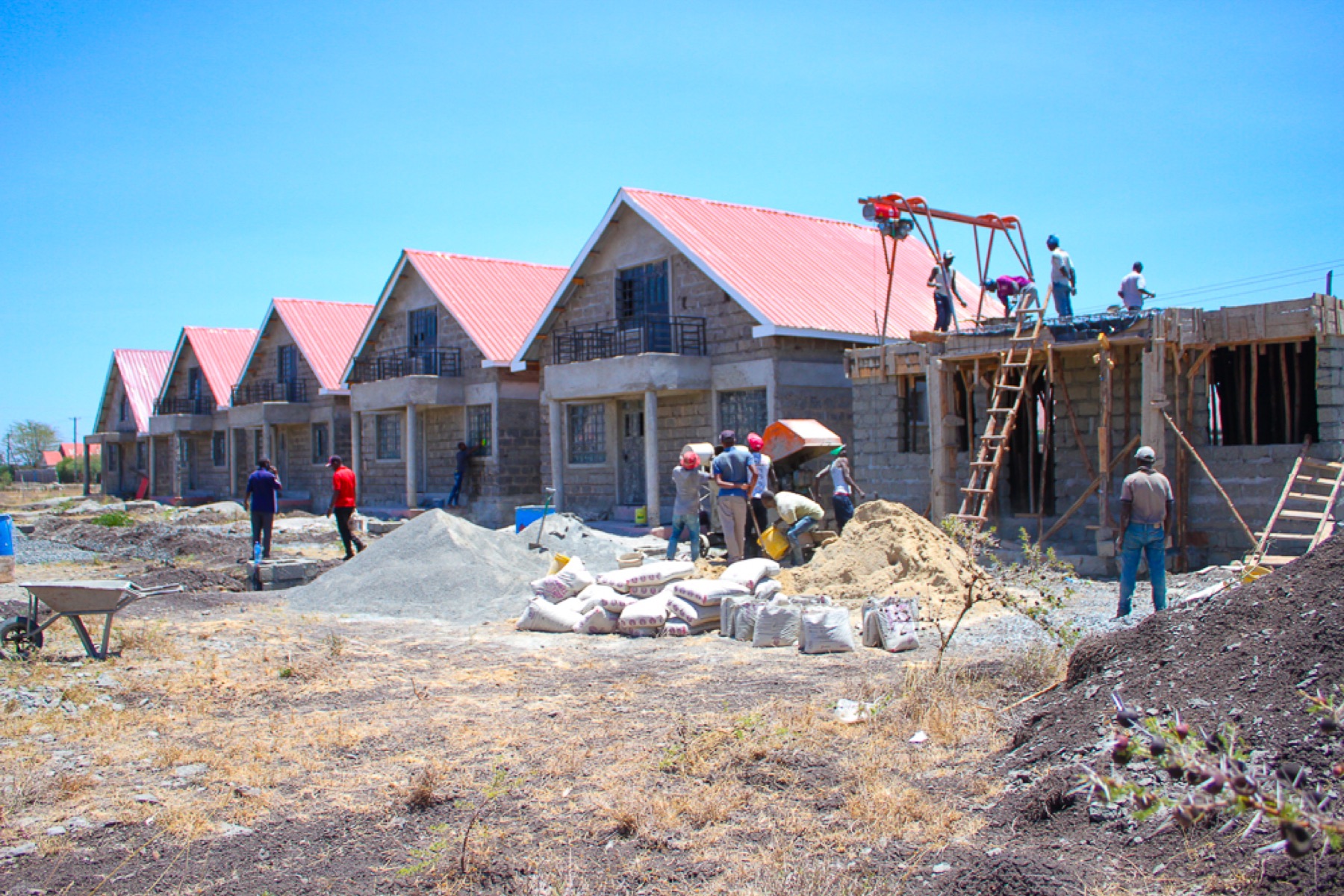
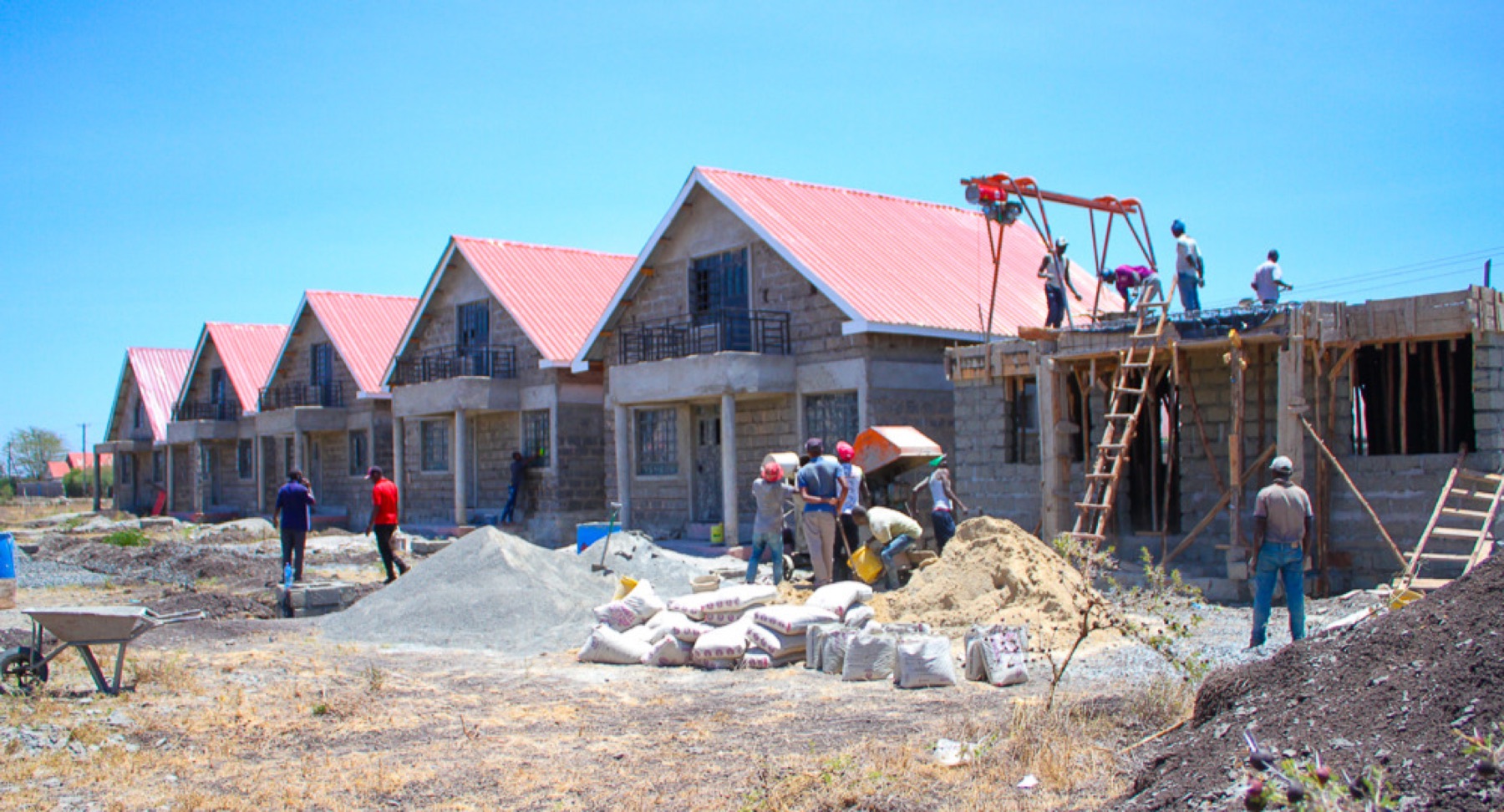
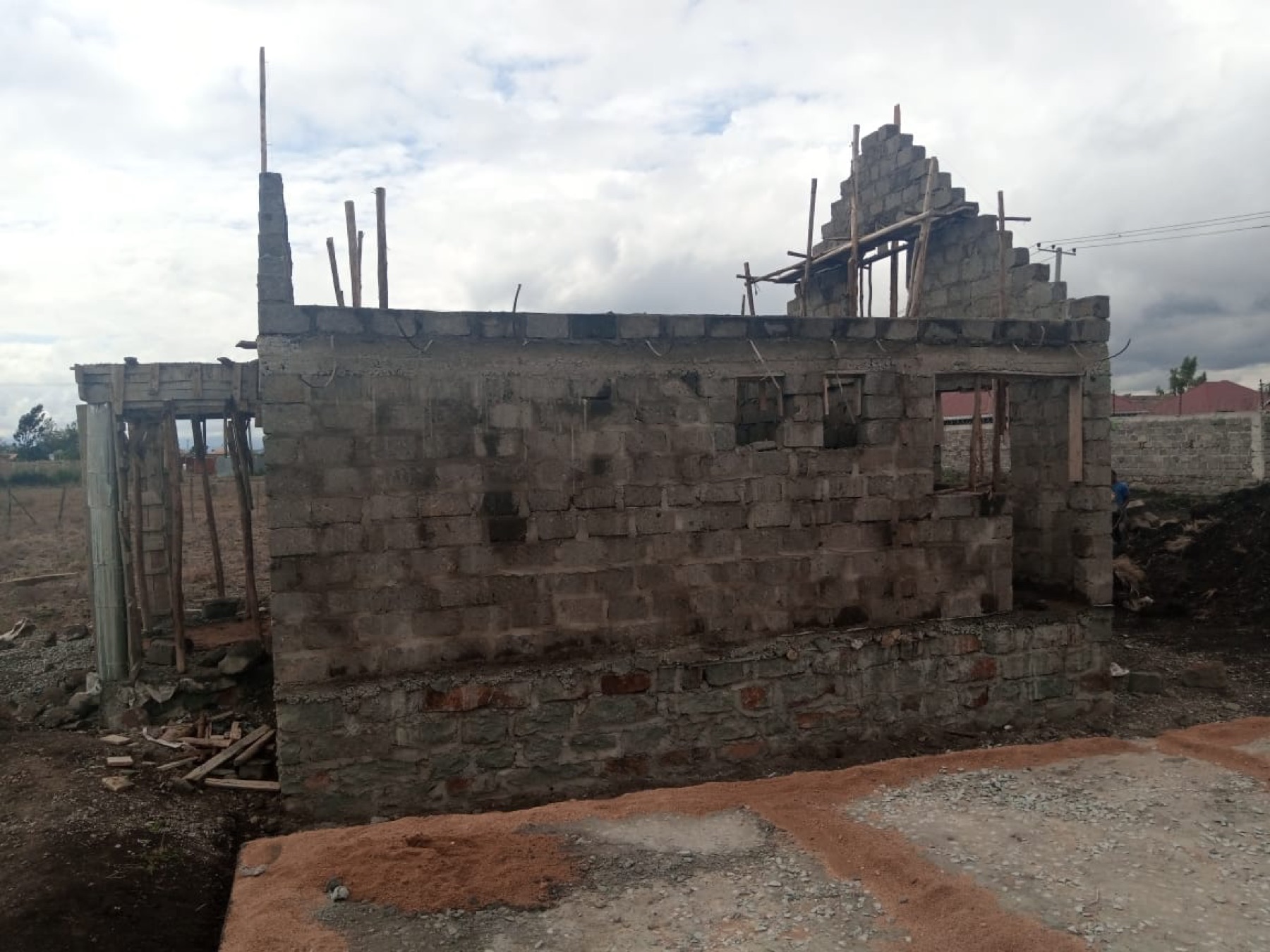
This is the site when the families moved in - five houses done and occupied, with the sixth well- advanced, thanks to a new donation for a complete house, seen on the right of the picture.
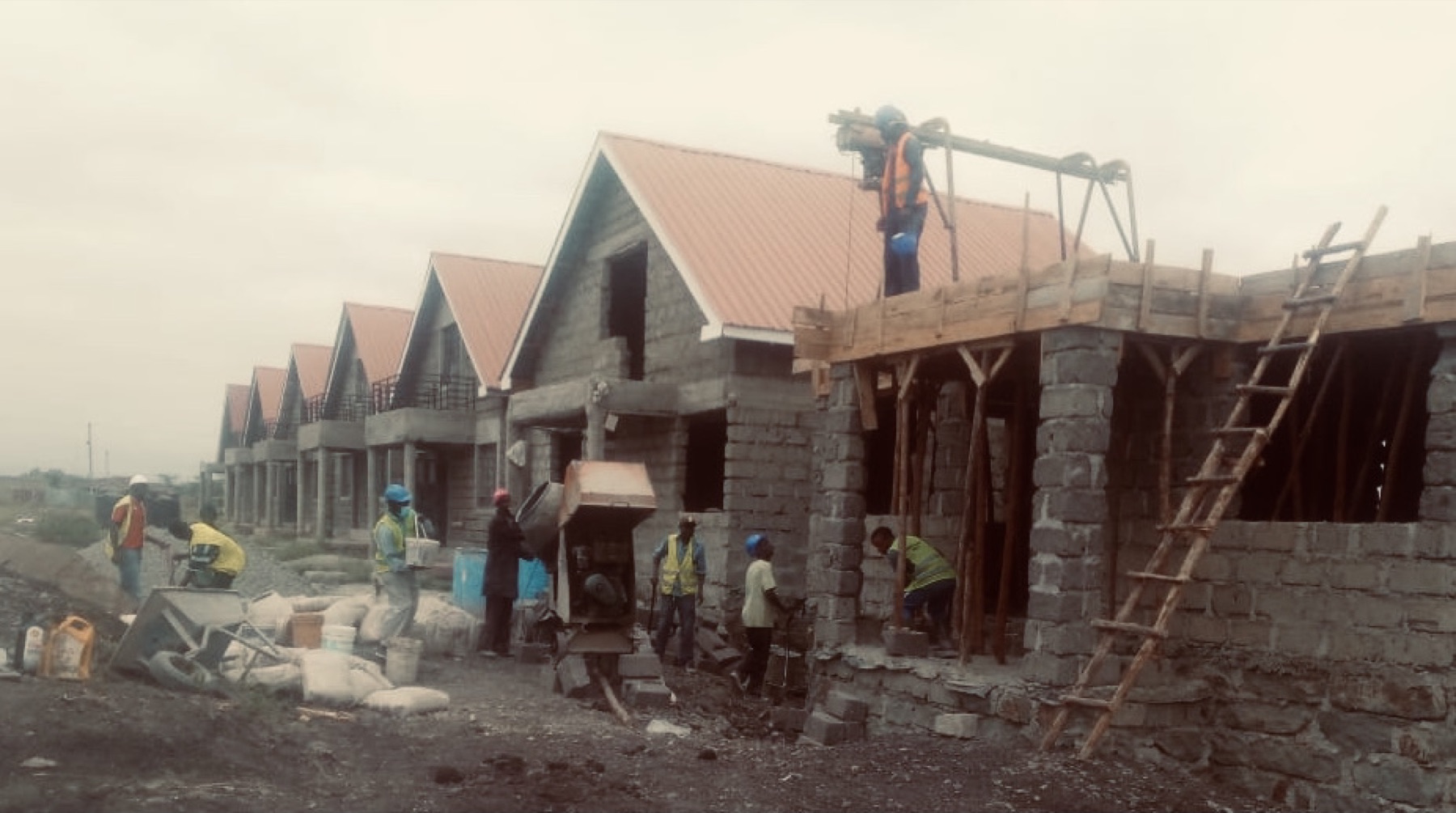
Then we received another donation to fund house number seven and work began immediately. You can see the cold, dreary seasonal weather!
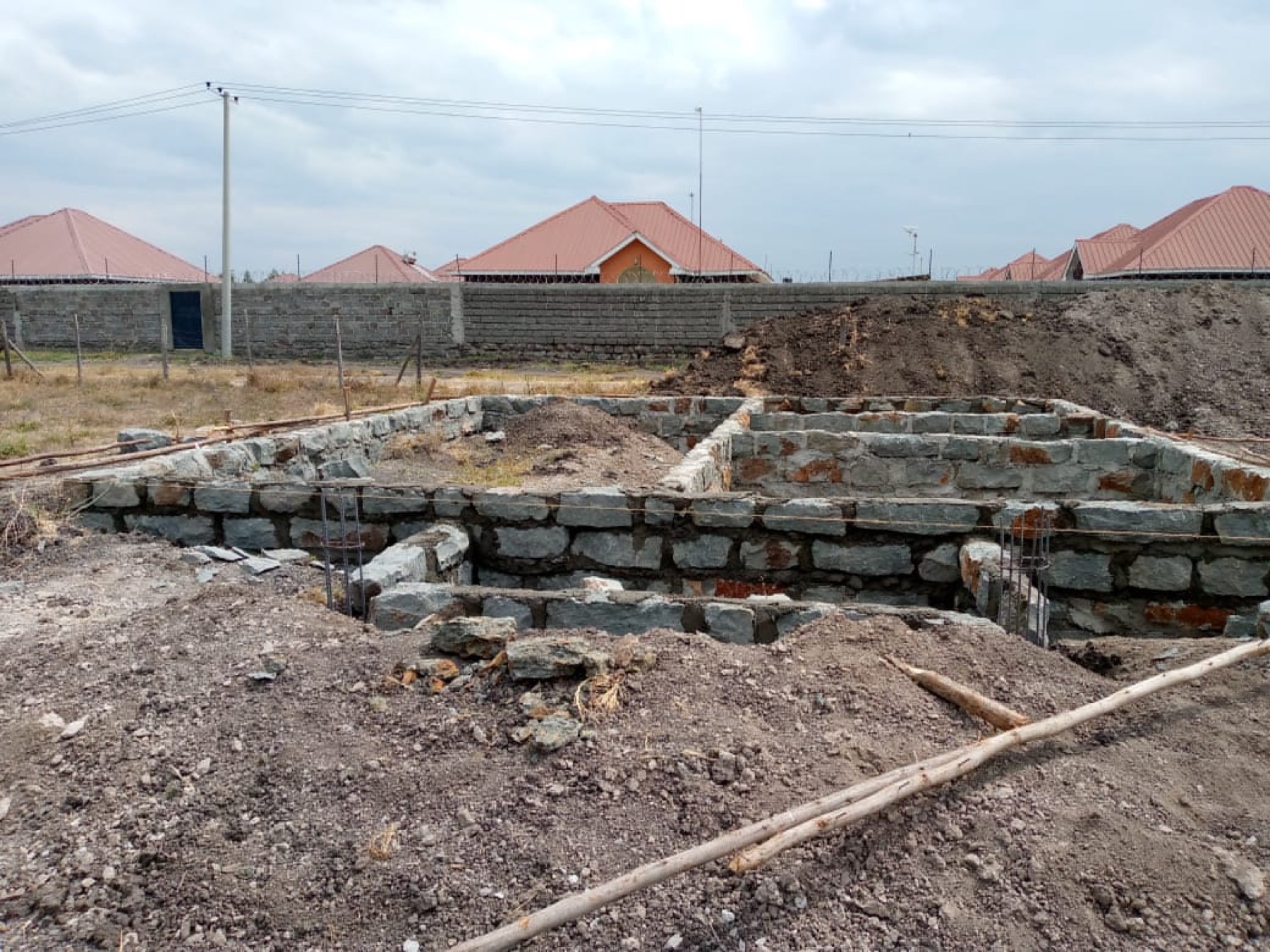
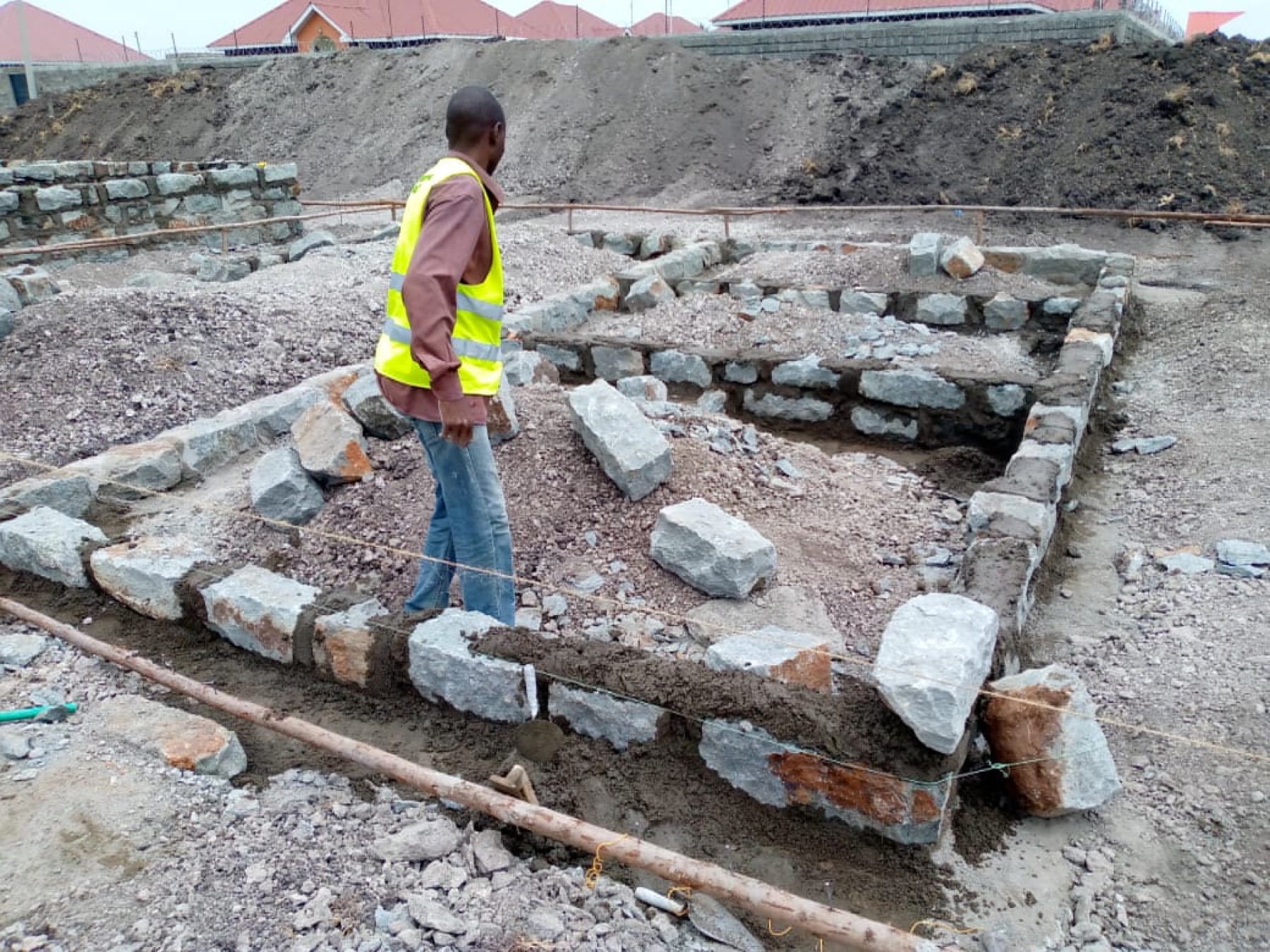
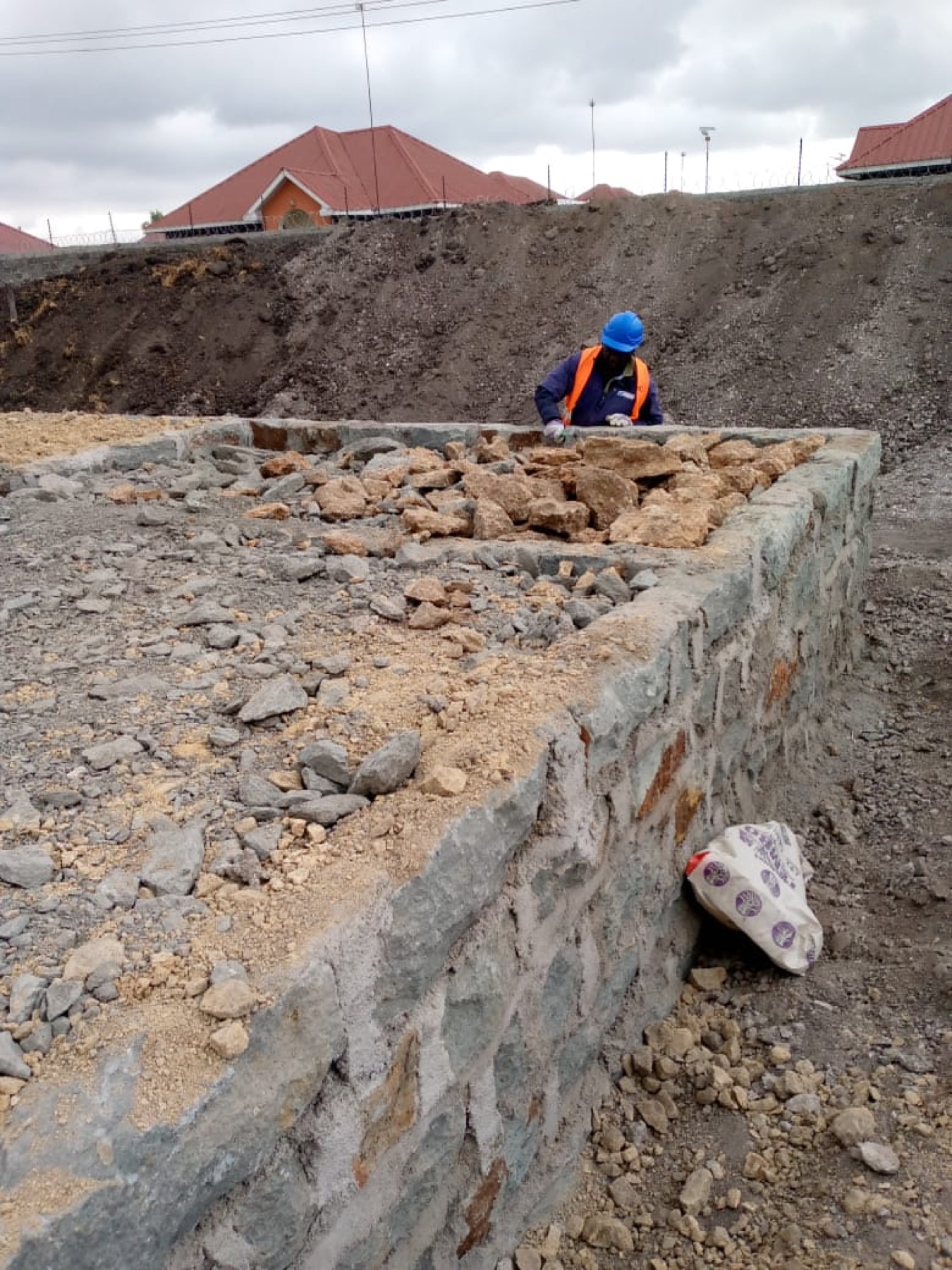
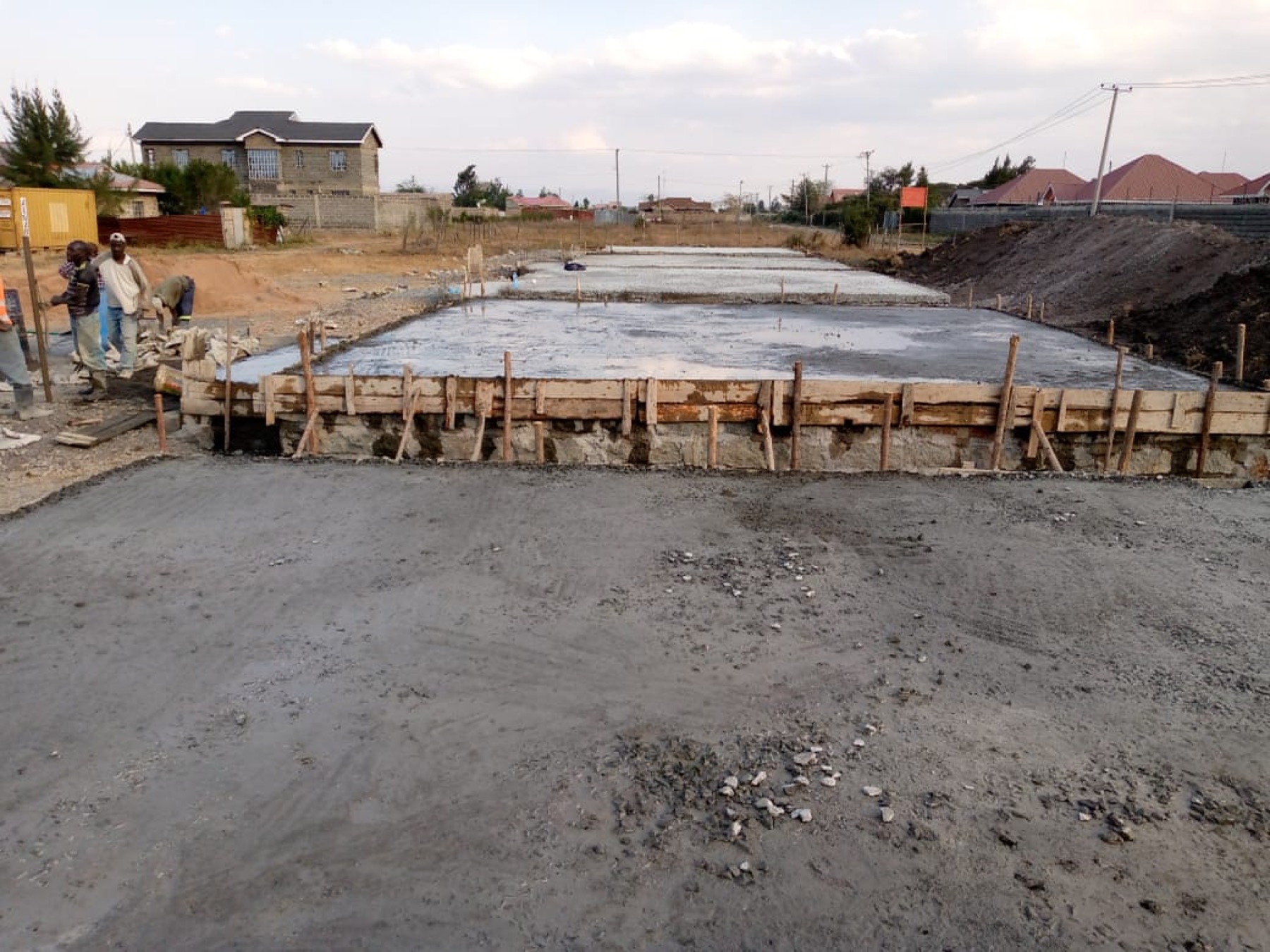
The foundations had to be deeper for this house, with five courses of masonry wall and then 126 tonnes of rock and murrum were needed for backfilling.
This, below, is not the most exciting of videos but it's a reminder of the back-breaking work involved in actually doing the backfilling! Below the video is a photo of the seventh house at slab level.
Backfilling the foundations of house seven. A reminder of the back-breaking work involved in backfilling: 126 tonnes of rock and murrum.
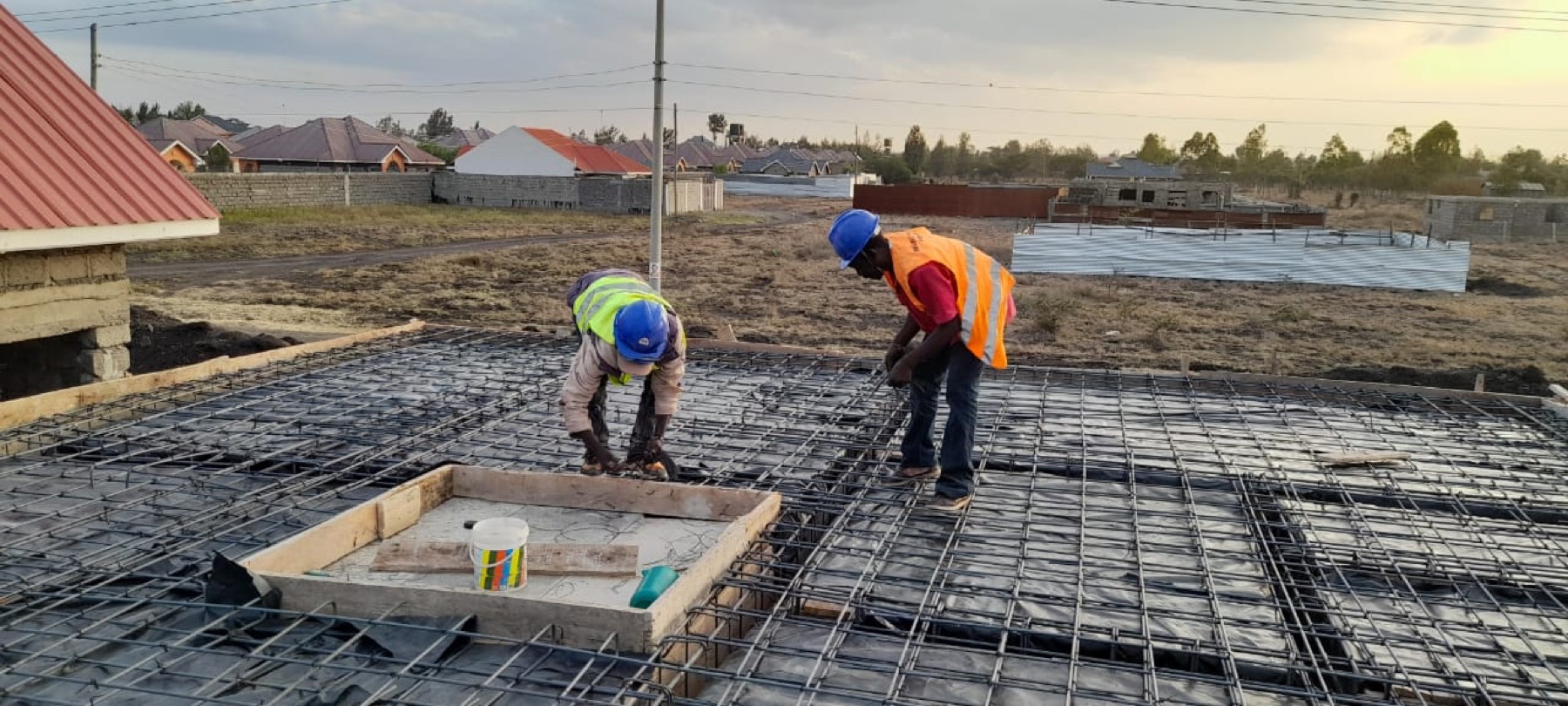
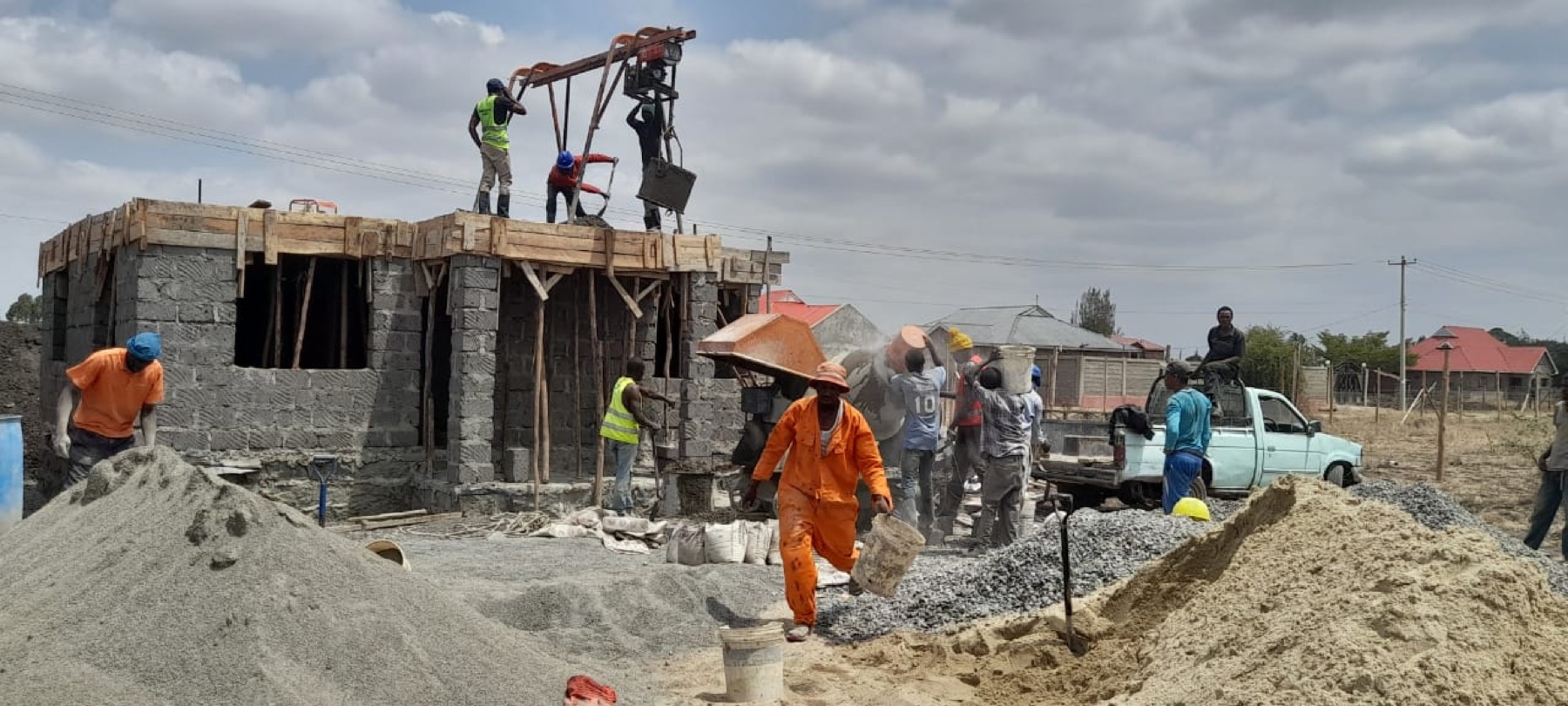
A gift from another generous benefactor has meant that CHG (Kenya) had enough funds to build house eight. Here, below, team members work on the slab for the eighth house, showing the wooden frame that surrounds what will be the top of the staircase to access the two attic rooms.
At the left of the photo is the already-roofed house number seven
NOTE, below! One of the grevillea saplings can be seen flourishing near house eight. Also known as the silky oak, they grow tall very quickly, are good for the soil and provide shade.
In addition to the tree you can see the latest stage of the current phase of building work - the team, led by the professional metalworker who comes to the site, are hard at work making the railings, doors, spiral staircase and window frames for the three most recent houses.
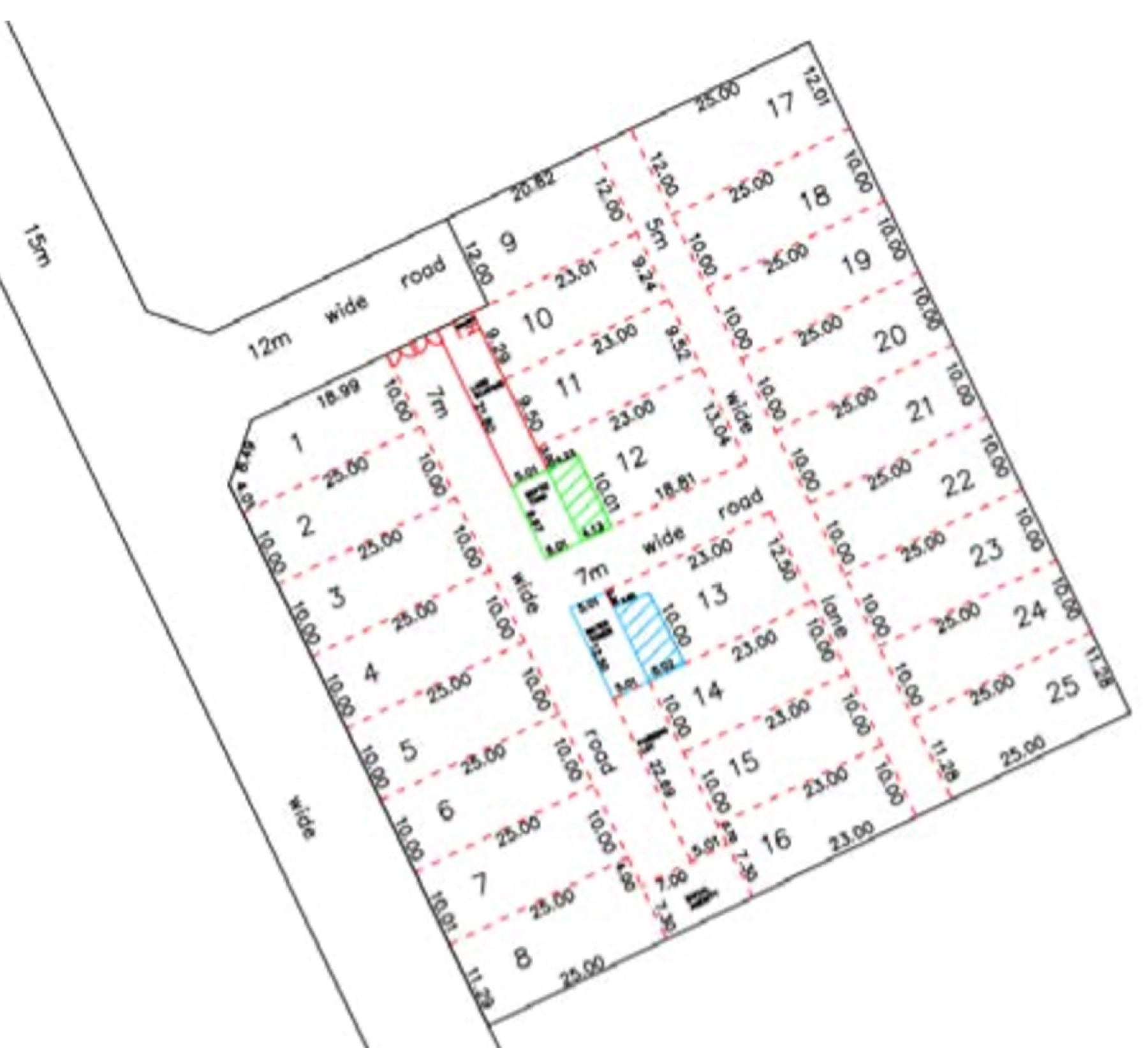
CHG and MWAMKO have now almost completed the eight houses which make the first row on the site plan, (below).
Note: the houses have been built starting with number 8 on the plan and ending with number 1, because of the lie of the land.
As you can see, there's a long way to go! The next house to be built is number 16 on the plan, continuing to work in reverse numerical order to house 9, at the top of what will be the access road.
That will be another eight houses, so that another eight families will have new homes.
You can help us to help more families move from the Korogocho slum to the new housing at Kamulu
As before, we are grateful for donations of all sizes. To start to build a house they need to buy hard core, cement, stone building blocks and much more. The overall cost of building each house is £10,000 or has been. Kenya, like the rest of the world, sadly has growing inflation.
Any donation you feel you can make would be a valued step towards completing a house
To make a donation please go to the 'donate' button
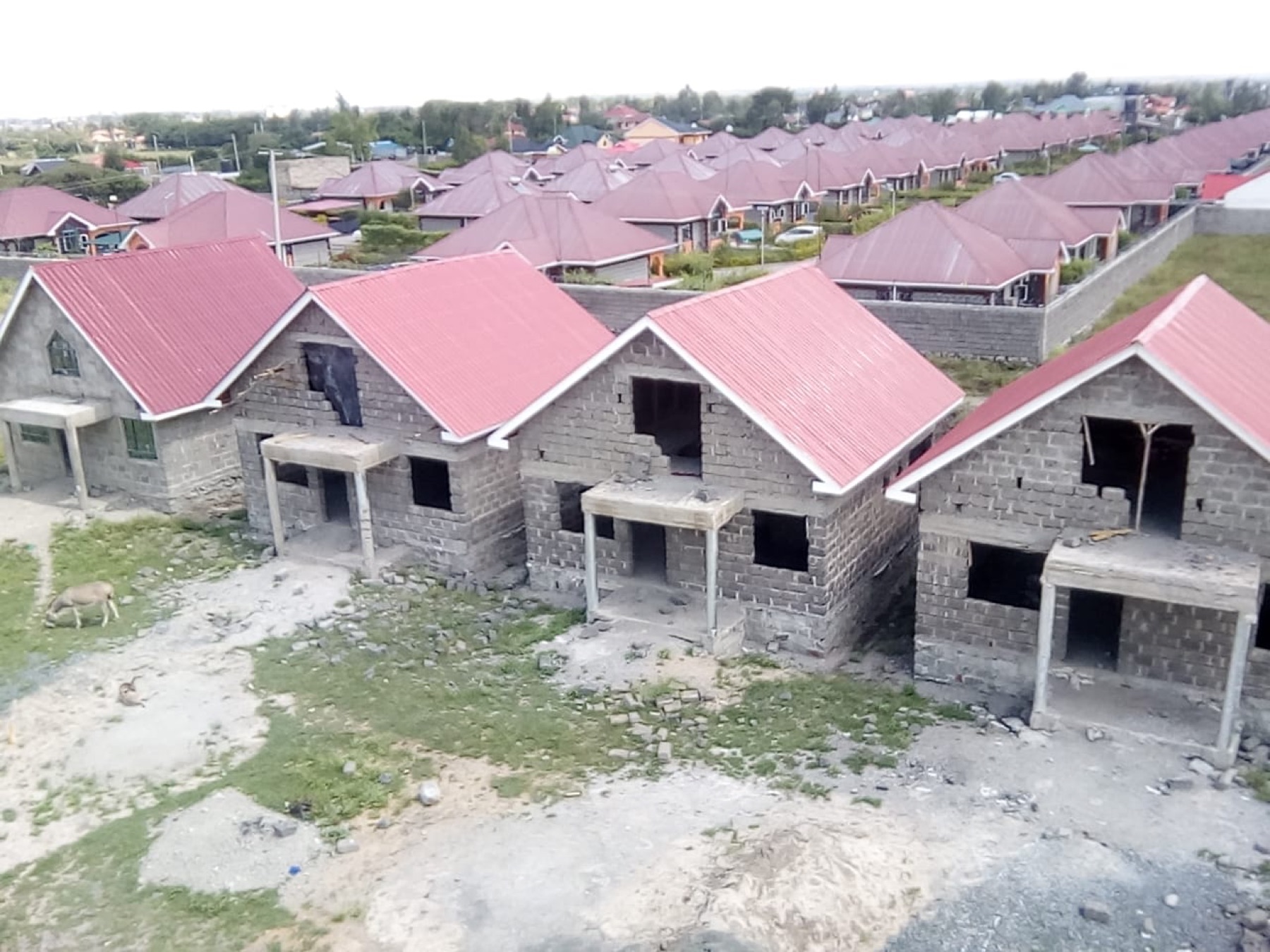
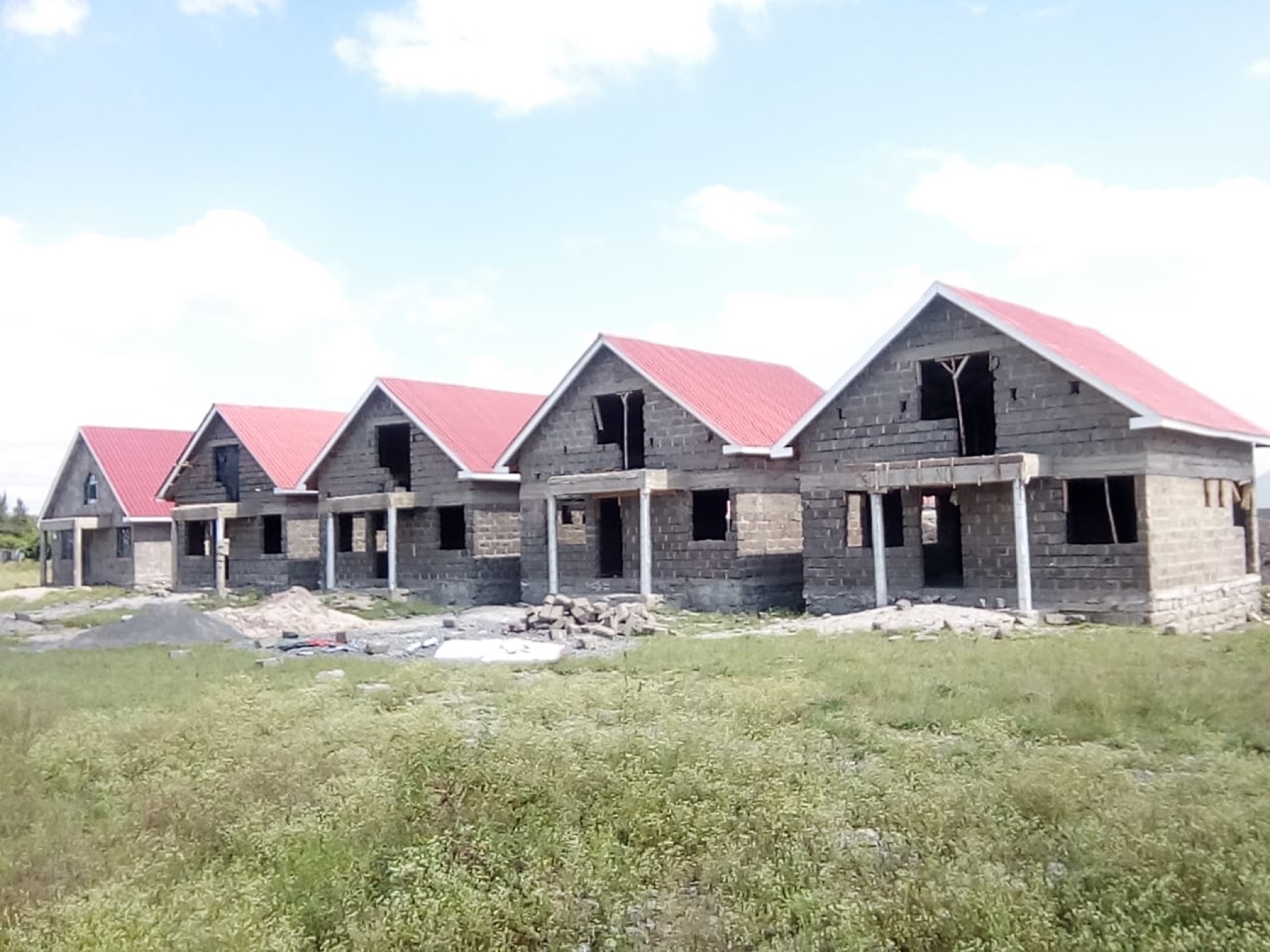
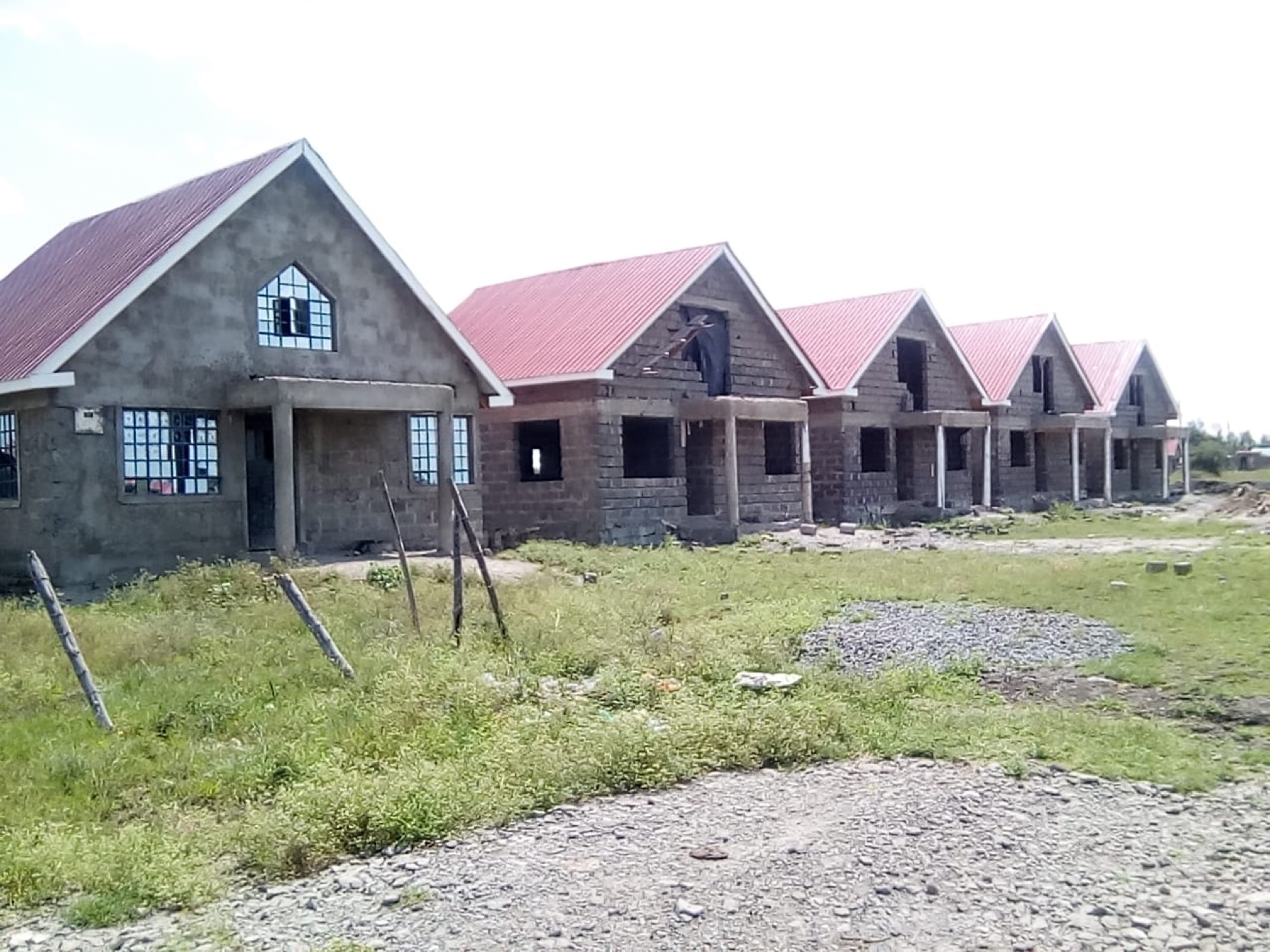
Above are the first five houses, almost ready for the tenants. The sixth (above, right) is underway.
The past few months have seen lots of activity on the site, with periods of inactivity when power to the site remained unconnected despite having been paid for some months earlier. This caused important delays, partly because as the houses came nearer to completion some design changes were made and some tasks were rescheduled.
The most significant changes were to the windows, doors and staircases. The first house to be built had a wooden staircase and the plan was also to have wood window frames and doors. It was decided that a more durable, and more environmentally friendly option would be to use metal doors and window frames. This would avoid the use if imported wood and would be easier and cheaper to maintain.
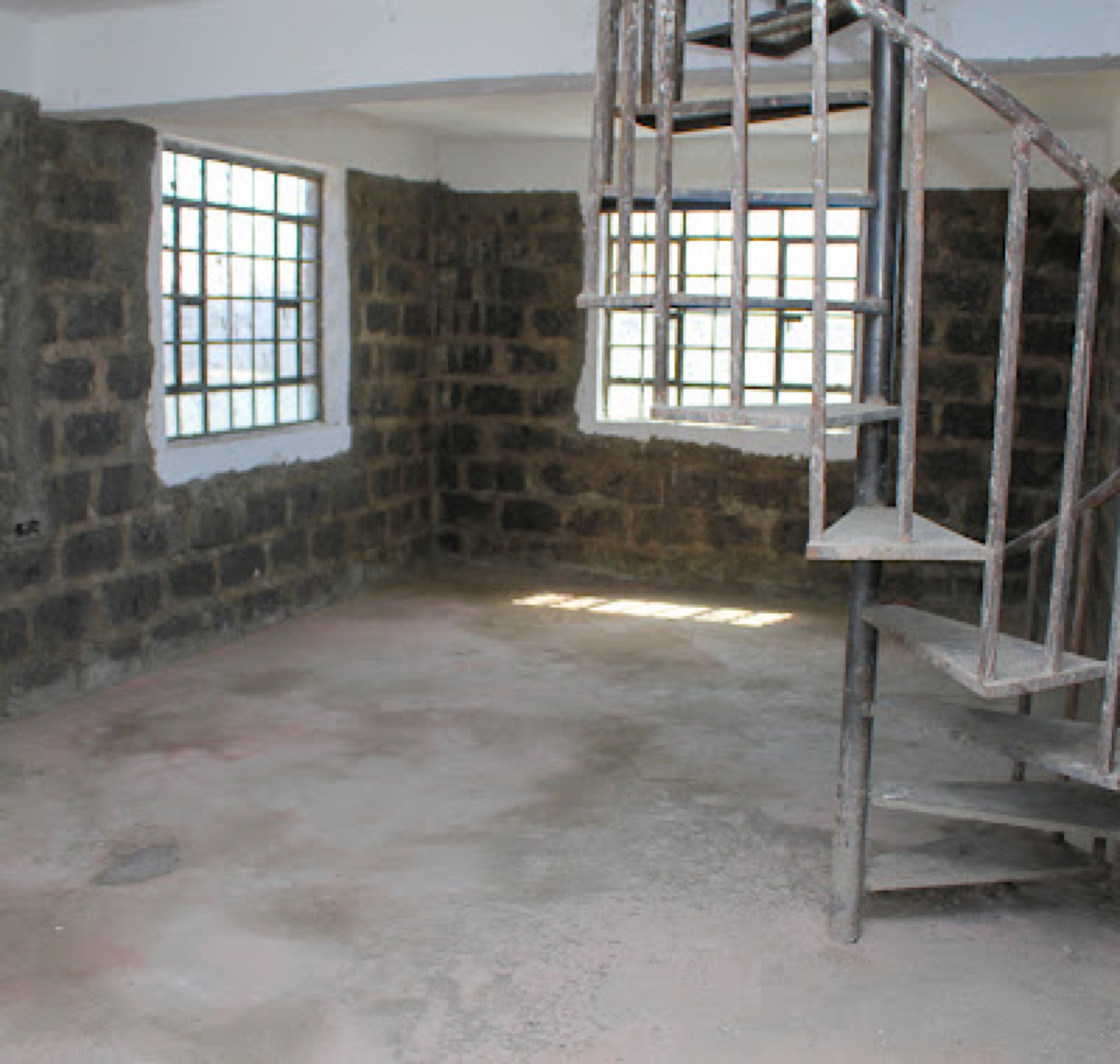
On top of that, building the wooden stairs showed a larger loss of floor space at both ground and attic level than had been visualised. it was decided to install a metal spiral staircase for the remaining four houses. The staircase has metal protection railings, as do all the balconies.
Below, the downstairs room, showing the staircase. There is also a small bedroom and the family shower room/WC at this level.
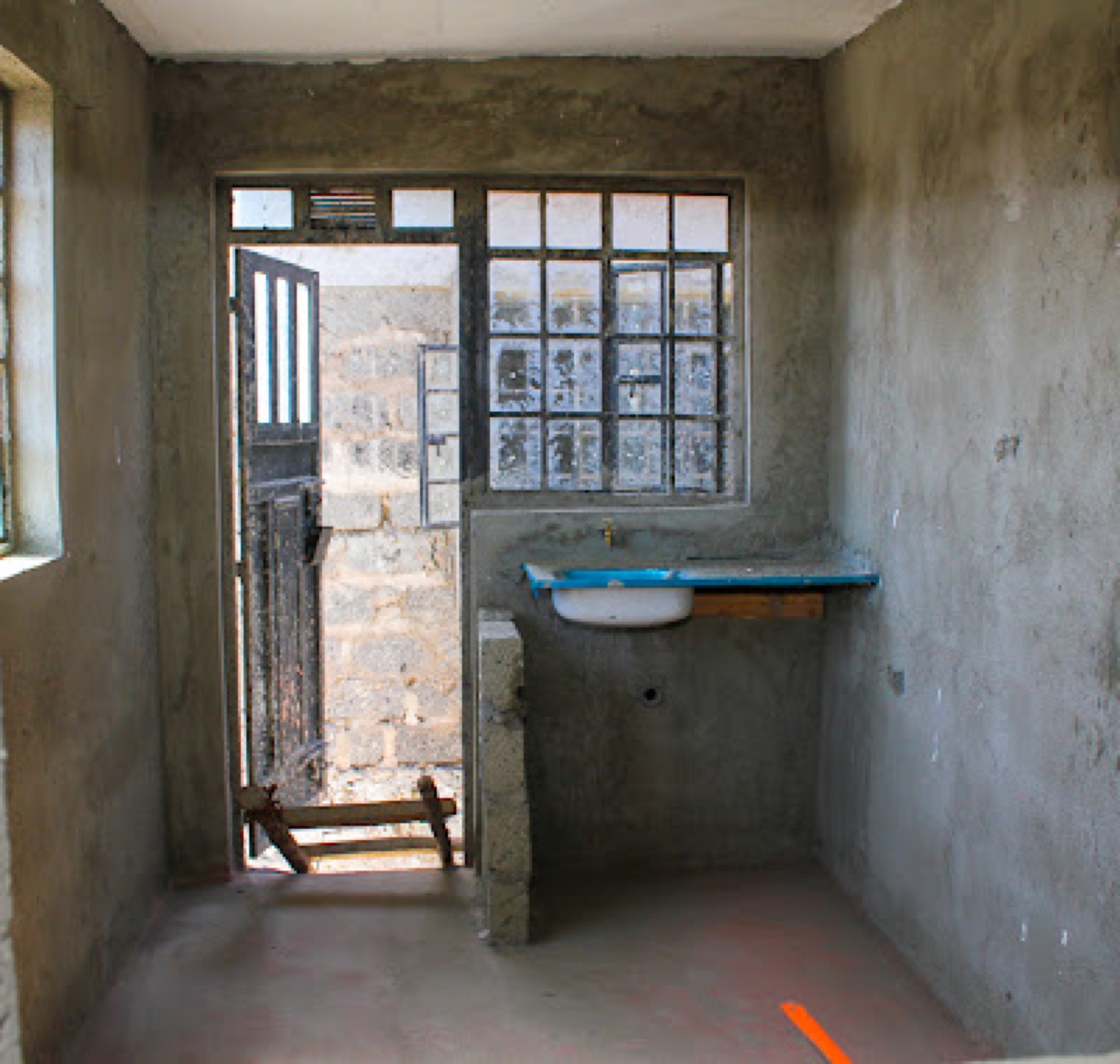
Above, the kitchen
Learning from experience
House one did not have a balcony on top of the porch but once that house was built it was decided for the next houses to use the top of the porch as a balcony as was in the original plan, with a door from the attic room level for access. That has been done, and the feature will be retro-fitted for house one.
For house one, the metal doors and windows were made off-site. It was found to be much cheaper to bring the metal worker to the site and to have the help of MWAMKO members where appropriate. Without electricity at the site,none of this was possible. Finally in early December 2021 the connection was made and work rapidly progressed.
Another change, for a very different reason, was not to install the solar panels until they can be bought in bulk at reduced prices when more houses are ready. House six is going well and the funds are now available to build house seven, thanks to another very generous donor. Solar panels may be not so far away.
A CHG inspection suggested that the kitchen and bathroom sinks were too small so they have been changed.
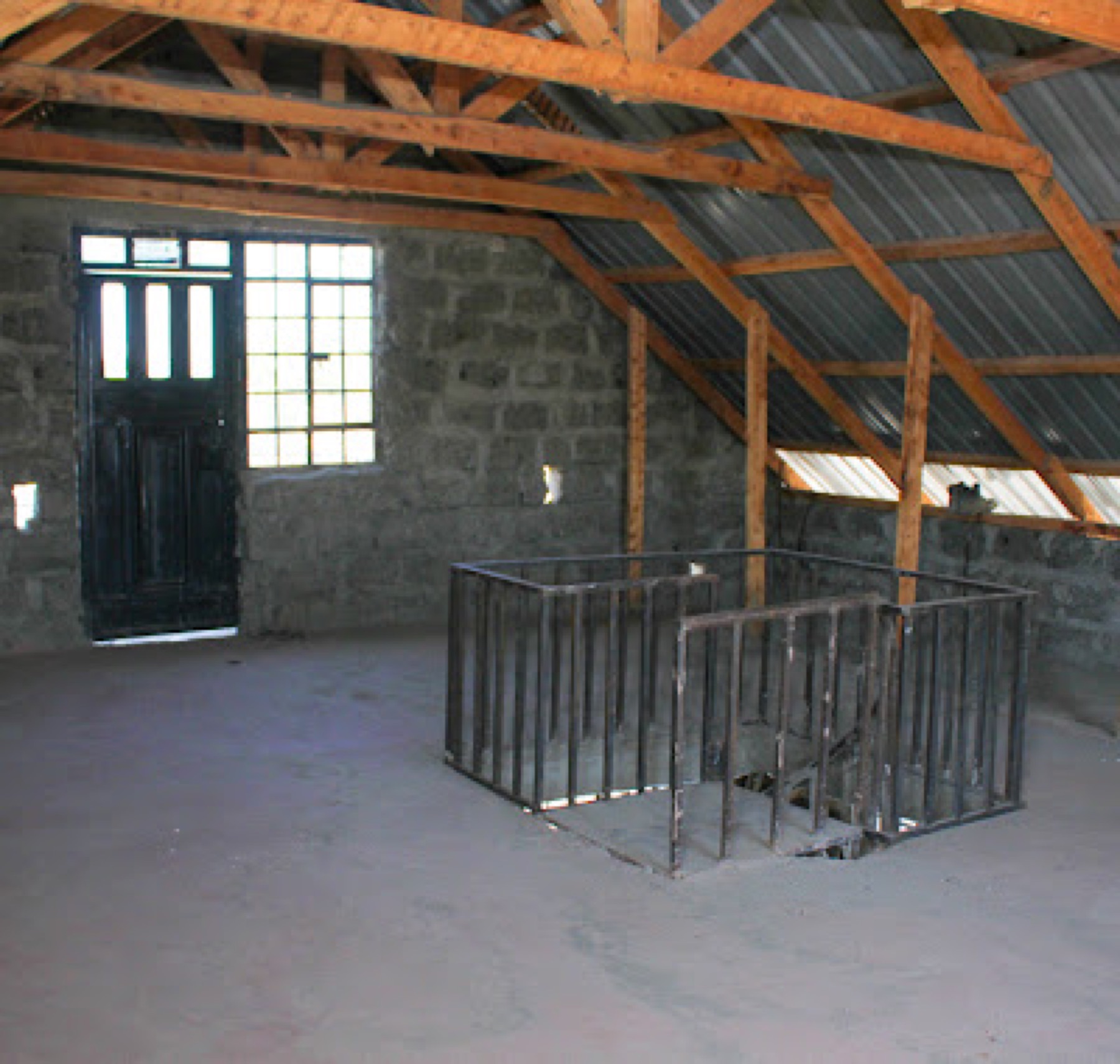
Finally, the intended division of the large attic space into two bedrooms has been deliberately postponed so that the families allocated to the houses could divide that space according to the individual needs of each family. MWAMKO members would do the internal masonry work once that was decided. Four of the five families have now completed the change. The fifth is still working out the most appropriate plan for the family.
Above, the attic space, facing the balcony door. The balcony can serve as a small space for relaxing or chatting, or as a place to do homework. Lack of a quiet space is a real problem for young people with schoolwork to do. For large families the pressures are greater.
Allocating houses to families
As the first five houses neared completion CHGK’s allocation committee set the agreed process into action, having consulted with the MWAMKO families as to appropriate criteria for selecting the first tenants and they developed a points system agreed by the CHGK Board. Applications from MWAMKO members using a questionnaire about their circumstances and involvement in the project.
The responses were assessed according to agreed and transparent criteria and their weightings were known by all the families.
Most weighting was given to evident need - economic and other vulnerability. Active involvement in self-build was also important, as well as other forms of contribution to the group, such as involvement in meetings and financial contributions to group funds.
Eight applications were considered by the panel and their five recommendations were approved by the CHG Board. Those not chosen had a right of appeal. The process worked well, also revealing the community spirit of MWAMKO families. No-one appealed and the relatively low number of applications was because many people chose not to apply, aware that others were in greater need than they were. The merit of MWAMKO families being involved in setting clear criteria and their weightings was evident.
A home to go to In mid-March, a ballot - drawing lots - was held at the site with the families present, ensuring random and fair allocation of specific houses to the five families. Here are some photos and brief biographies so that you can see the life-changing difference for the families made possible by donors to this innovative training and self-build project.
ALMOST HOME ......
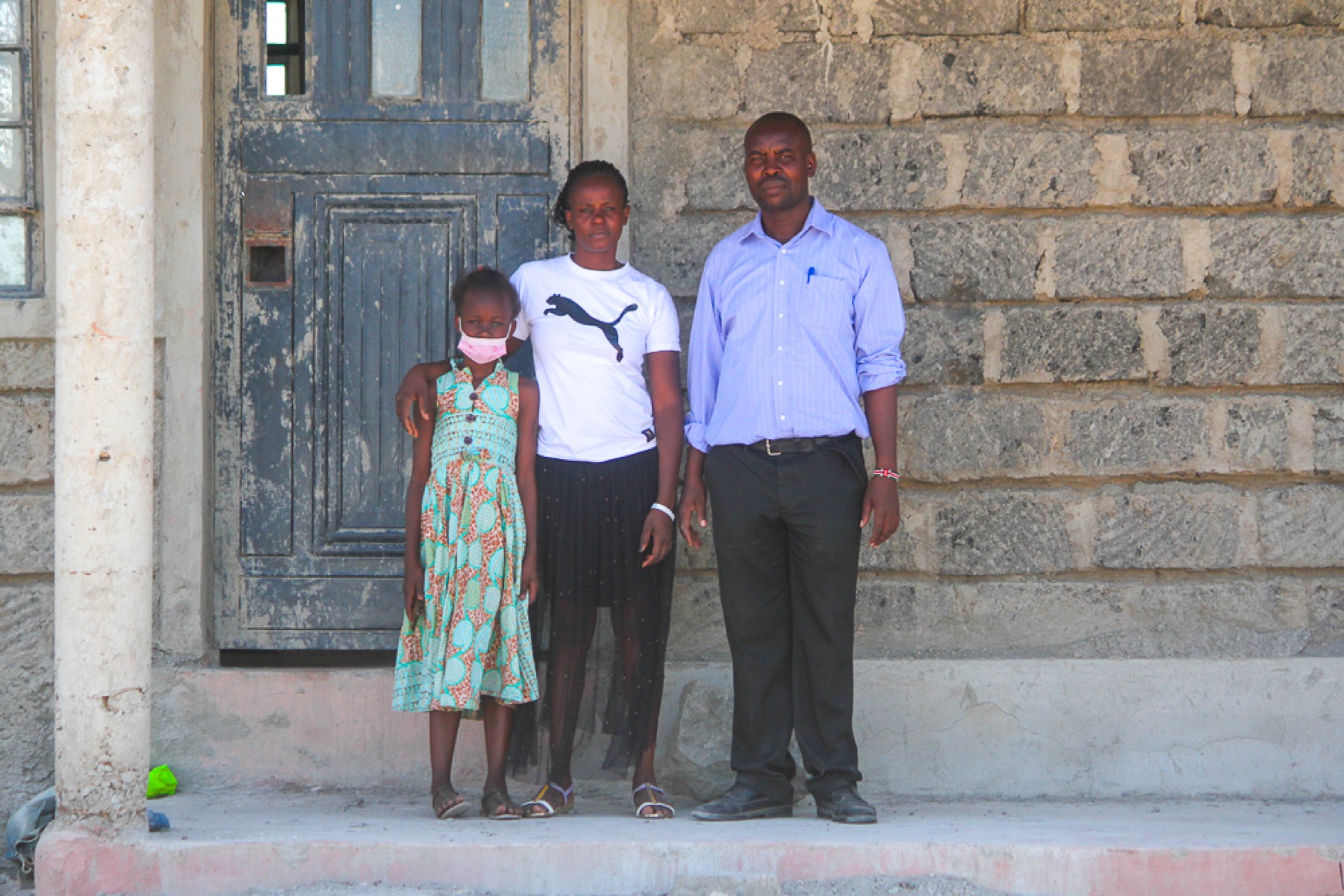
Tom was the first to draw the ballot and was allocated the first house to have been built. It is slightly different from the others but where possible it will be modified to reflect the changes in the other houses, including the balcony door and railings, giving more usable space. He works in community development with intermittent short-term contracts - his income is small and unreliable. Each day his wife goes out to work as a street vendor from 3-7 pm, selling dried sardines from Lake Victoria. The eldest two of their six children are studying at university, thanks to grants from the Government.
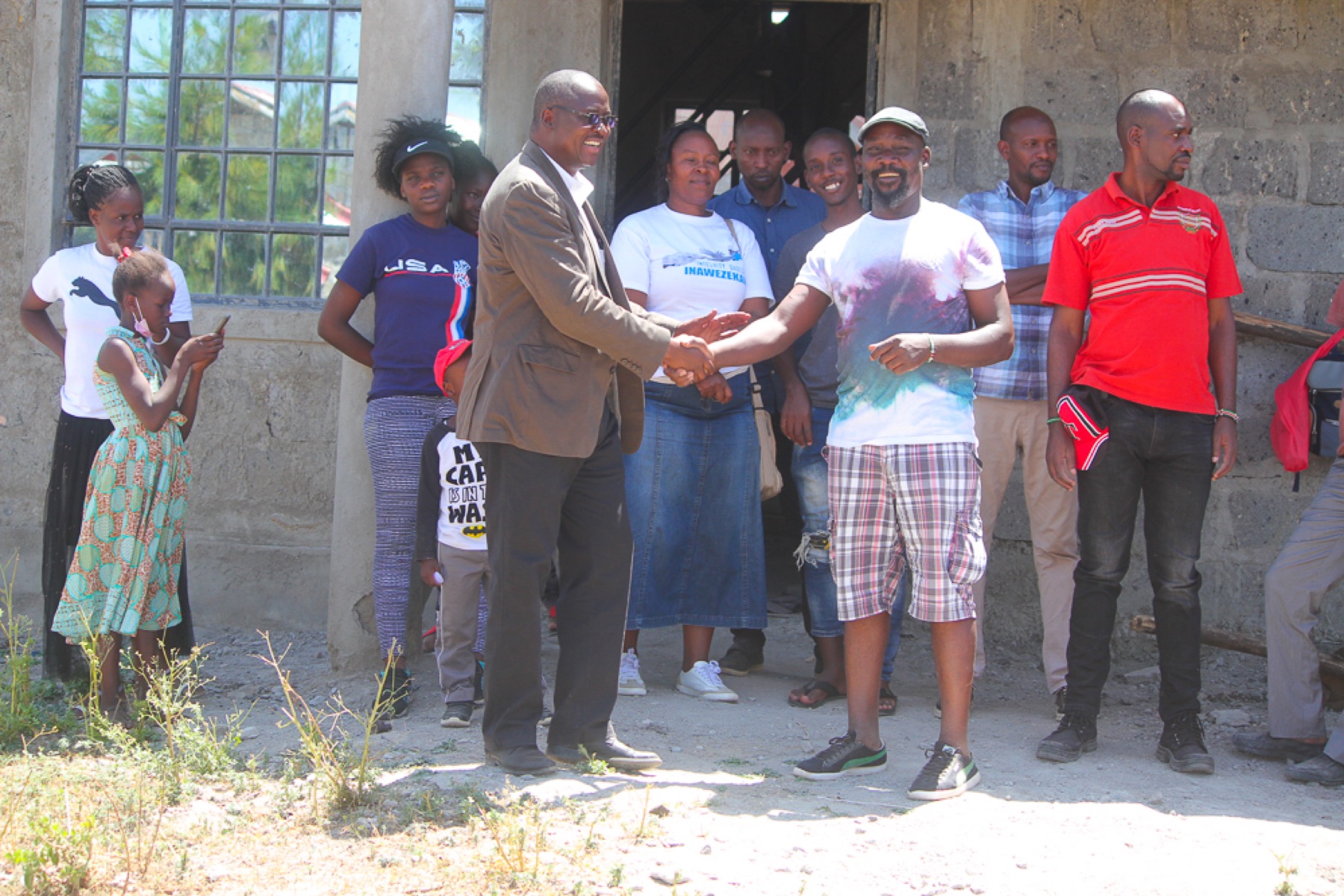
Below, CHG Chairman Harrison Kwach congratulates Tom and his family
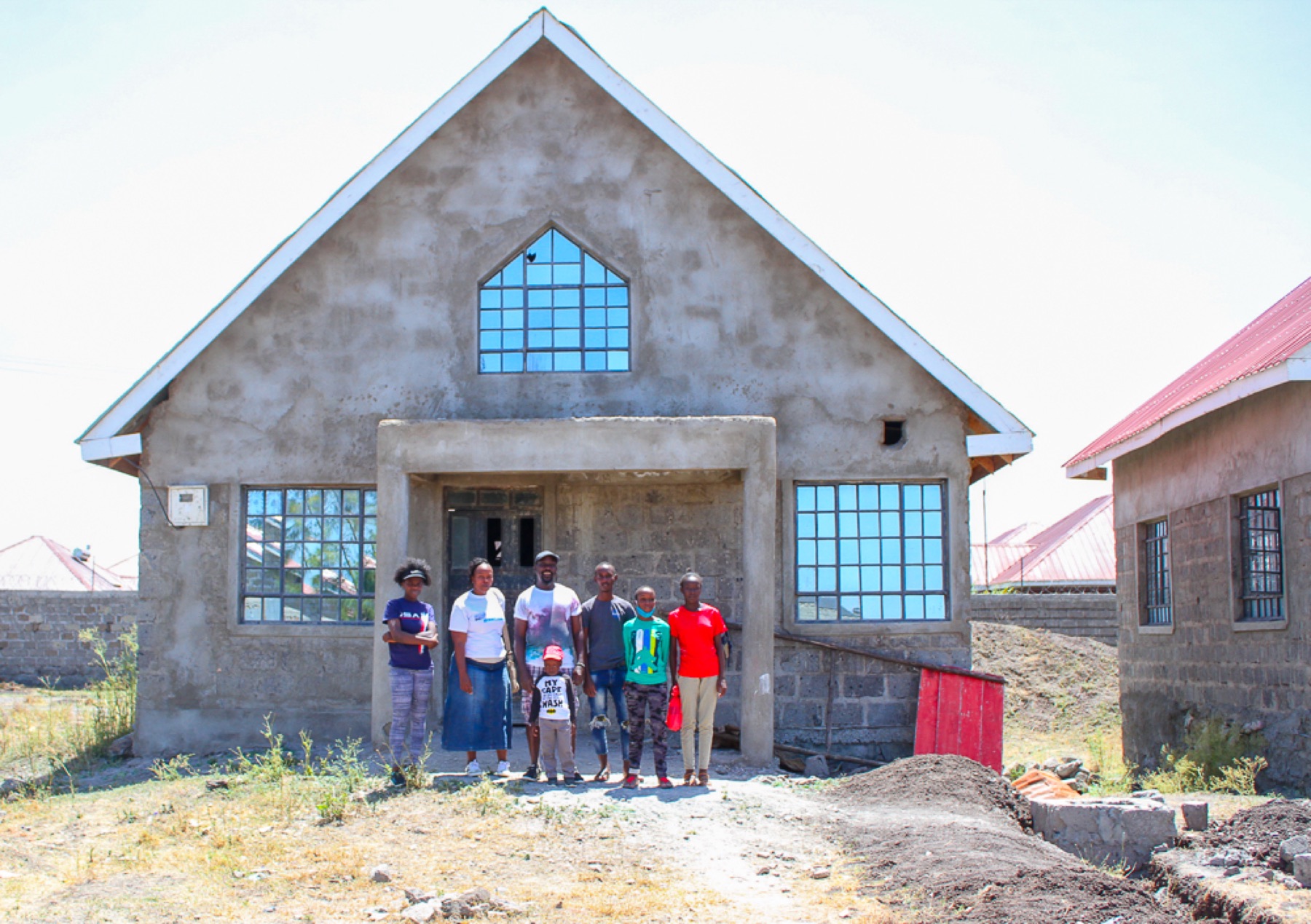
On the threshold of their new home (below)
Maureen (below) is the single parent of three children, having parted from her husband. Her income comes from selling used clothes. She goes early in the morning to the matumba (street market for second-hand clothes) and buys items she hopes she can then sell on the street during the day.
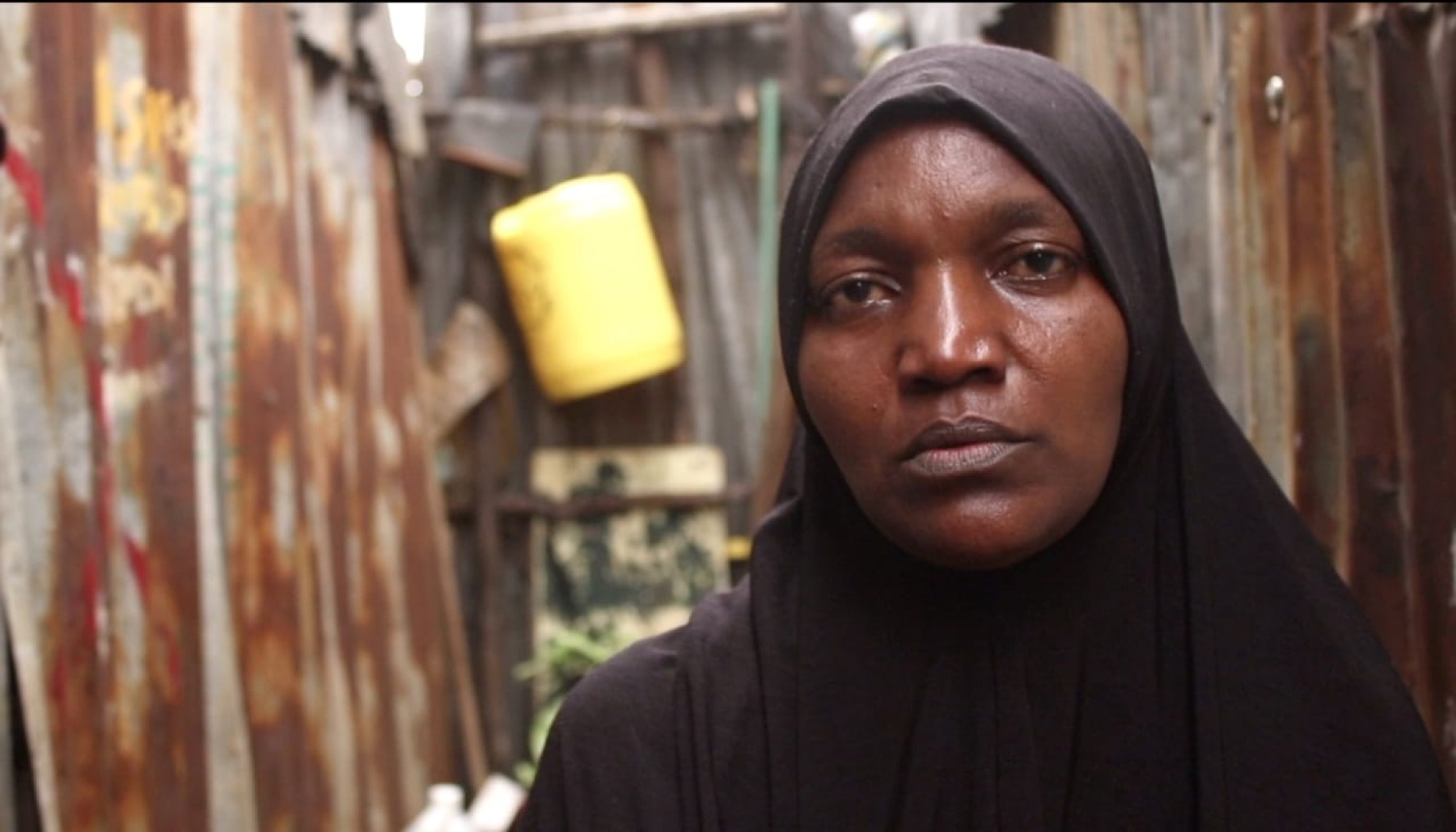
Martha (seen below, outside her home in Korogocho) could not get to the ballot on site, caught in a 3-hour traffic jam as were several other MWAMKO members. A friend drew the ballot on her behalf. She has been a very active member of the project for a long time. A widow living with her three daughters and a granddaughter, Martha works hard to earn her small income as a street vendor of perfumes, women’s shoes and new clothes from China. She carries all these with her when she works. Her eldest daughter is a cleaner in a clinic, her other two daughters have recently finished school.
Martha’s son Magid was a MWAMKO building trainee, qualified in painting and able to help the family income by taking small painting jobs locally. He was a very active worker in the self-build programme from the outset, becoming a proficient concrete mixer in the time before there was anything on-site to be painted.. He helped and supported his mother in many ways and was widely very popular. Tragically, he died in a boda boda (motorbike-taxi) accident last year, while trying to help his family with occasional delivery work - a boda boda can be rented by the day by young delivery drivers..
You can meet two of Martha's daughters and also Maureen by watching the video below, in which they speak about life in Korogocho and their hopes for the future in their new homes.
Martha Wangui’s daughters and Maureen. Two of Martha’s daughters and Maureen speak about life in Korogocho and their hopes for the future in their new homes.
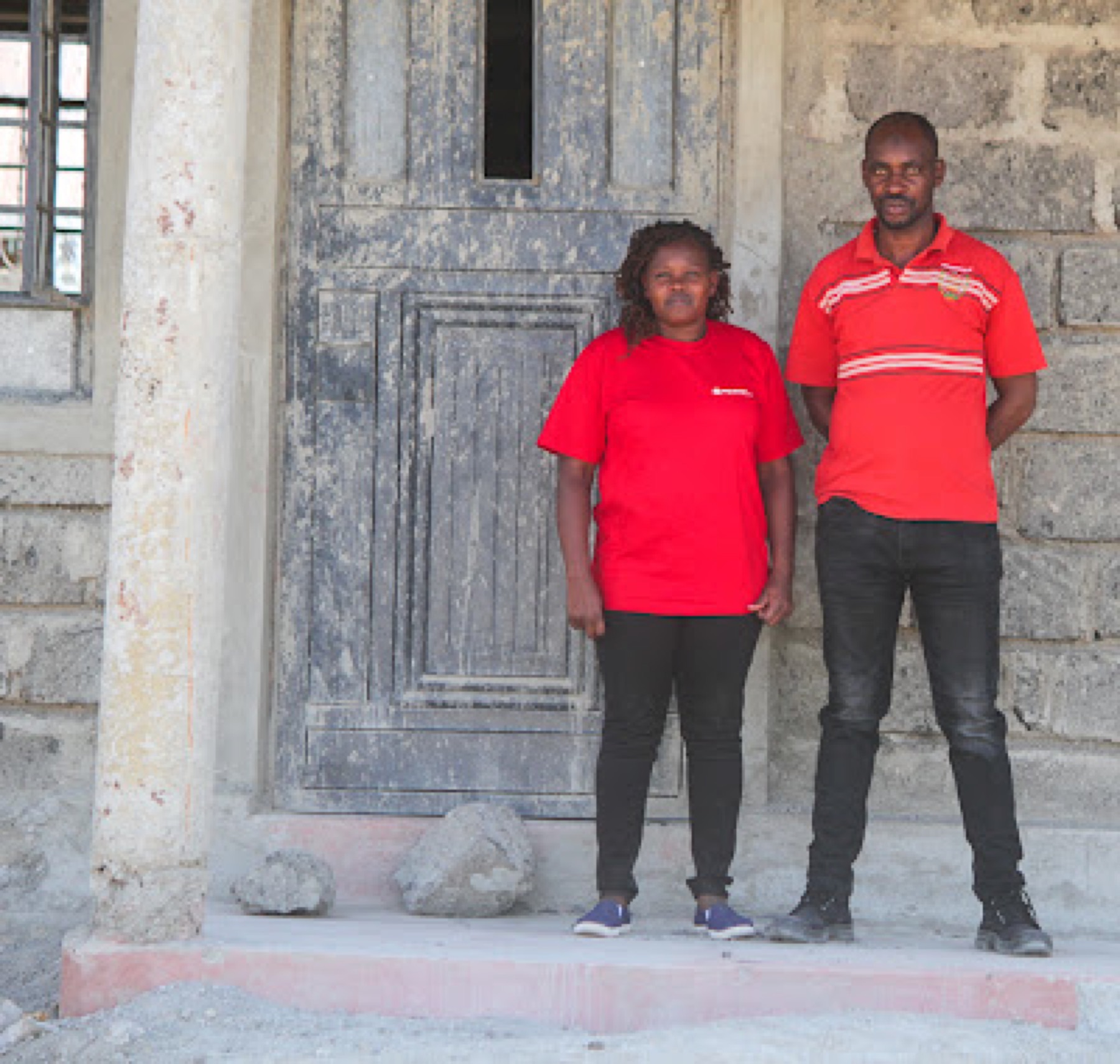
Sarah and Oduor, seen below outside the house allocated to them in the ballot,
Oduor does some part-time tutoring in an informal school in the slum for which he gets very little pay. With only two state primary schools in Korogocho, these unregistered schools have sprung up for children without school places. Oduor’s wife Sarah has casual work as a maid, doing laundry or washing dishes. They have four children, one with epilepsy. In addition, they are bringing up a further four on behalf of two sisters and a sister-in-law who live up-country, all them even poorer than Sarah and Oduor This sort of arrangement with extended family in need is very normal.
Despite their difficulties and vulnerability, Oduor makes a wonderful contribution to the project in many ways, including active self-build participation, involvement in MWAMKO meetings and maintaining his financial contributions to MWAMKO despite his low income.
See the video below for a Sarah's thoughts on the life this family of ten in Korogocho.and their delight at the move to the new house in Kamulu
Sarah. Sarah’s thoughts on life for a family of ten in Korogocho and their delight at the move to the new house in Kamulu.
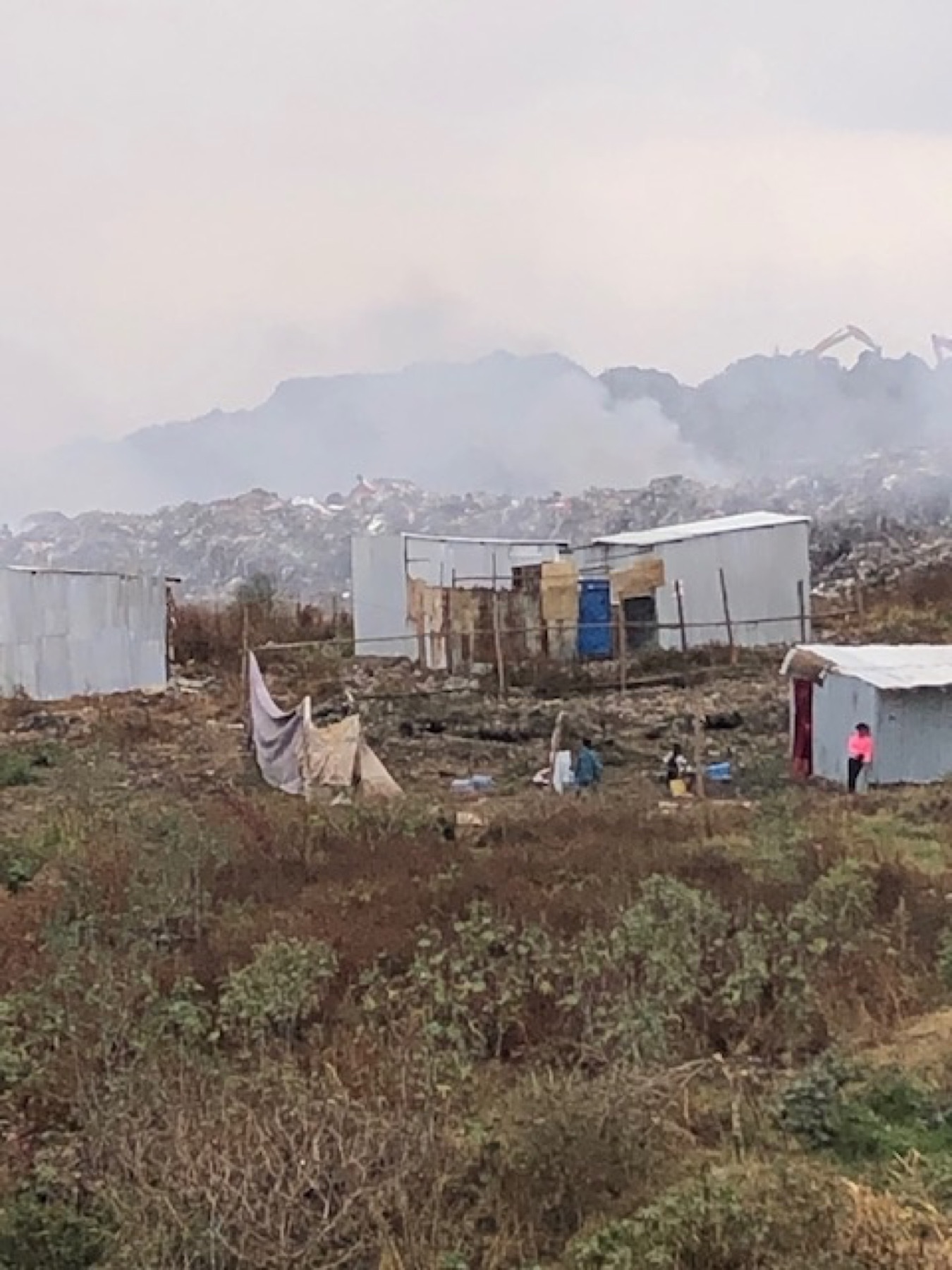
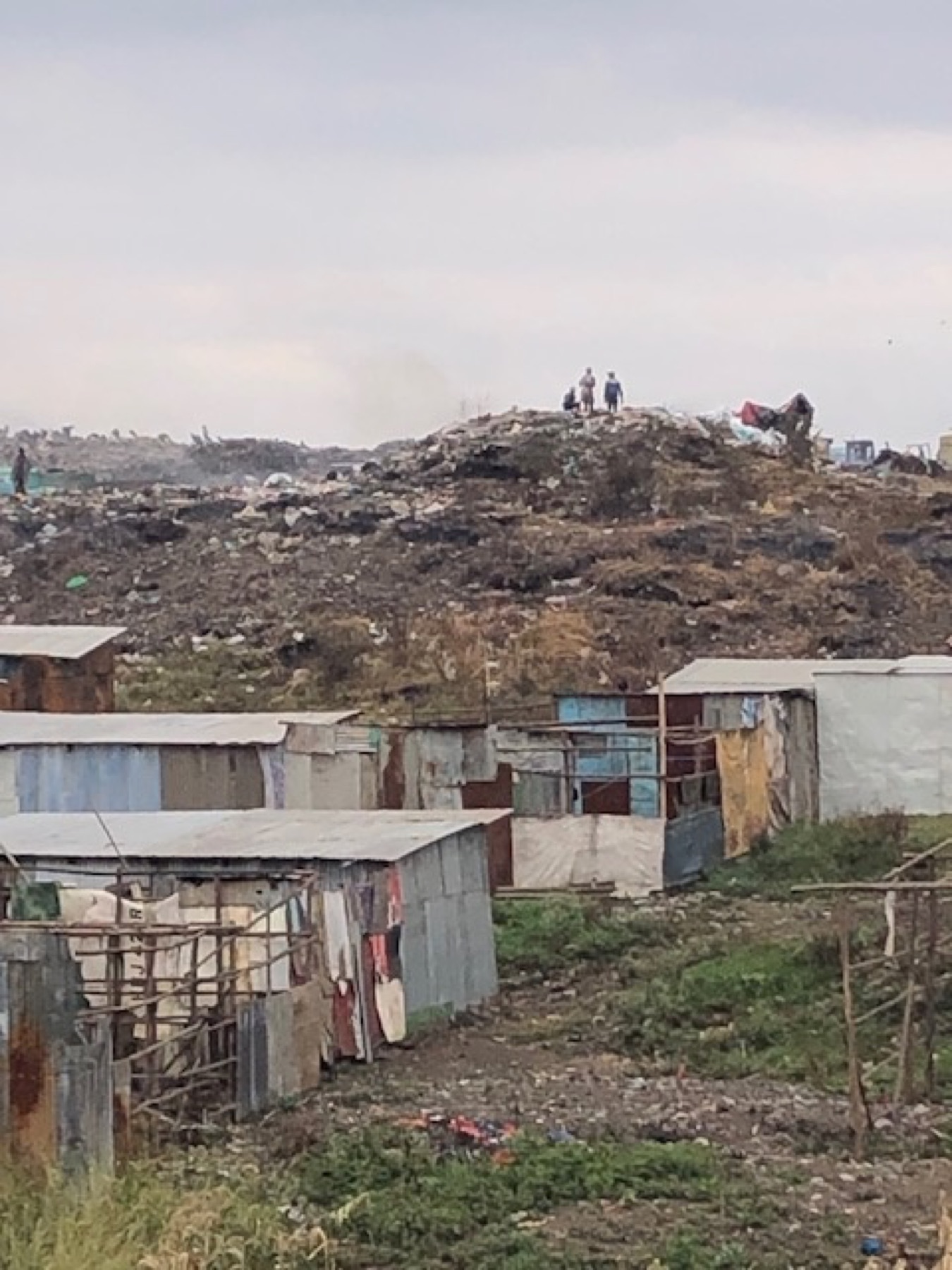
Above is the view of the dump, including the farthest 'hill' - actually part of the dump. These homes, including Joseph’s, are right on the edge of the dump site.
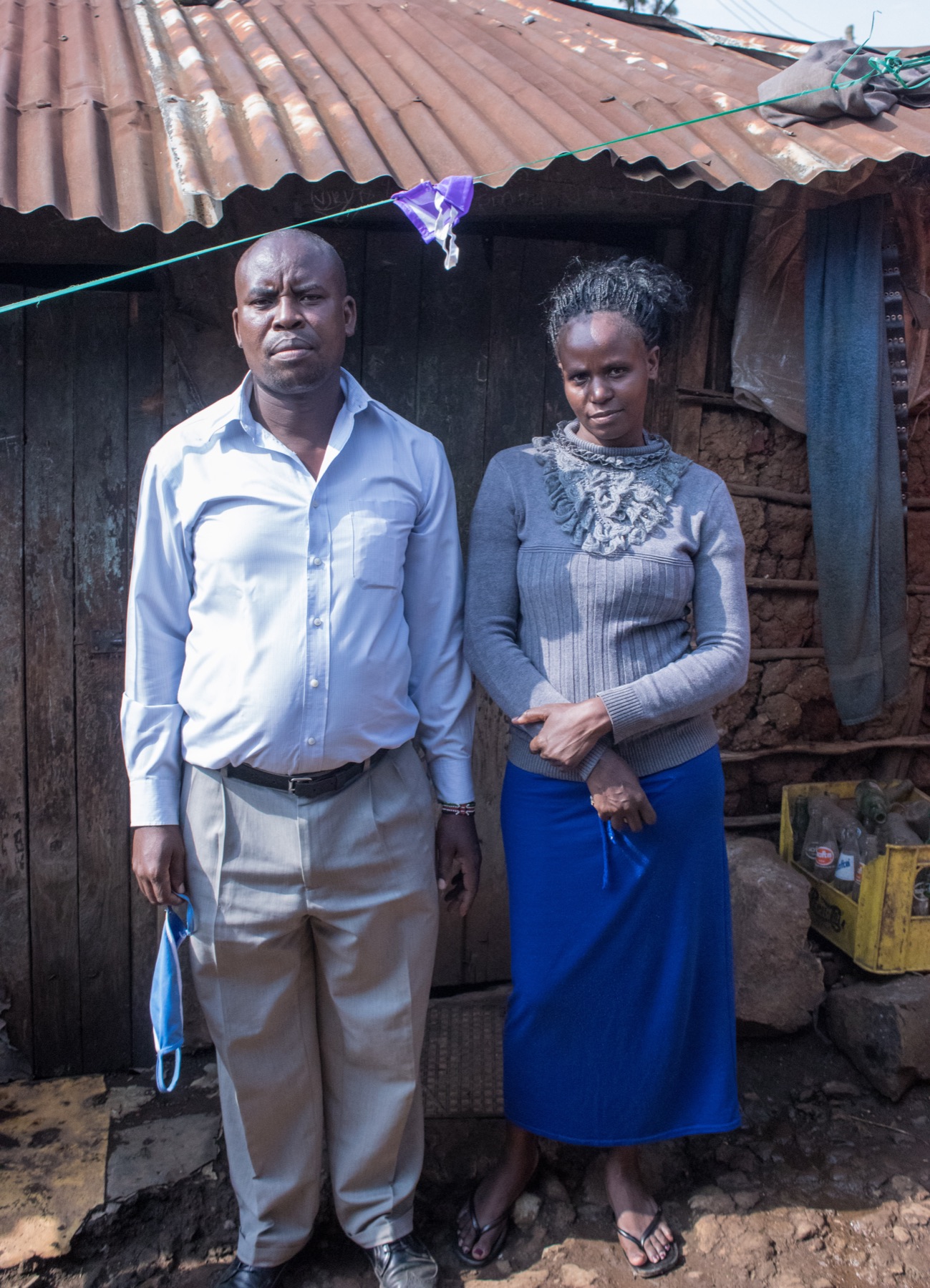
Joseph lives in one of the homes on the edge of the Municipal Dump with his wife and five children, in a 10 foot square tin shack, like those of the other MWAMKO members (see photo, below). He has lived there for twenty years.
In December 2021 he had to rent a second shack, having agreed to take in two of the children of his recently widowed sister.. His income comes from selling vegetables from a small kiosk. His wife sells roast maize on the street, cooked on her own grill.
Joseph is the Secretary-General of MWAMKO and has been a very active member of the group for many years.
Here, below, are Joseph and his wife outside their home in Korogocho
And here, below, they stand outside their new house with one of their children.
Joseph recorded a video, below) just before the move, in which he tells of their struggles and of their gratitude that they are part of this important project, looking forward to more houses being built for his neighbours.
Joseph Omondi, Secretary General of MWAMKO. Recorded just before the move, Joseph tells of the family’s struggles and their gratitude to be part of this project.Support the project
· 2 min read
So nearly there...
The decision to finish the first five houses together makes it possible to benefit from economies of scale.
All the first five houses are now roofed. The first house has all doors and windows, a staircase and most internal finishing. Now the other four houses are about to be secured with doors and windows and to have their staircases built.
Learning from the first house, the building and management team have now decided to manufacture all doors and windows on-site, This will reduce costs and provide a training opportunity. An experienced professional metalworker will train some of the MWAMKO volunteers in making them and they will work together. This work will begin as soon as the electricity company connects the site to the supply. The staircases are to be made by carpenters who were trained early on in the project, again with experienced supervision. The important role of the project in advancing the skills and life opportunities of unemployed young people continues.
The project actively seeks green and sustainable solutions in every way possible. After the windows and doors are installed the next task will be to fit the solar panels on the roofs and also the water-harvesting gutters and tanks, Other roof work will be to fit a chimney to each house..
Before the first five families can move in there is still much work to do - including internal fitting-out, connecting the electrical and plumbing systems already installed. We are hoping that we shall raise funds to install an onsite sewage treatment plant with re-usable (not drinkable) treated water but it is expensive and unlikely to be possible very soon. The cost is roughly equivalent to building three more houses. The first work on the site, in 2019, was to build a septic tank. That will have to be used if we are to see families move to the new homes in the near future. If and when the funds become available the existing septic tank will be cleaned out and the treatment plant put in one chamber and the recycled water in the other. This would be a huge advantage to the families, spared the constant expense of emptying the septic tank as well having the benefit of a steady supply of recycled water.
And where are the families living now? A reminder of why our help matters
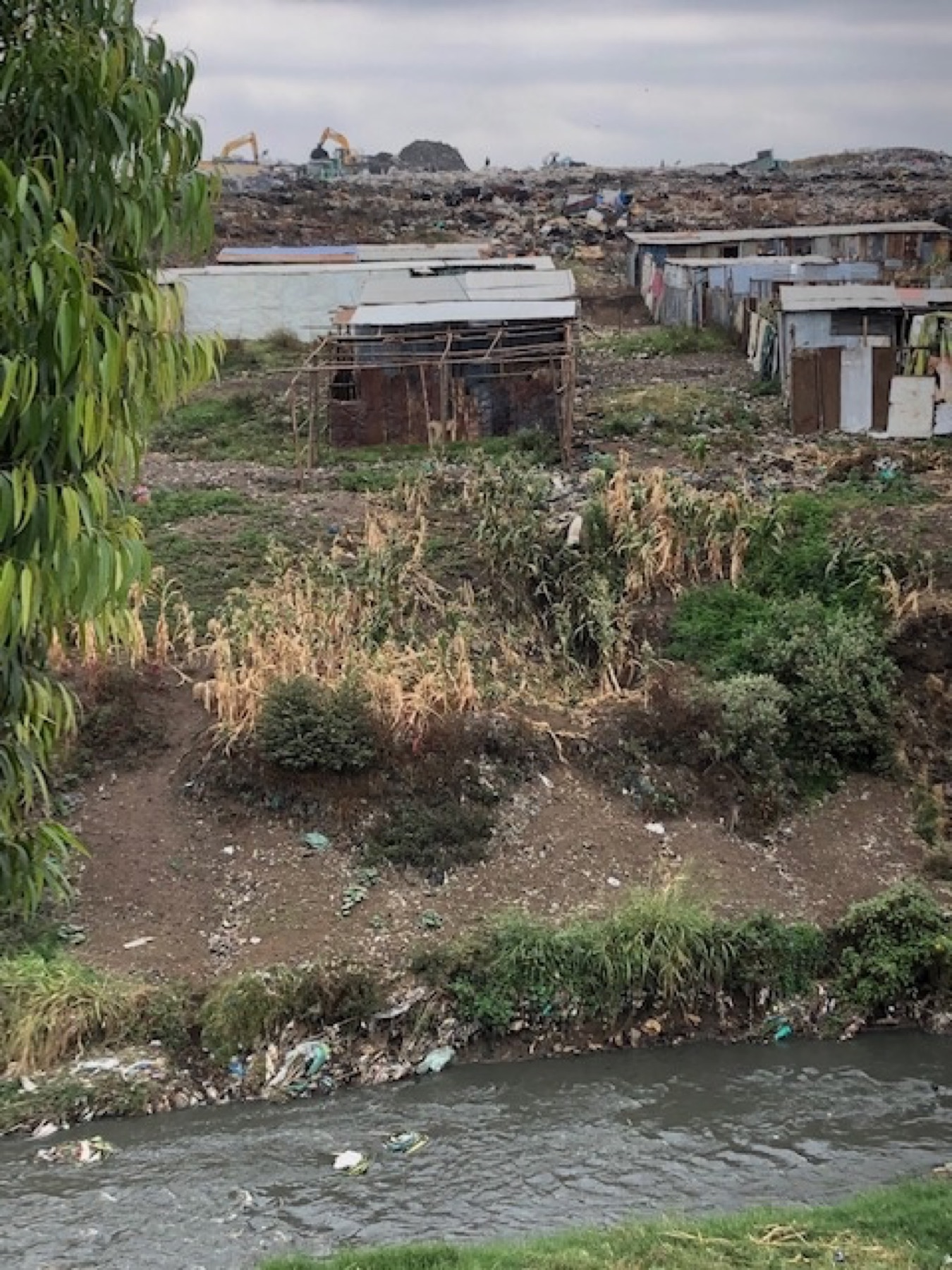
The 180 or so people in the MWAMKO families are still living in Korogocho, next to the toxic Nairobi Municipal Dump which has significant detrimental consequences for people's health. The shacks each family…
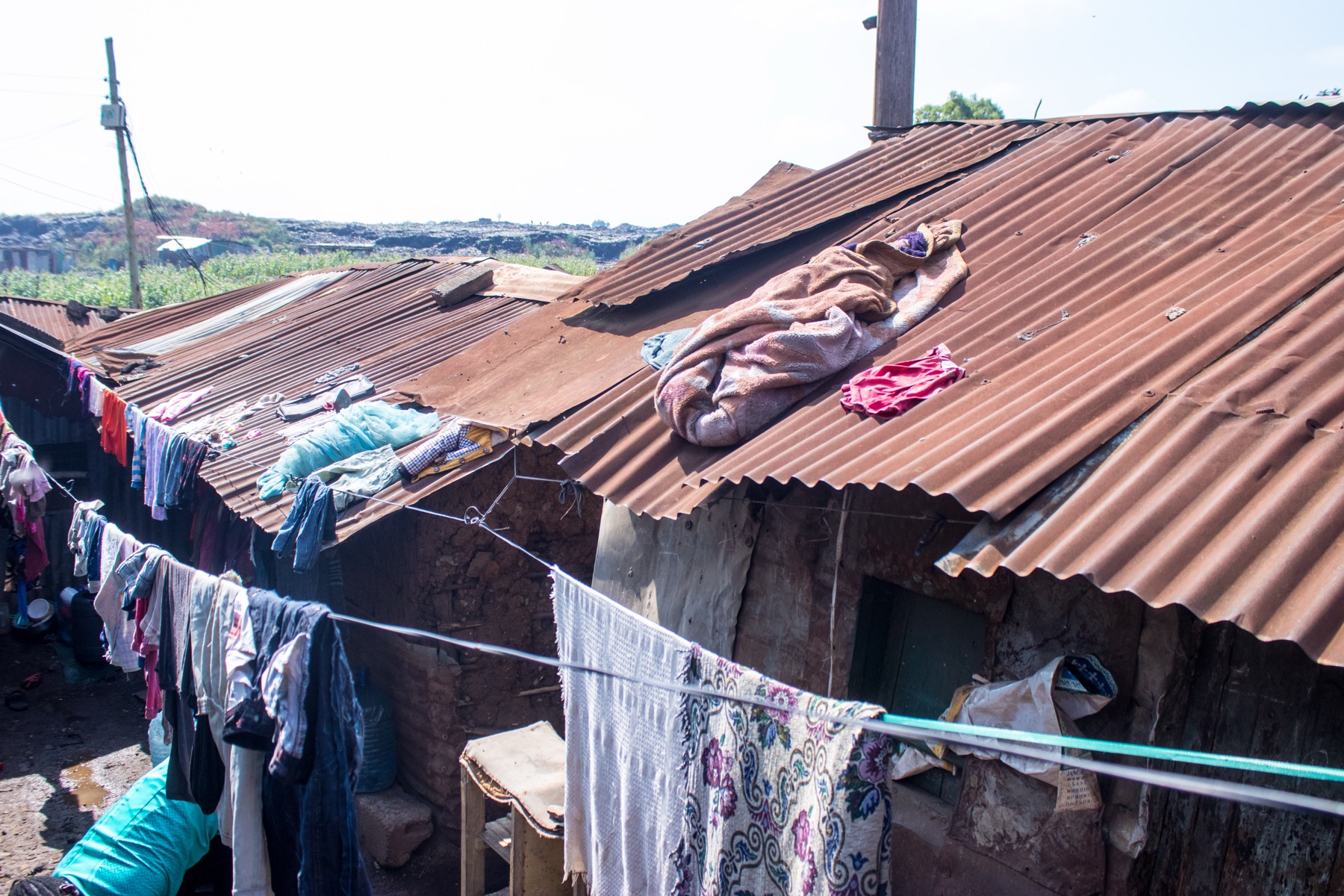
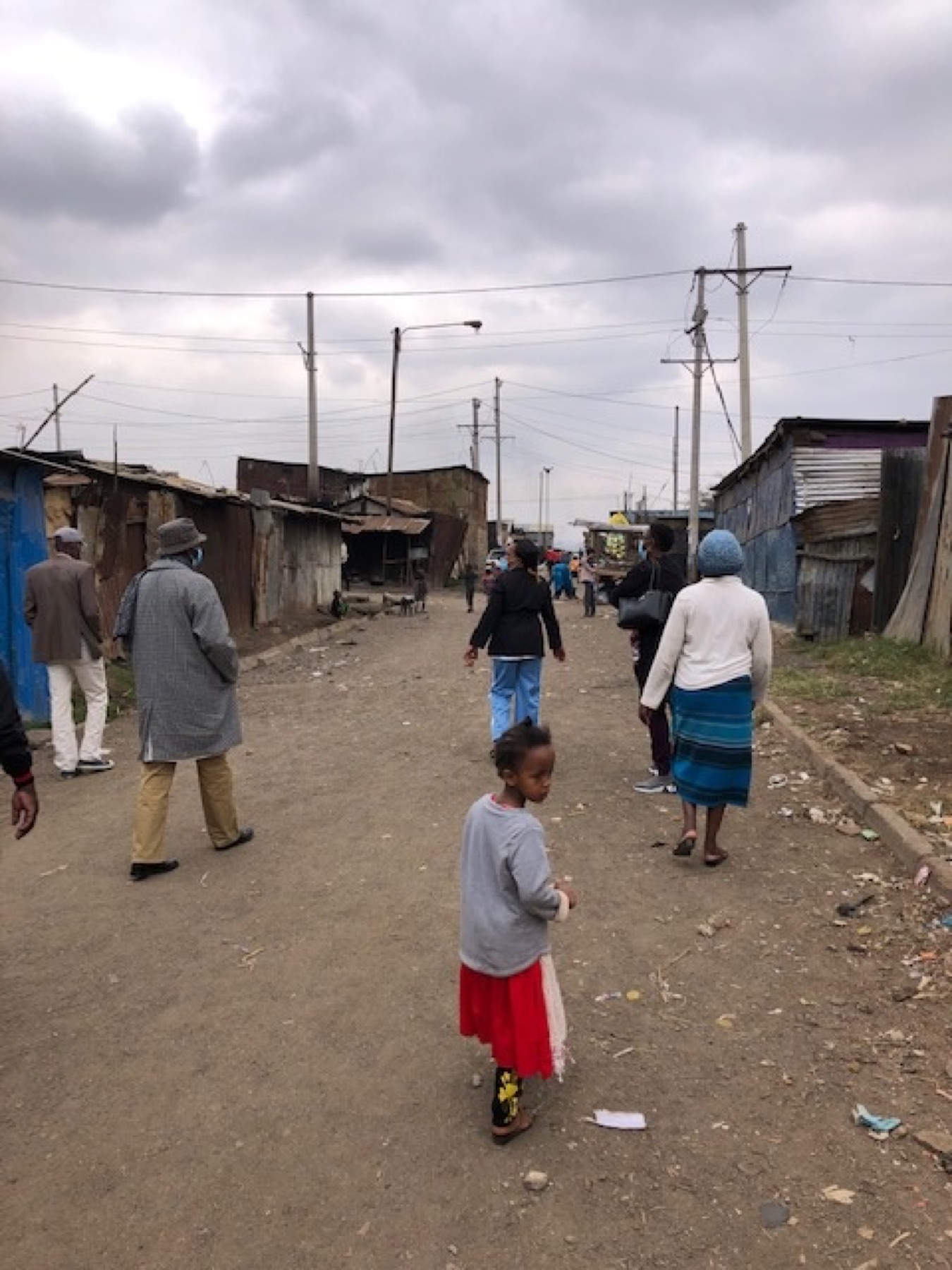
The 180 or so people in the MWAMKO families are still living in Korogocho, next to the toxic Nairobi Municipal Dump which has significant detrimental consequences for people's health. The shacks each family lives in (and has to pay rent for) are just a single room, normally 10 feet (3 metres) square, made of corrugated iron which is baking hot in hot weather and very cold when the temperature drops - Nairobi's altitude is 1800 metres and it can get very cold.
They are a close-knit community, very diverse in terms of tribe and religion. Most have been friends and neighbours for many years, holding together even through the inter-tribal post-election violence of 2007/2008. They are mostly deeply poor.
We have some new photographs of the Dump and of some MWAMKO members in Korogocho. They show how important it is for this project to succeed, There are about 200,000 people living in Korogocho and pressure for homes grows. For some time now people have been building ever closer to the dumpsite, even on to older sections of it. There are many fires, some deliberate to reduce the volume of waste, others from the spontaneous combustion of chemical and industrial materials. You can see the result above - though very often the smoke is intensely black. You can see the diggers dealing with the latest additions. The dump covers 30 acres.
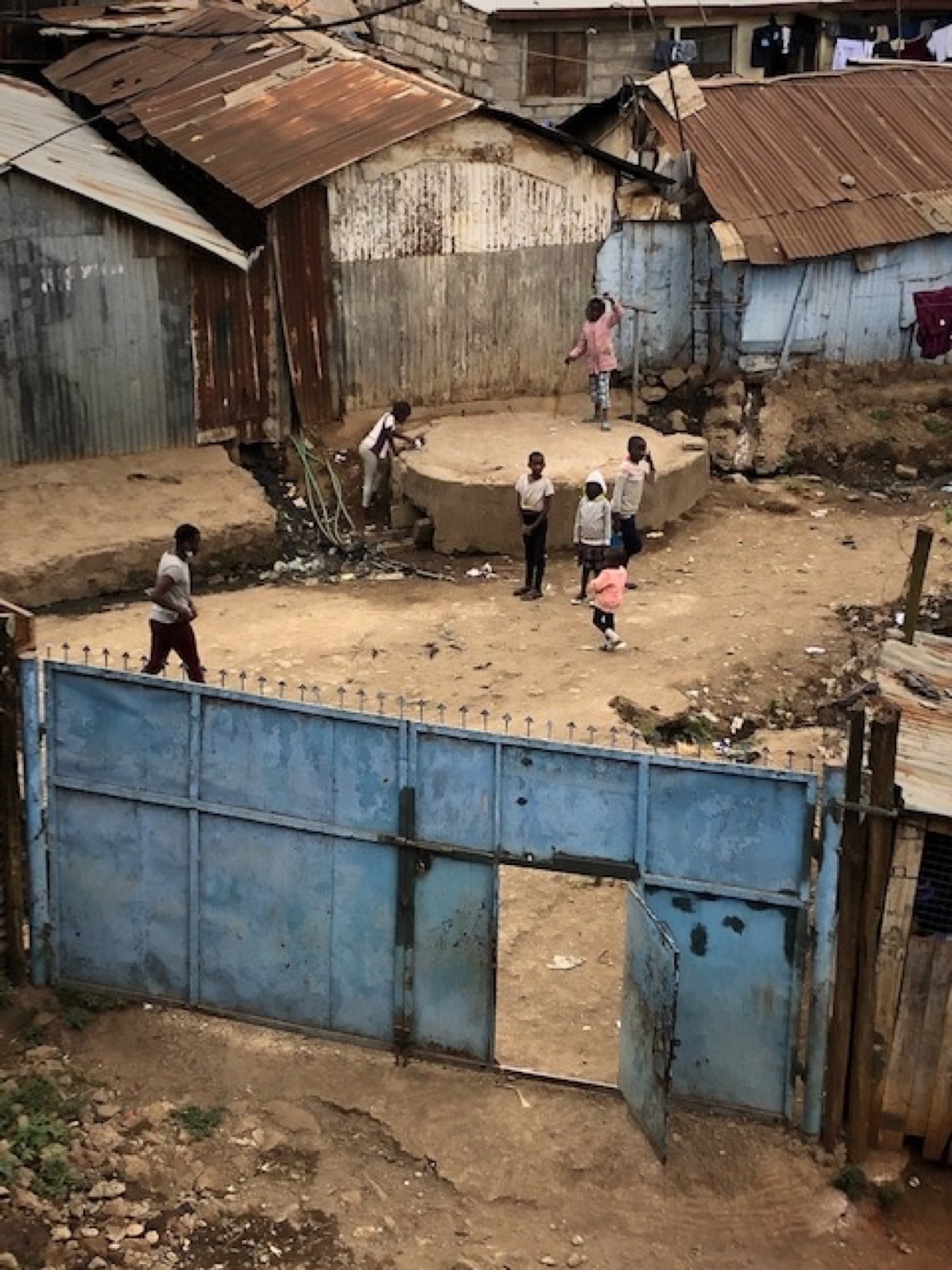
Children play wherever they can, as children do. The streets are dangerous, however, and the incidence of crime, violence and drug use in Korogocho is high.
These houses, above, are almost touching the dump. Some people make a living scavenging from the dump, as indeed one of the MWAMKO members used to do. It must be unpleasant work - also very dangerous. And see below...
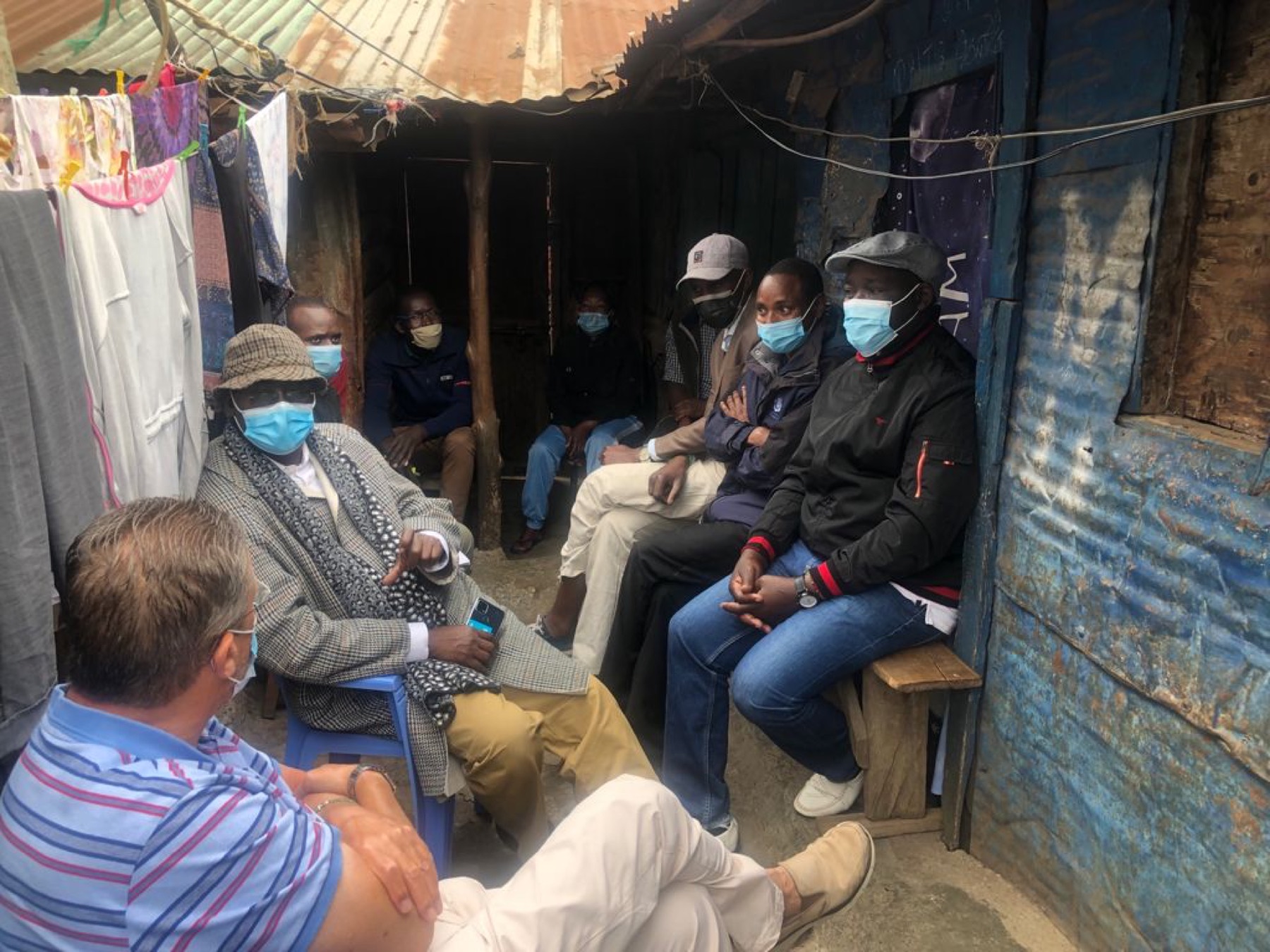
This is a planning meeting outside the houses of several MWAMKO members, with new CHT Trustee Jan Eijkemans (front left), CHG Chairman Harrison Kwach (second left), CHG Project manager Abdi Mohammed (second from right). The others are members of the MWAMKO committee.
CHT, CHG and MWAMKO are all registered - CHT in the UK with the Charity Commission since 2002, CHG in Kenya as a Community Based Organisation and MWAMKO in Kenya as a Mutual Help Group.
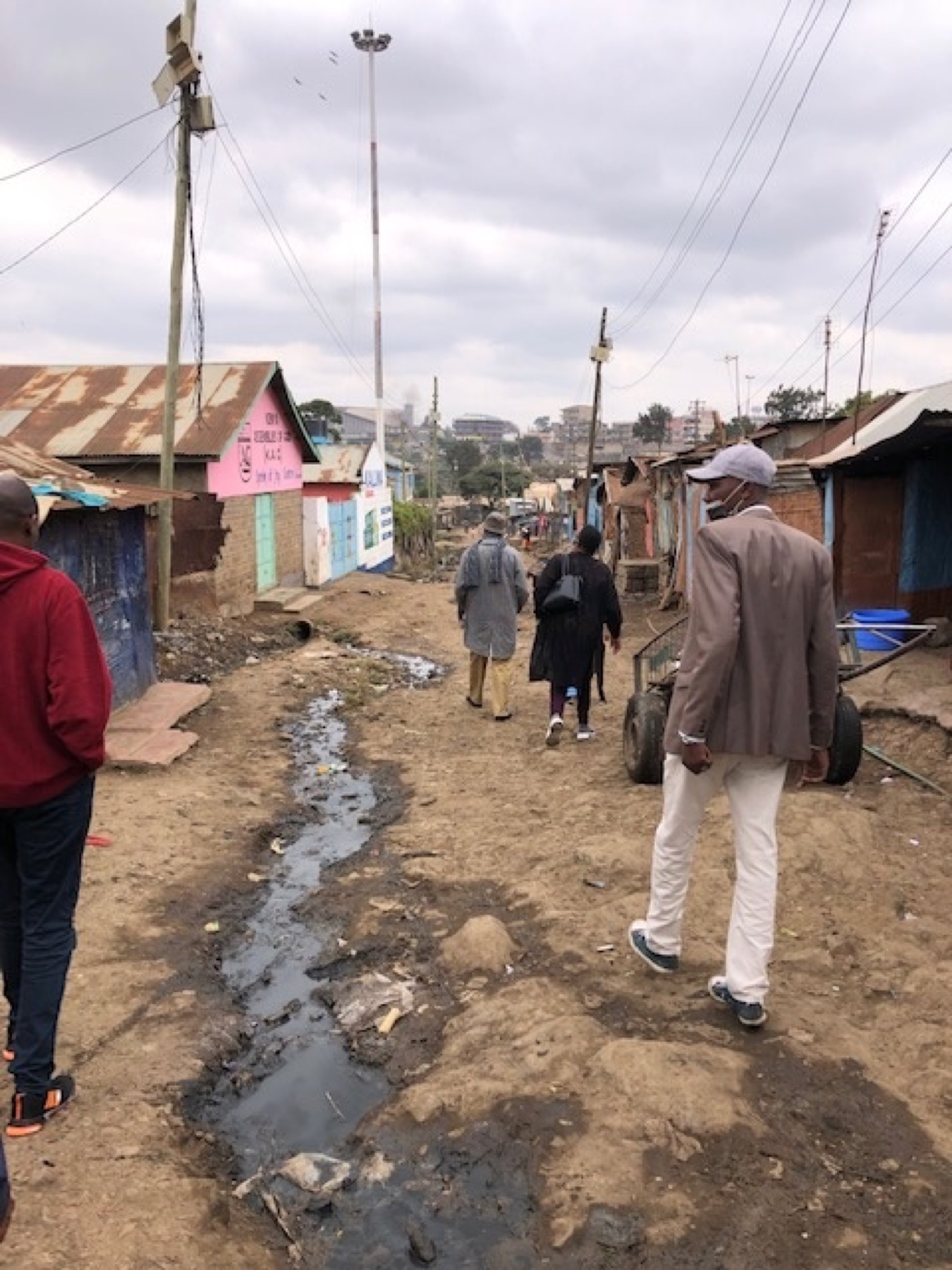
Below, two typical street scenes. There is no sanitation or drainage, which explains the run-off seen in the lower photo below.
Through April and into May 2021, despite a new Covid-19 Nairobi lockdown but observing all regulations, building work continued enthusiastically. When the land was bought in 2012, with considerable foresight…
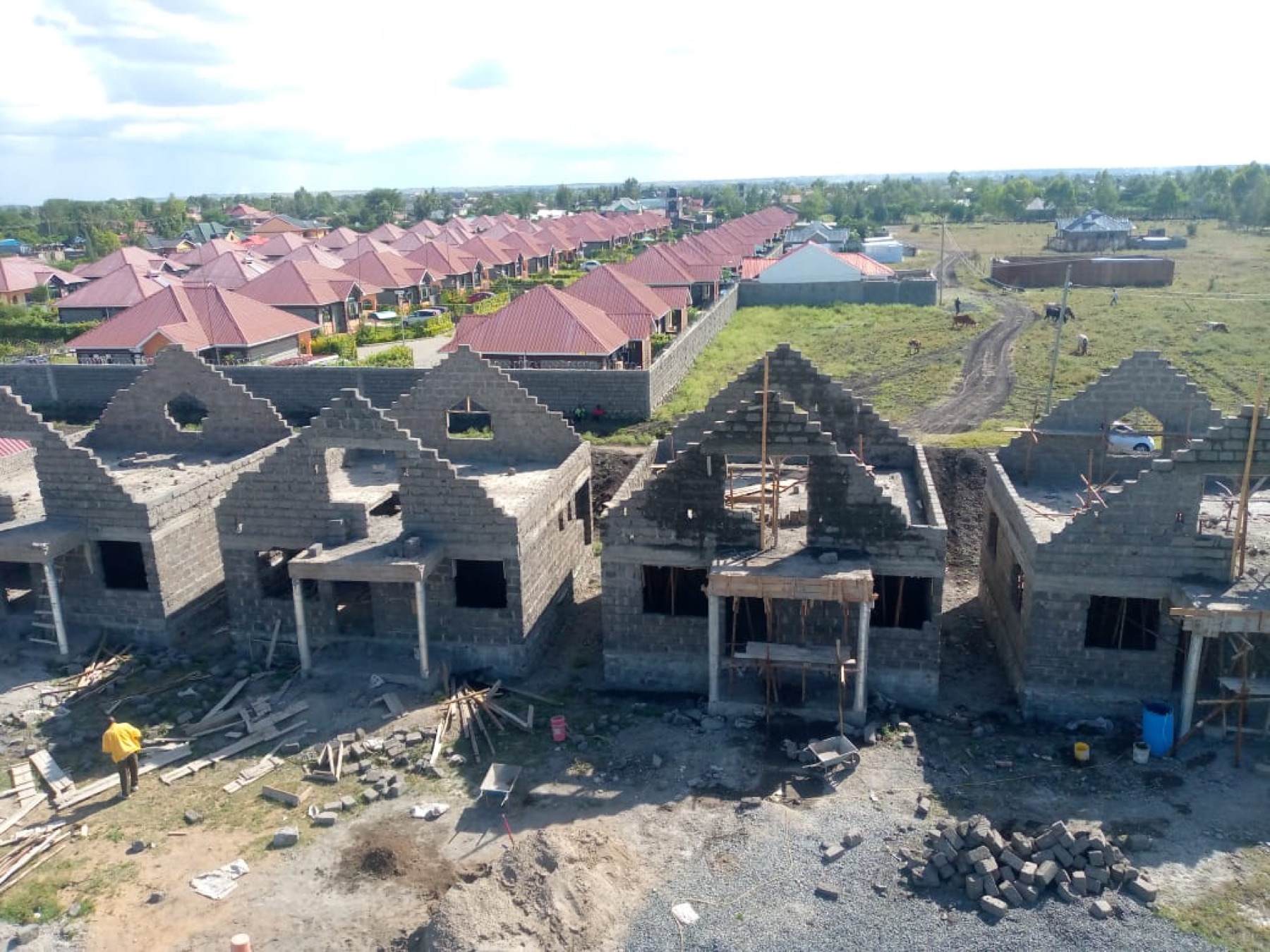
Aerial view of the houses taking shape. Footage of the houses rising at the Kamulu site.
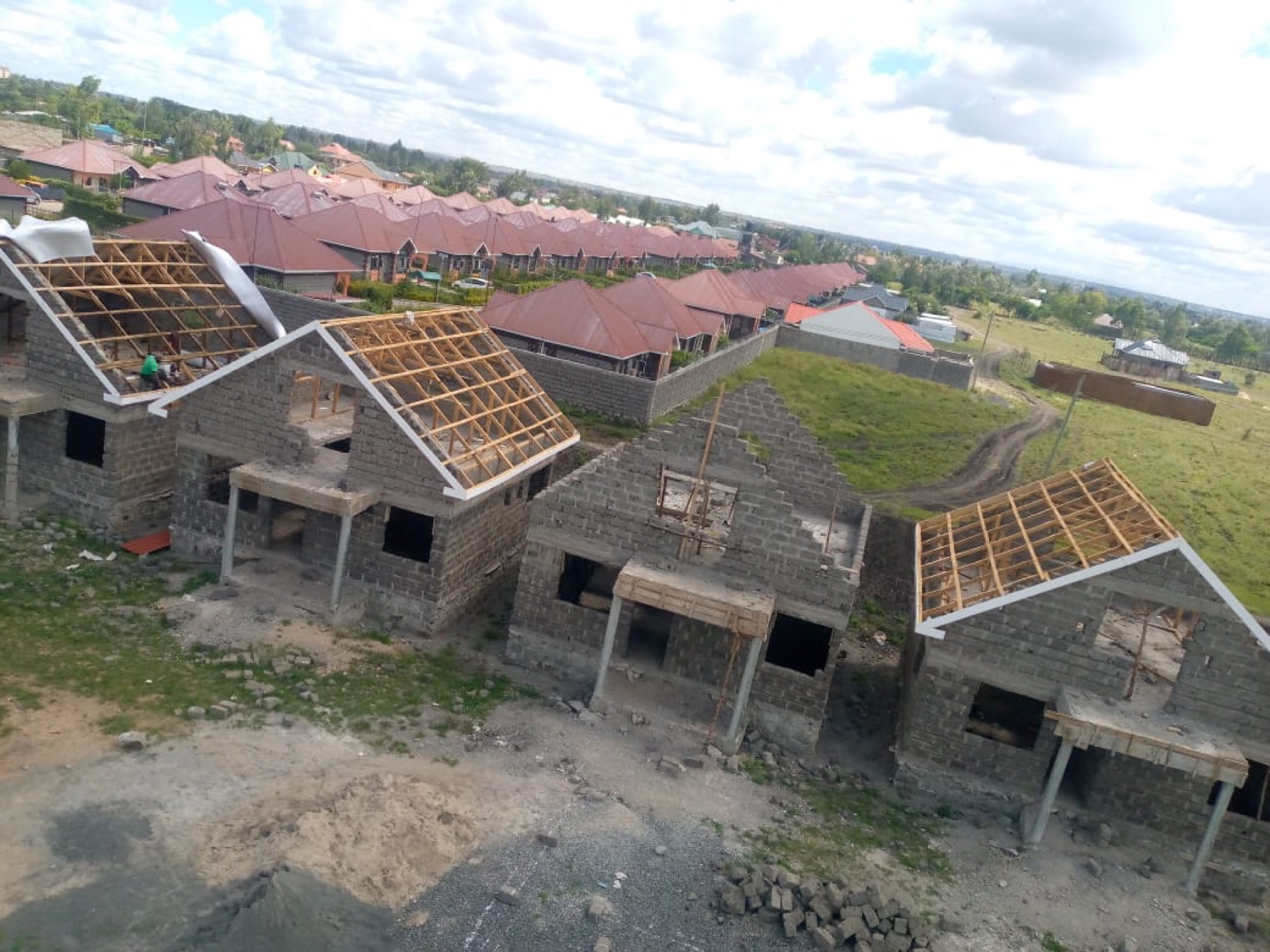
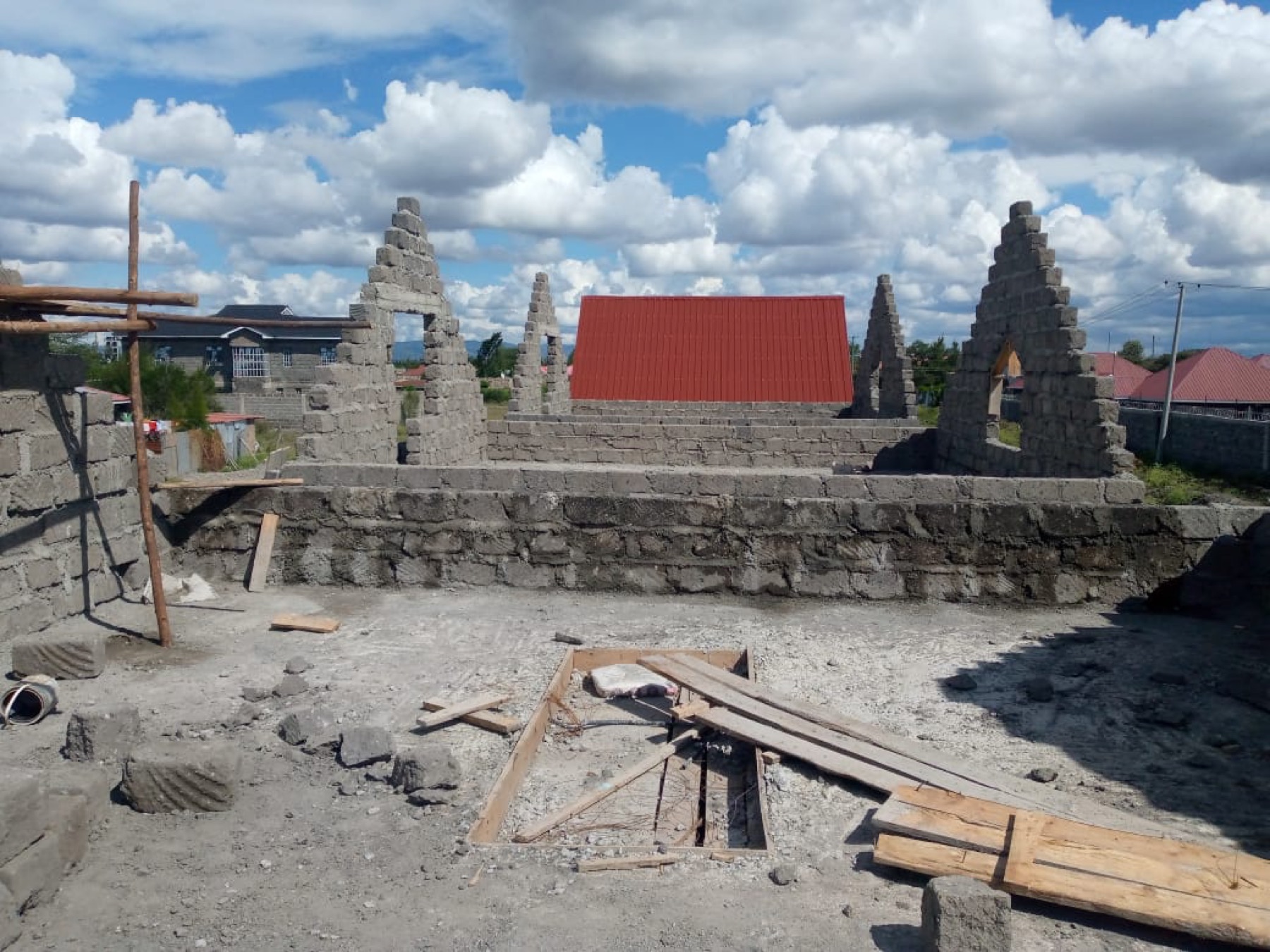
Through April and into May 2021, despite a new Covid-19 Nairobi lockdown but observing all regulations, building work continued enthusiastically. When the land was bought in 2012, with considerable foresight, the area was largely used by pastoralists for their animals. Inevitably, given the pressures on Nairobi's growing population, the land available to pastoralists is diminishing,. Sadly, the days when cow bells are heard here are rapidly coming to an end.. More happily, it will become a place where the sounds of children playing and families going about their daily routines will be heard instead, very far from the lives they are leading today.
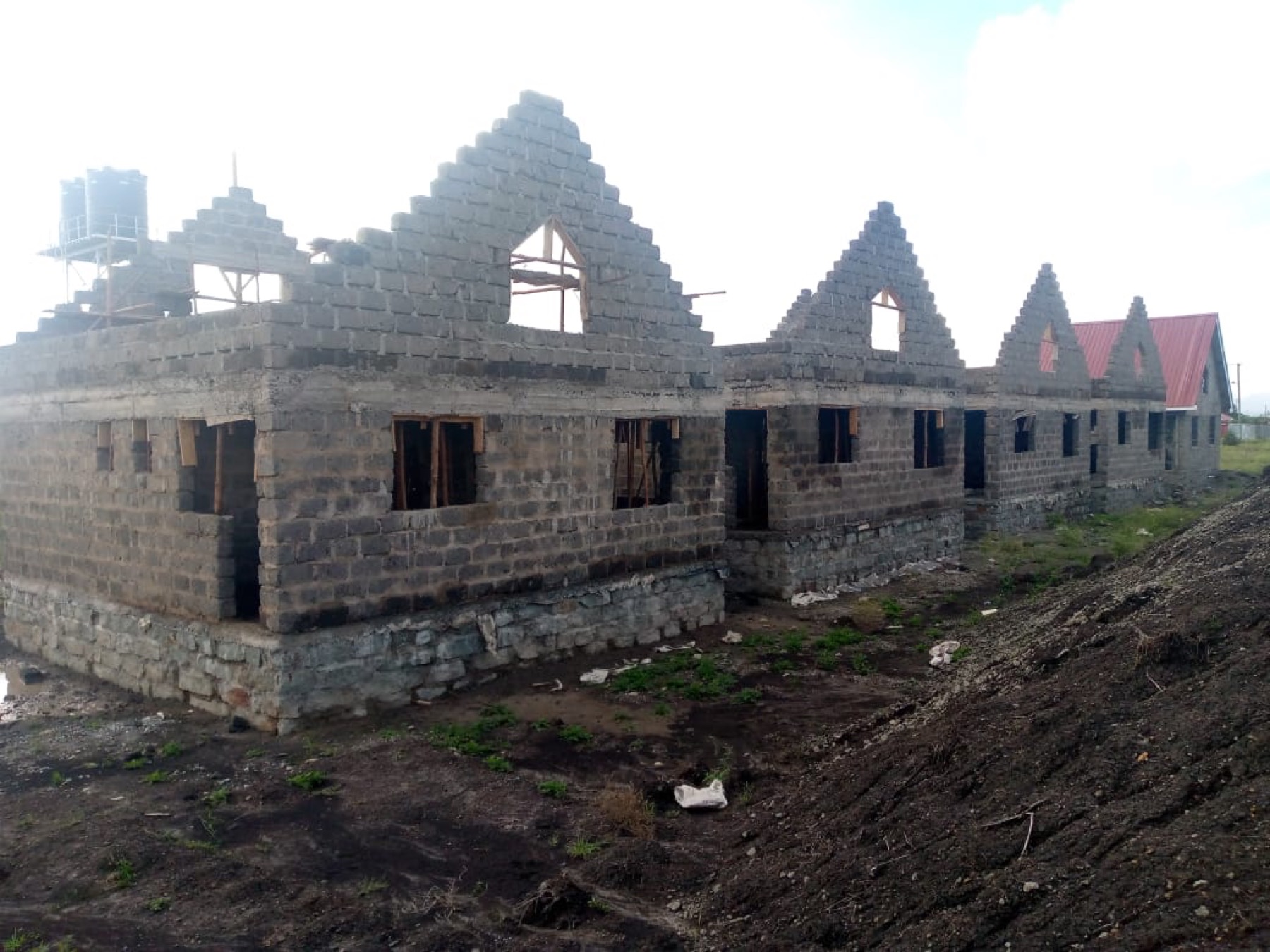
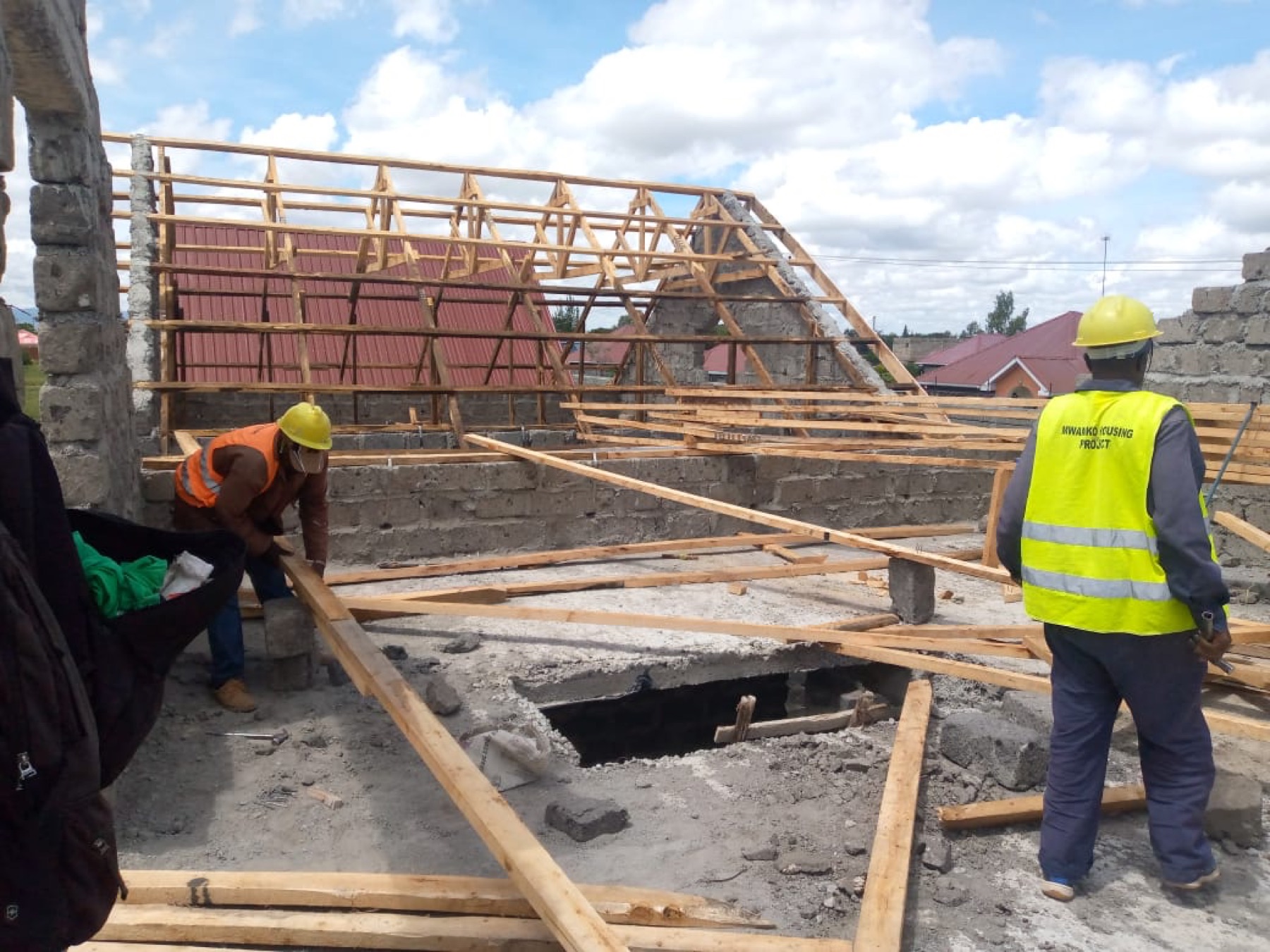
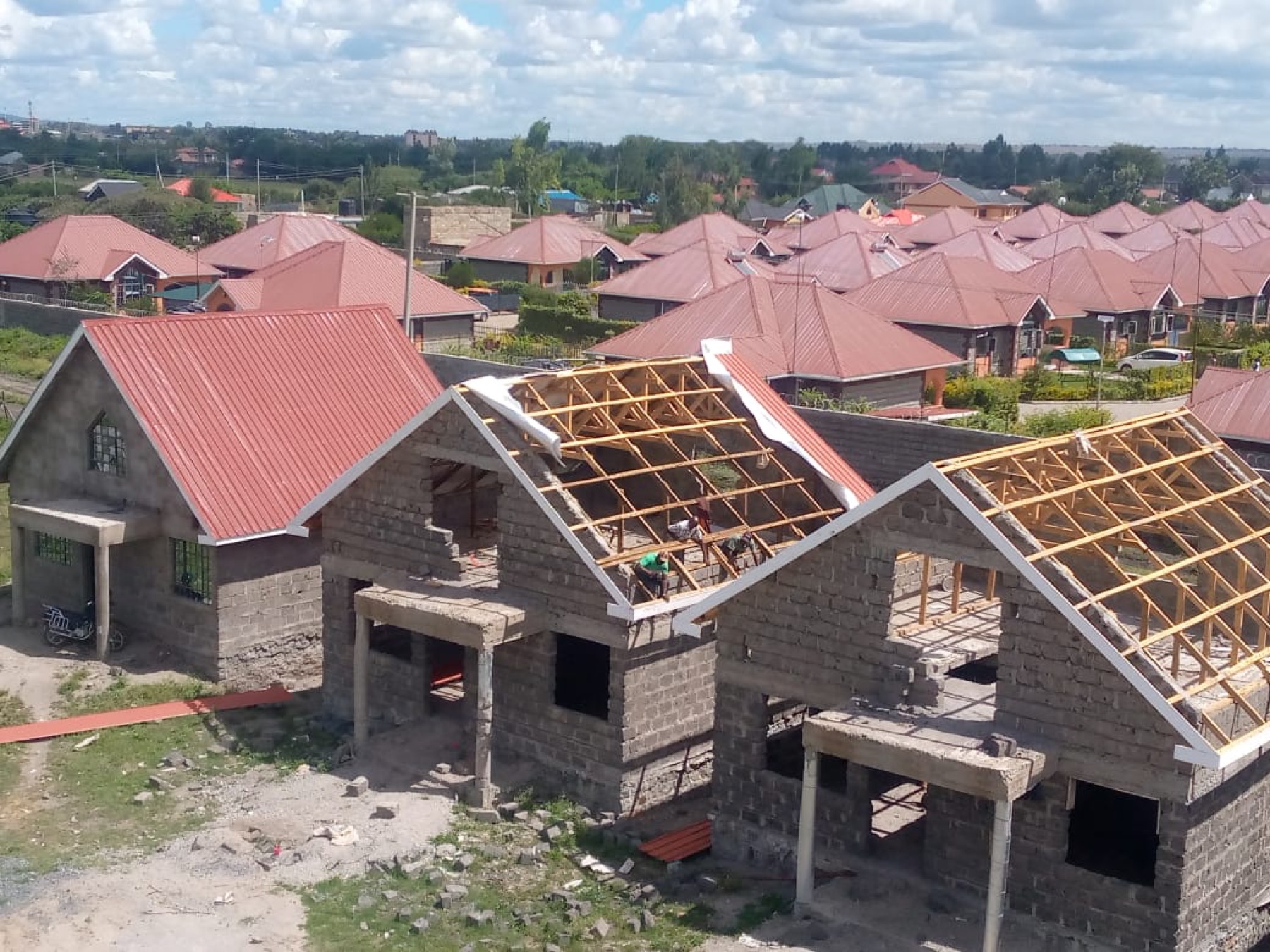
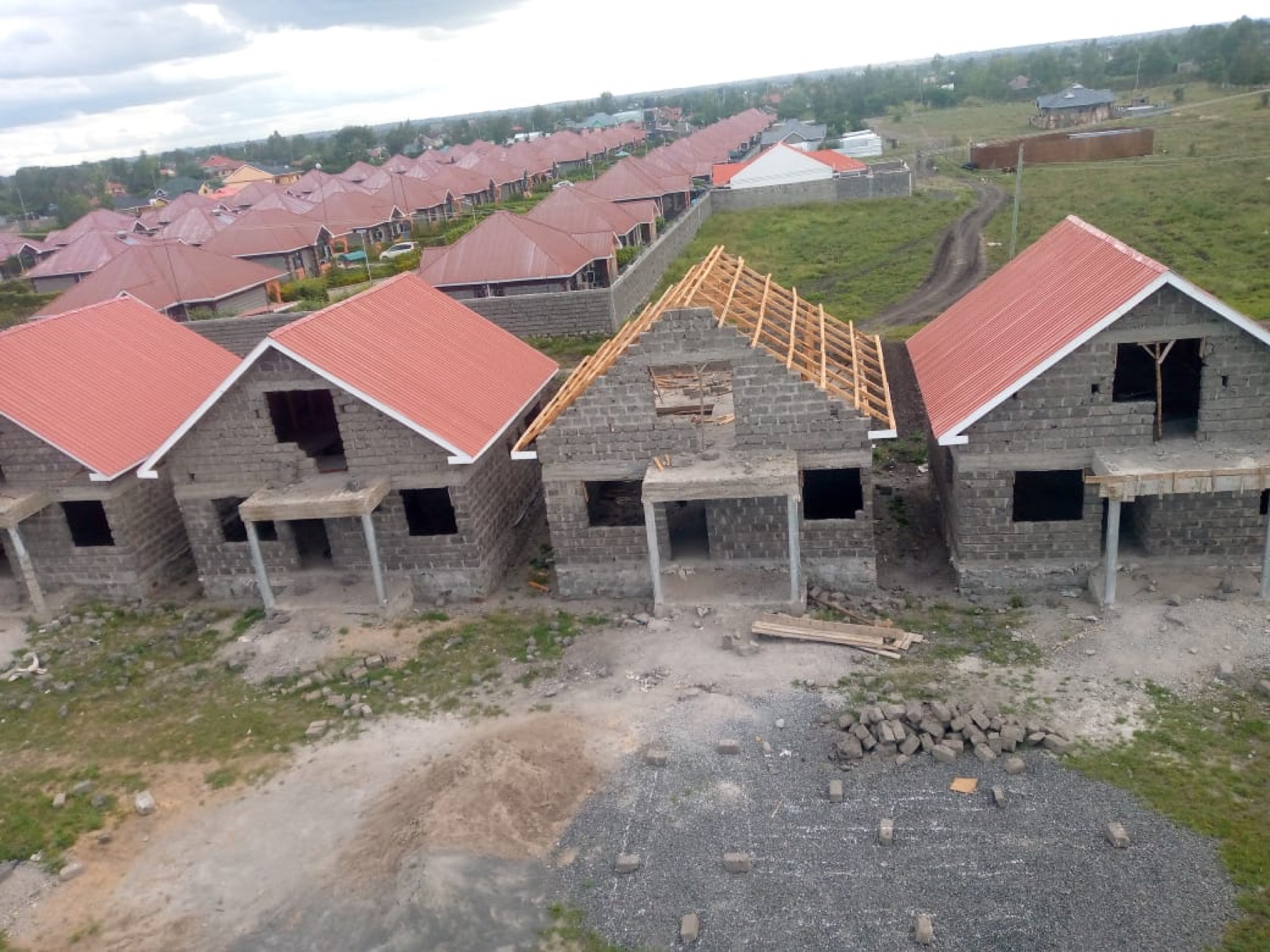
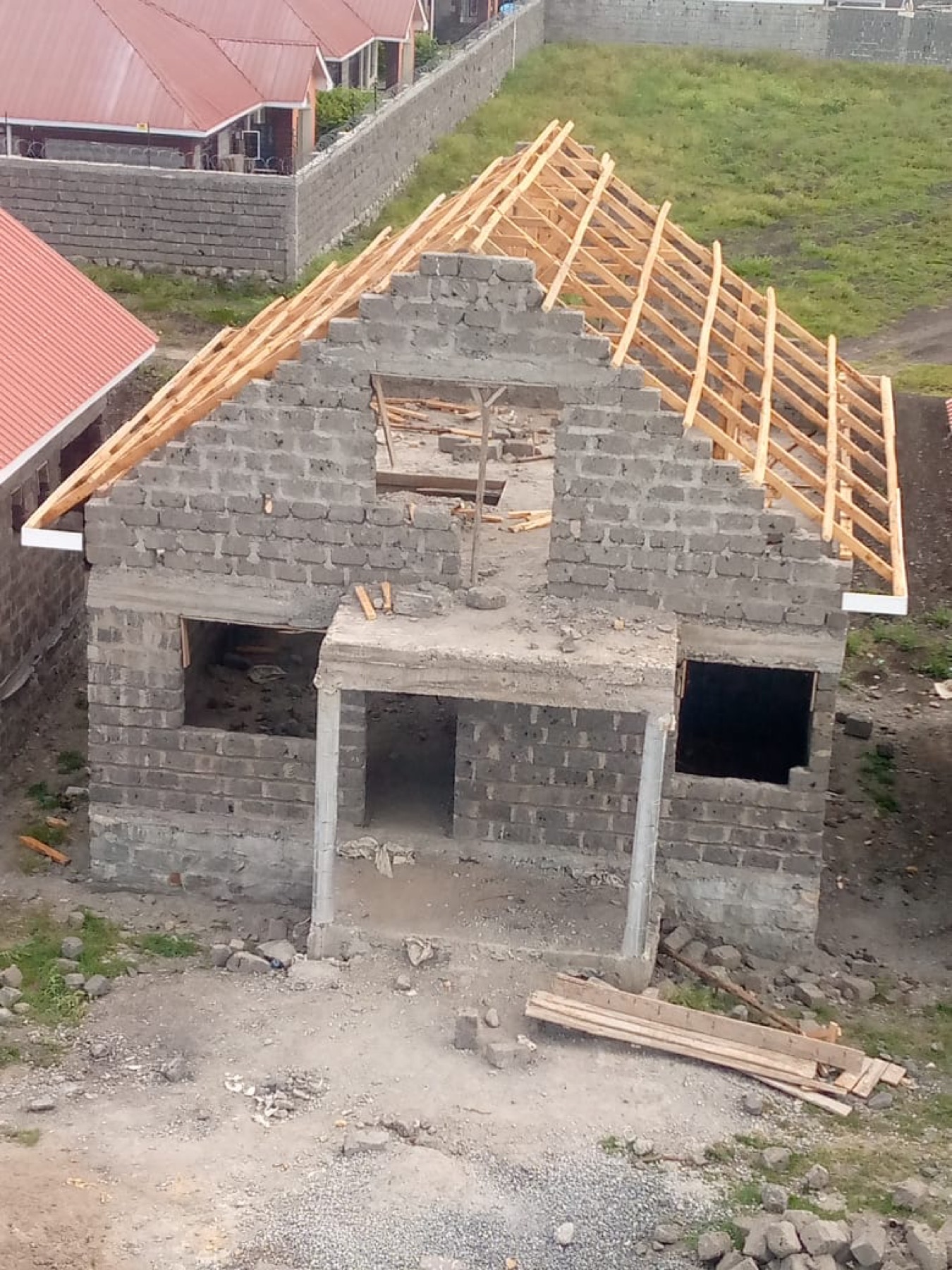
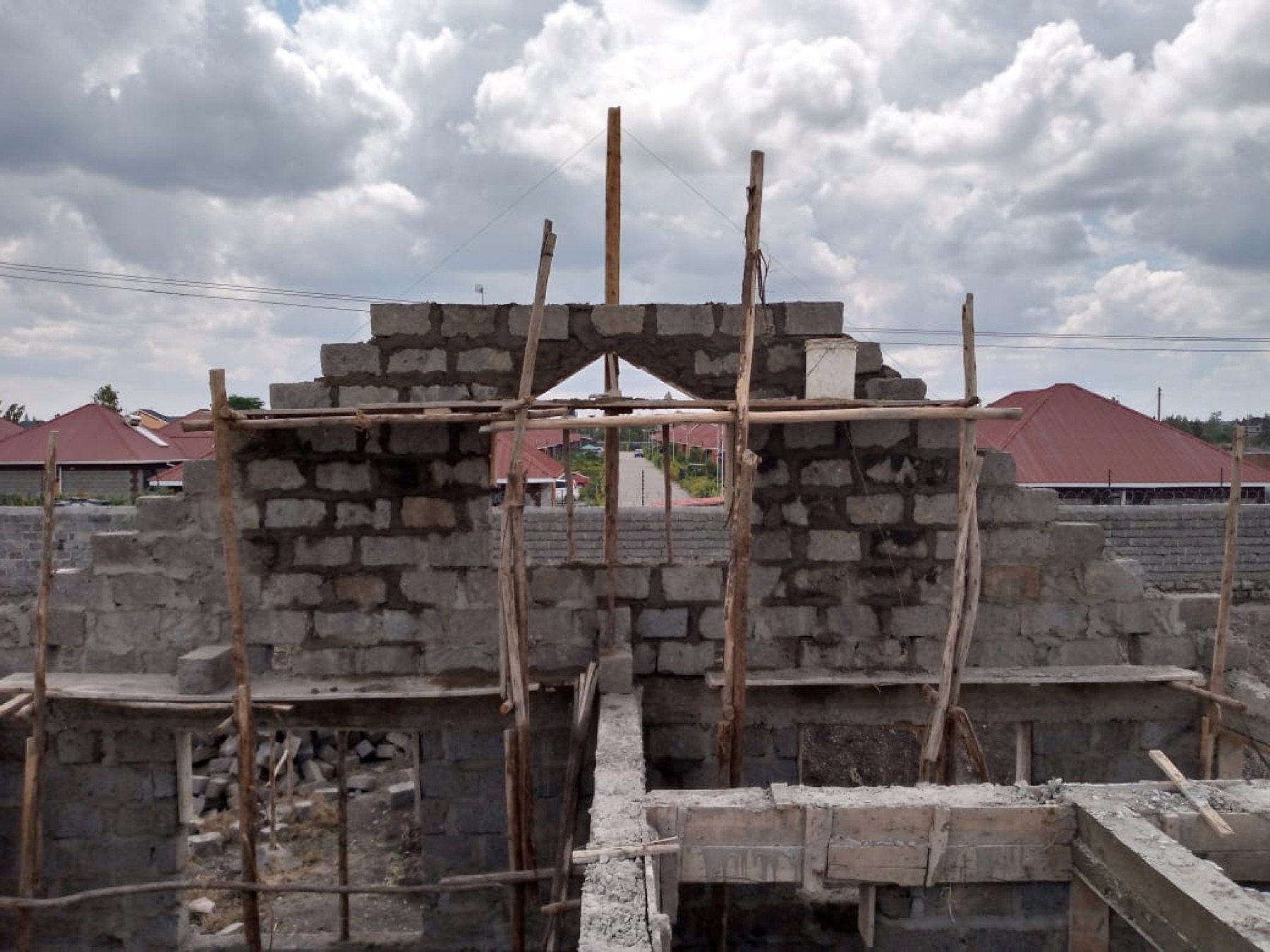
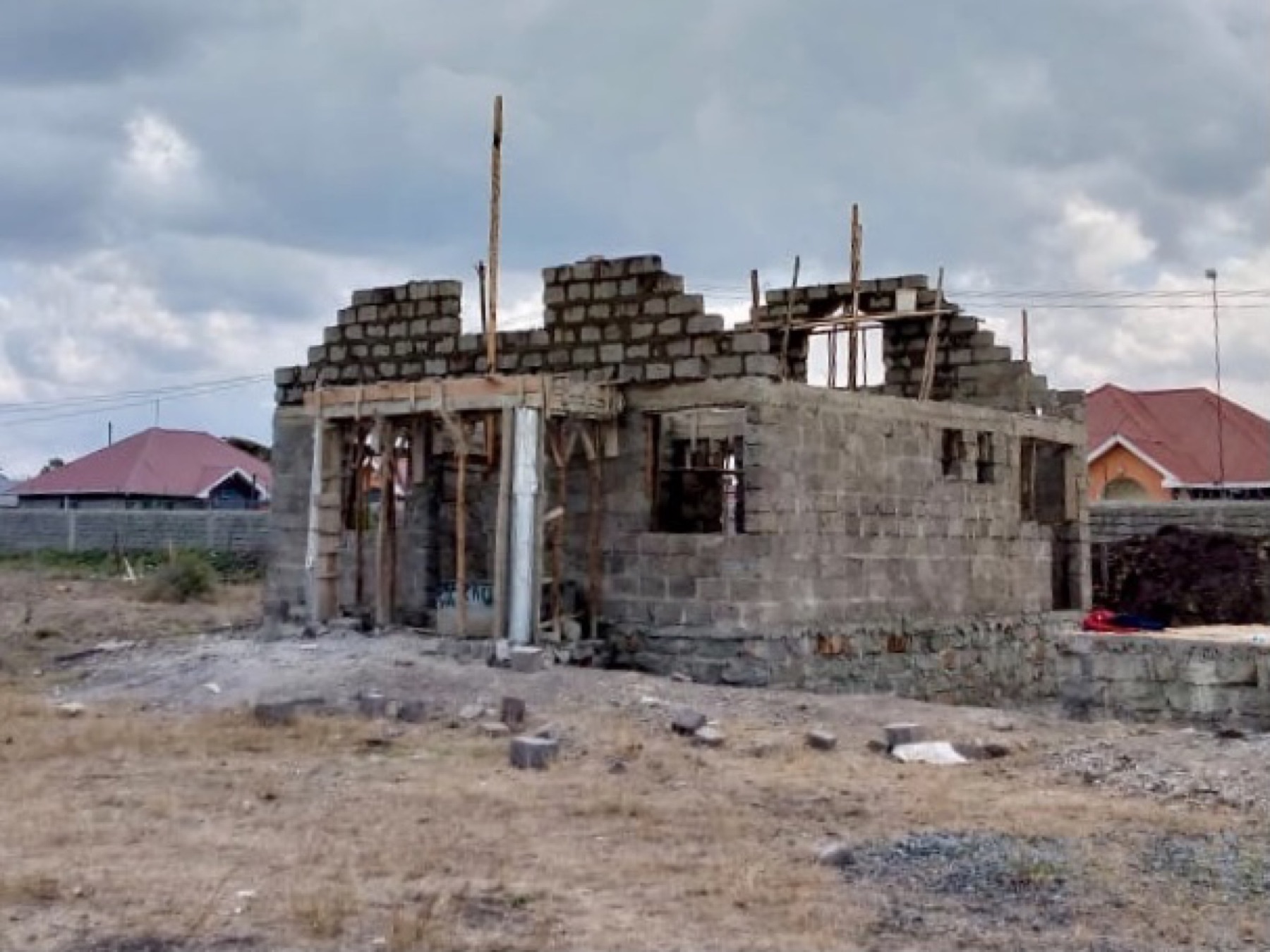
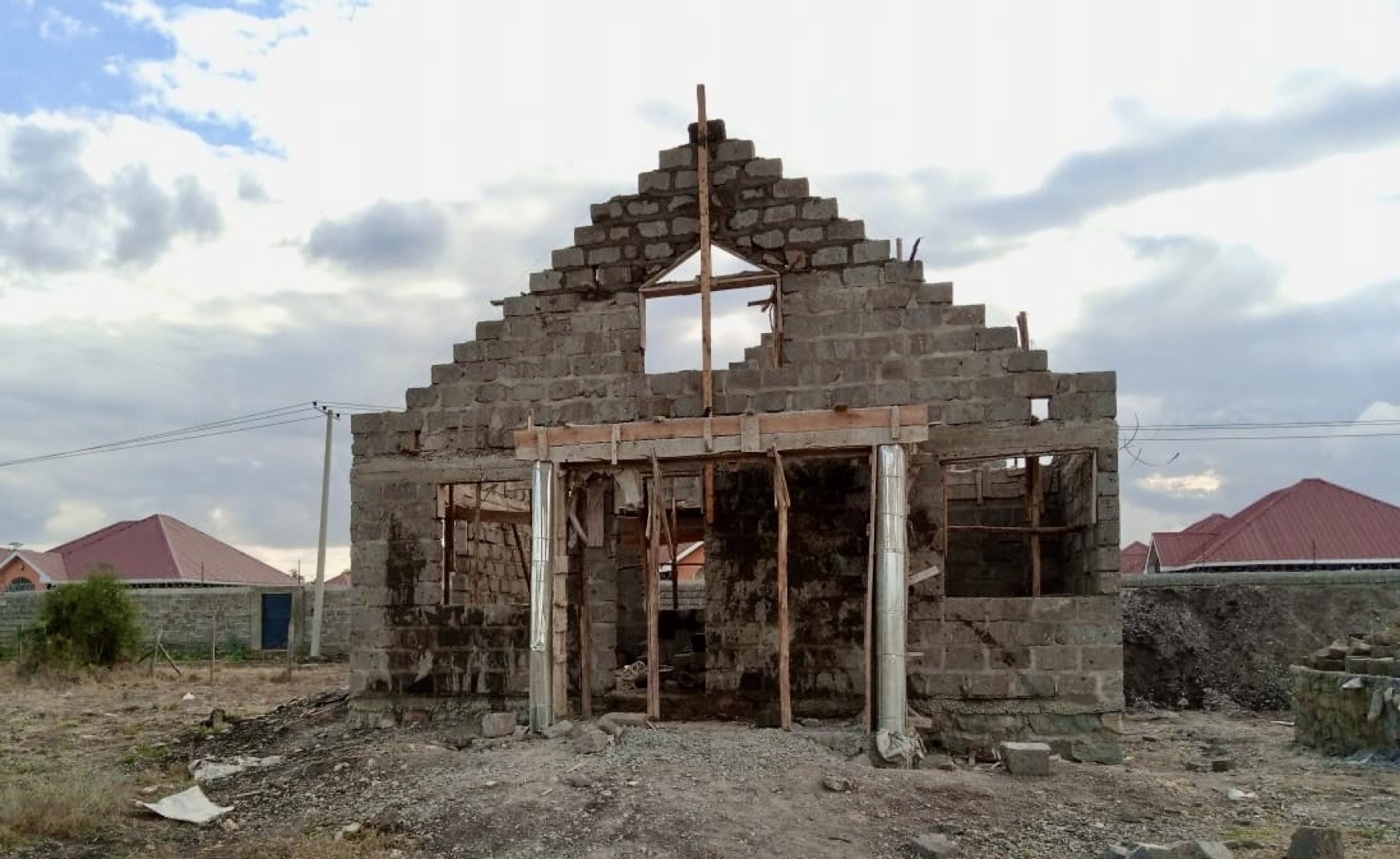
New timber trusses have been erected in all four houses. These were lighter than those originally planned because the extra walling to the attic level meant that there was less roof to cover, so less weight.
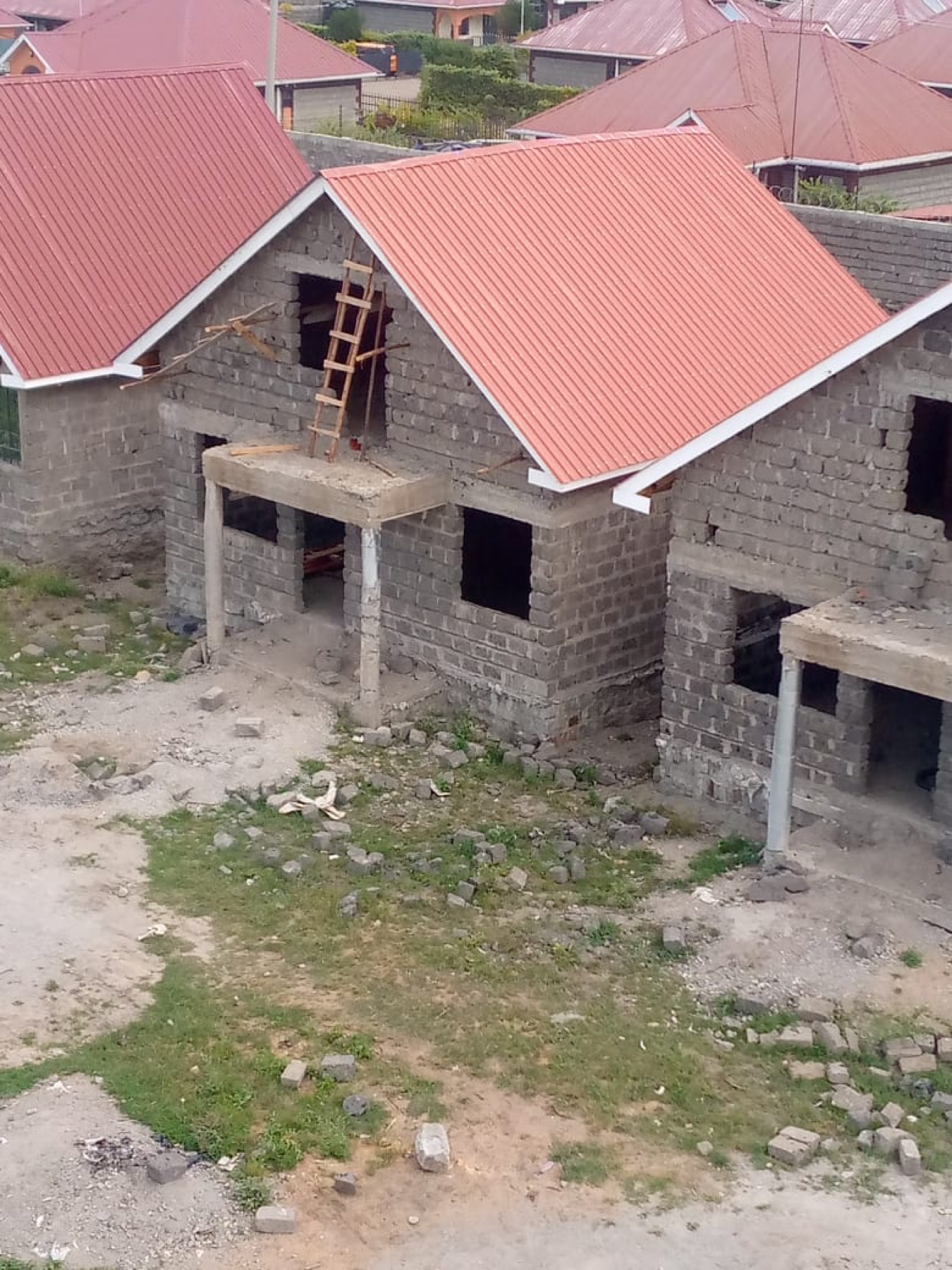
After the trusses came the roofs, all now in place. Now windows, internal and external doors and the staircases will soon be installed.
We are very grateful for the donations which have helped the project come so far. We need more help, though, from donations large and small, so that the current building site can in due course become a flourishing community of the twenty five MWAMKO families
Roof timbers going up. Timber trusses being raised on the first houses.
Many important lessons were learned from the first building phase. Some were about the best way to proceed and to implement lessons learned. Most of all, the capacity, the conscientiousness and the commitment…
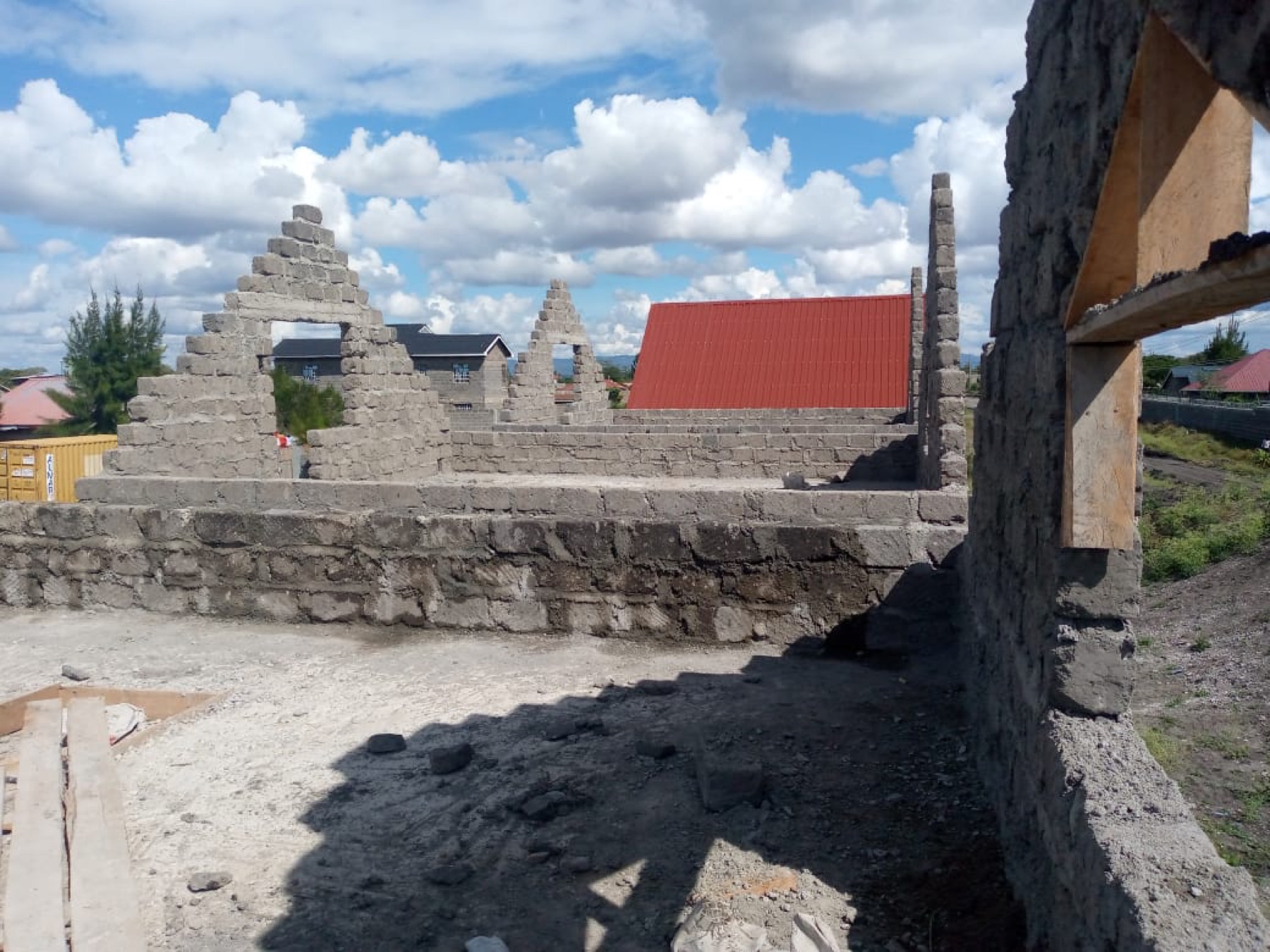
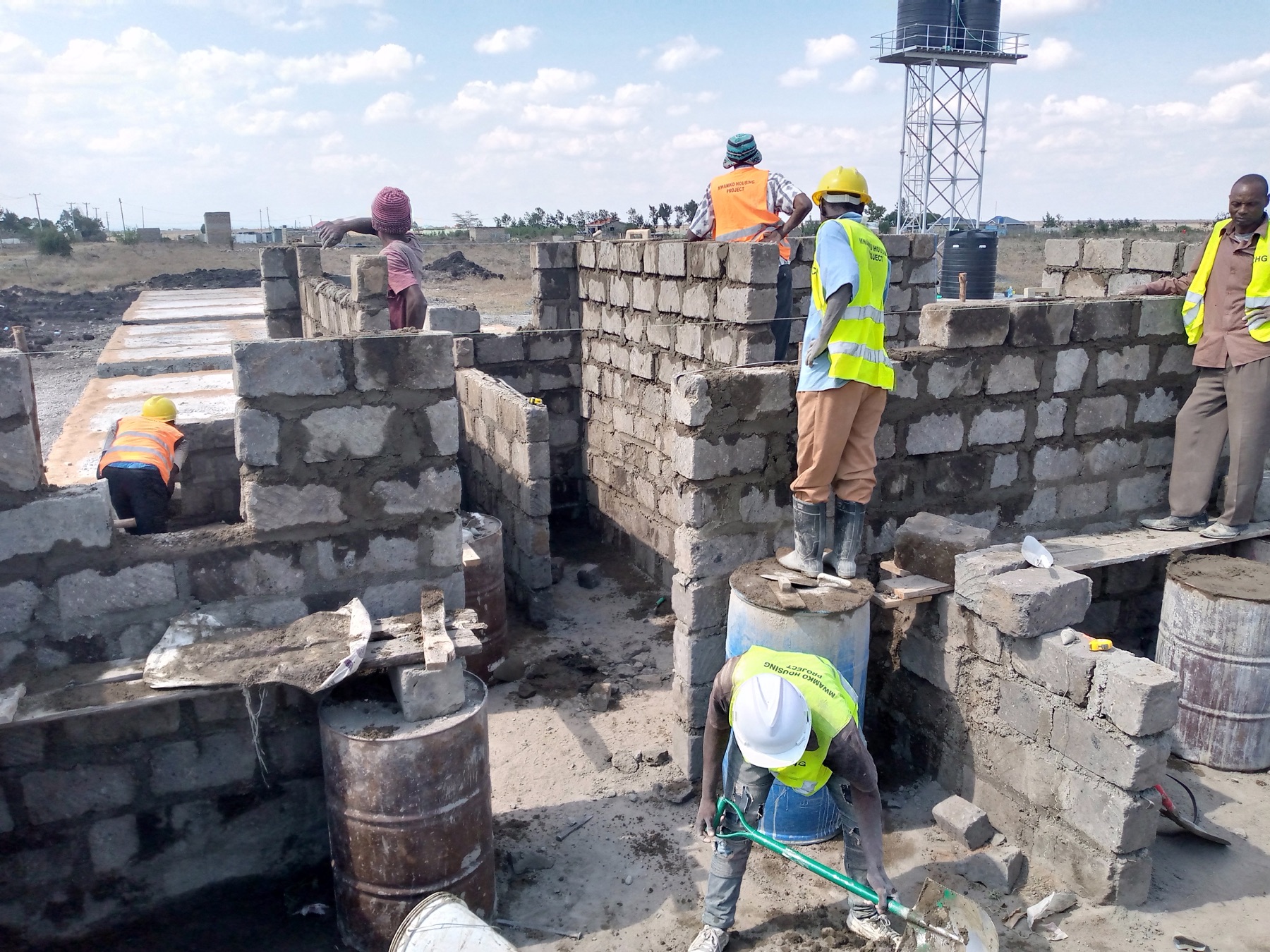
Walling and roofing in progress. The building team at work on the next houses.
Many important lessons were learned from the first building phase. Some were about the best way to proceed and to implement lessons learned. Most of all, the capacity, the conscientiousness and the commitment of the MWAMKO builders and their family members had shown that they could reach building targets more quickly than anticipated, as long as funds are available to do so.
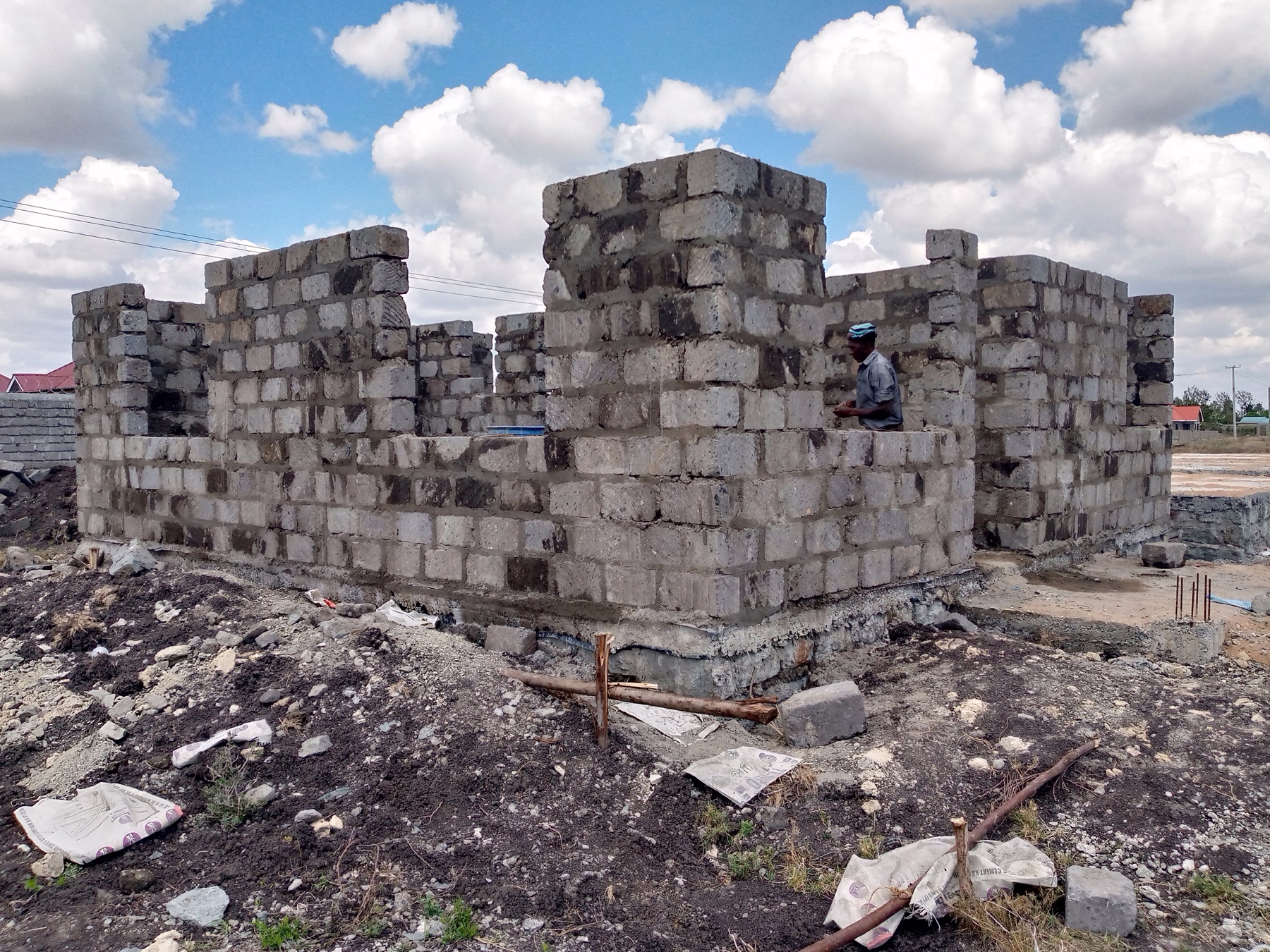
A decision was taken by the CHG Board to start walling work on the other four foundations. This will allow the benefit of economies of scale when it comes to buying and installing solar panels and guttering, sanitary ware and kitchen equipment and connecting the houses to electricity, water and sewerage systems.
Some changes to design and procedure were made as a result of Phase 1. The wooden floor of the attic has been changed to a concrete slab. The wood was imported and didn't provide the good sound insulation provided by concrete. The structural engineer has ensured that the design and its implementation was sound. Two extra courses of bricks have been added to the attic walling, to raise the roof and provide more headspace. After discussion between MWAMKO members and the CHG Board, the covered porch also now serves as a balcony to the attic room. This was in the original plans submitted for planning permission and increases the usable space there, as it can seat four or five people, with a door and a small window replacing the earlier window.
A thank-you from a resident. A message of thanks for the support that is making these homes possible.
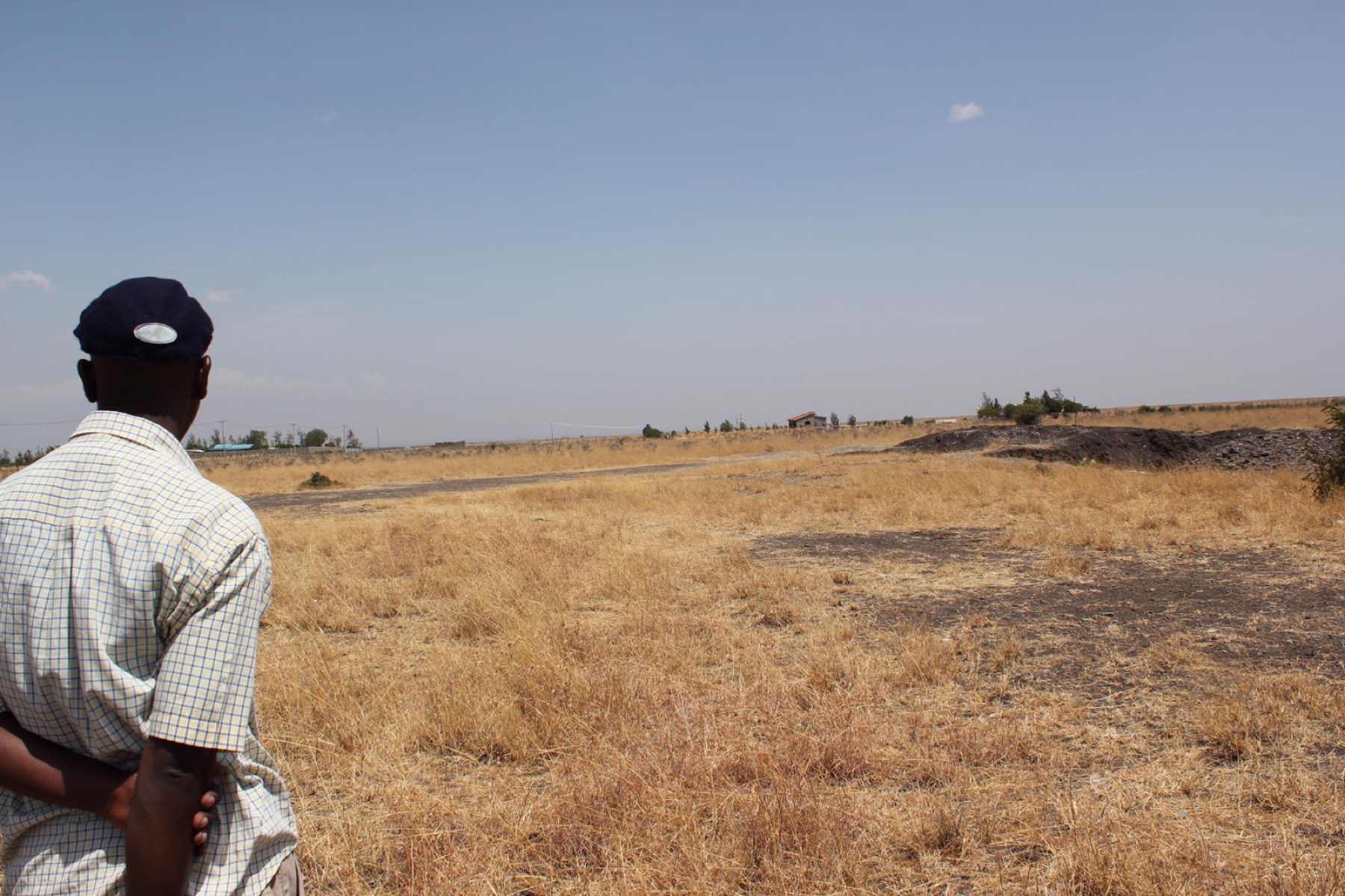
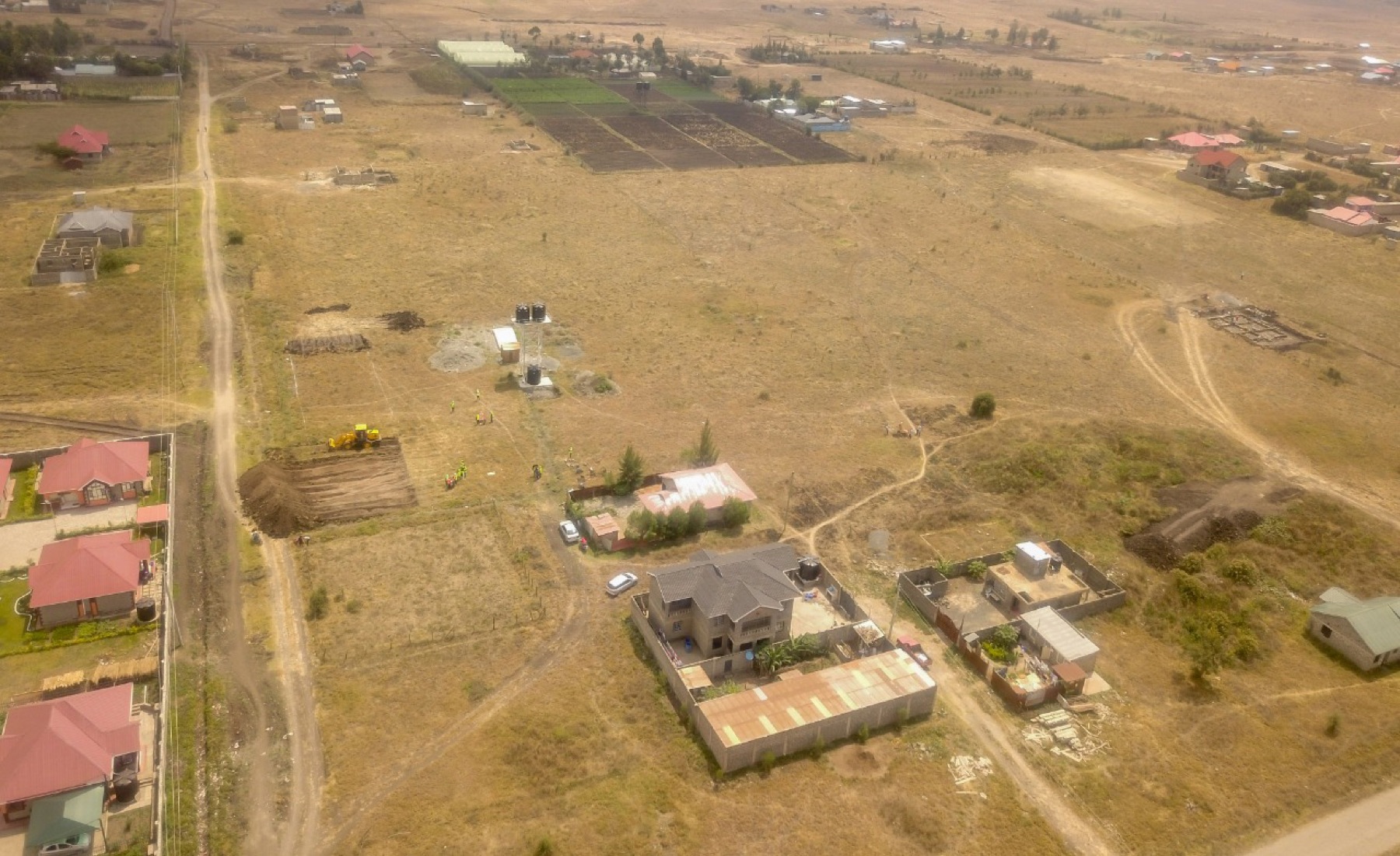
When the site was bought in 2012 it was open, undeveloped land, with just two houses and a small church visible a distance away and with no nearby amenities other than electricity poles along the track.(PHOTO…
When the site was bought in 2012 it was open, undeveloped land, with just two houses and a small church visible a distance away and with no nearby amenities other than electricity poles along the track.(PHOTO here) Today the area, Kamulu, is home to a thriving community with shops, several schools and greatly improved public transport. As you will see in the photographs, a wall has now been built by the developers of an adjacent small housing estate.
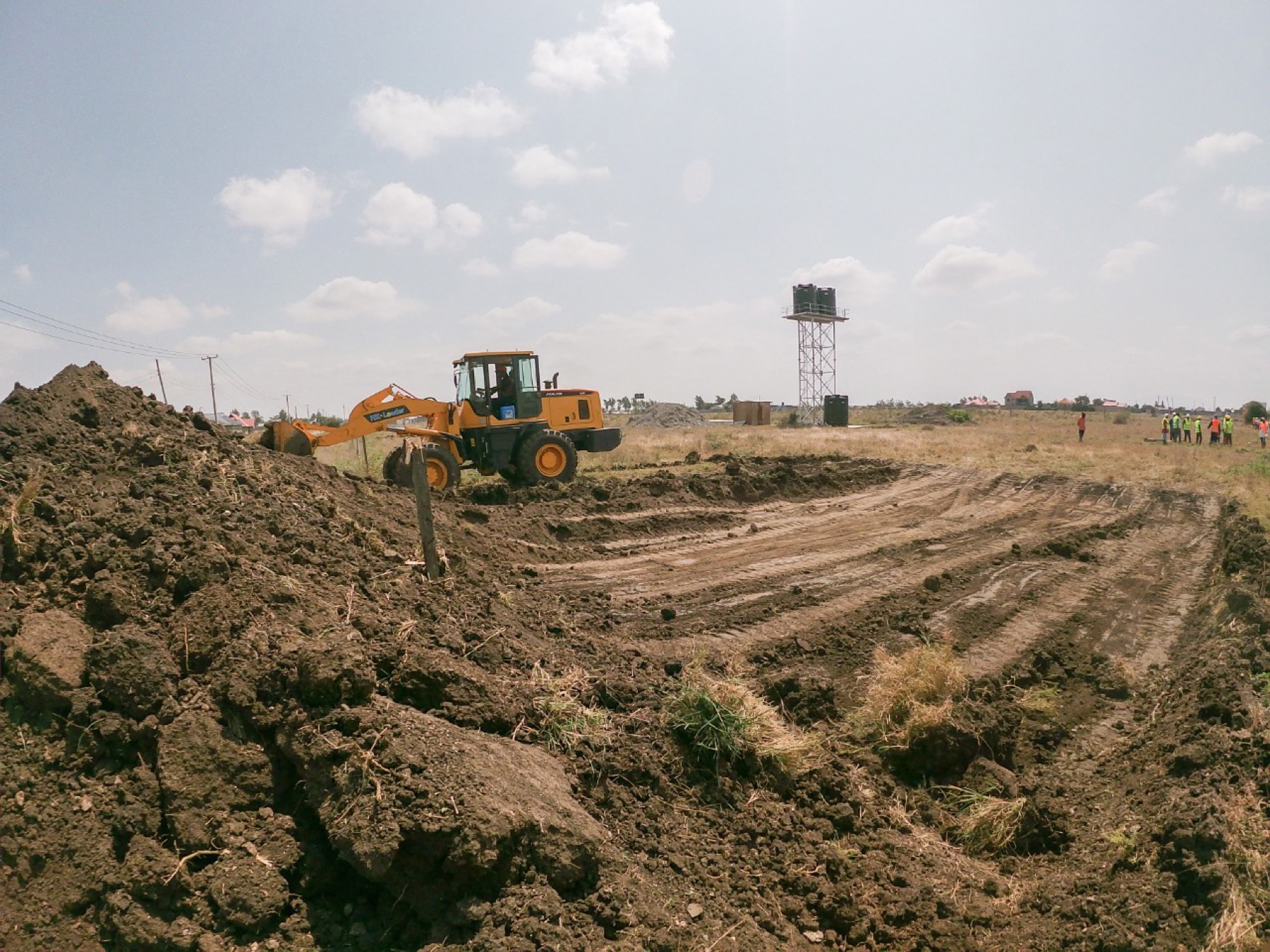
The ground at the site is 45 cm of black cotton soil on top of extremely hard rock. Black cotton soil is always a problem in construction: it is thin and light and unstable, drying out easily and becoming very slippery when wet.
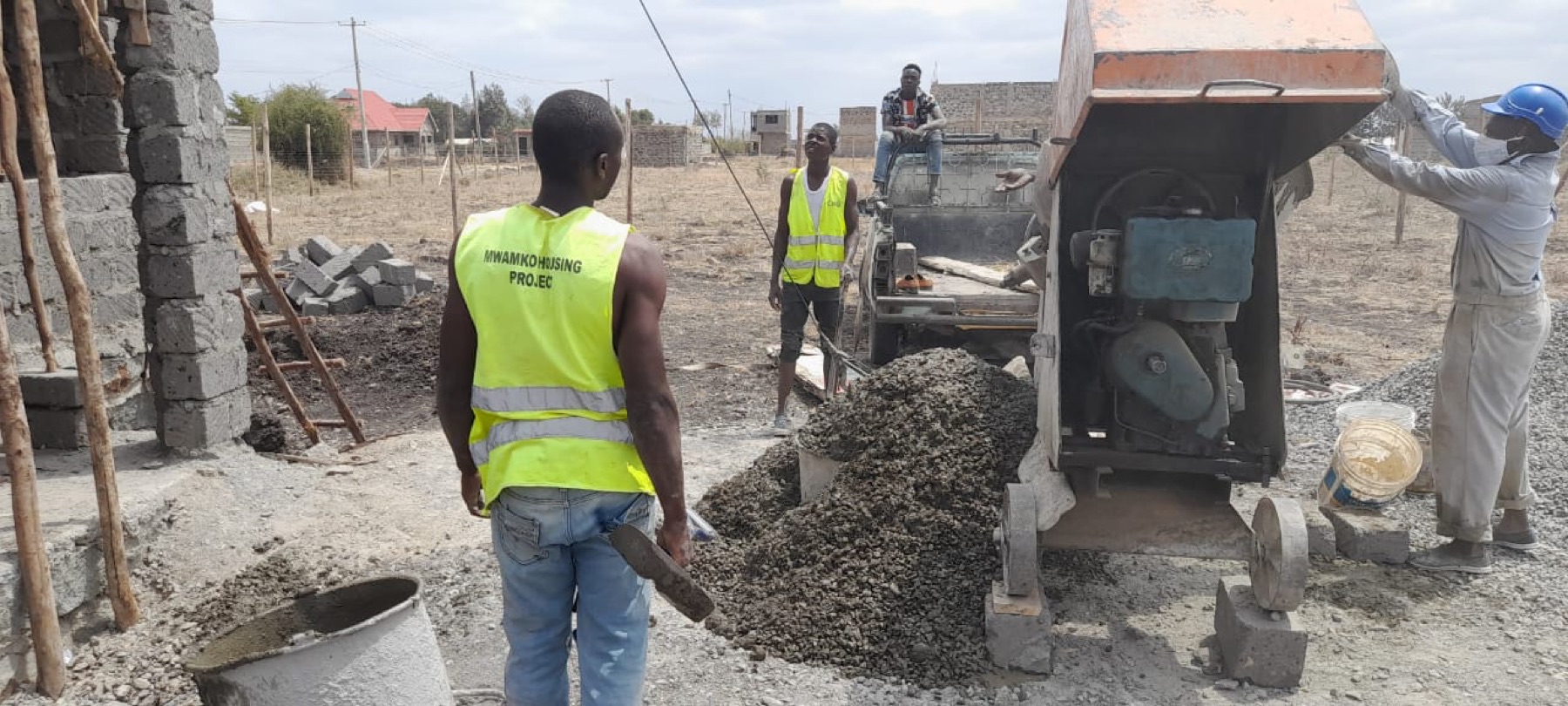
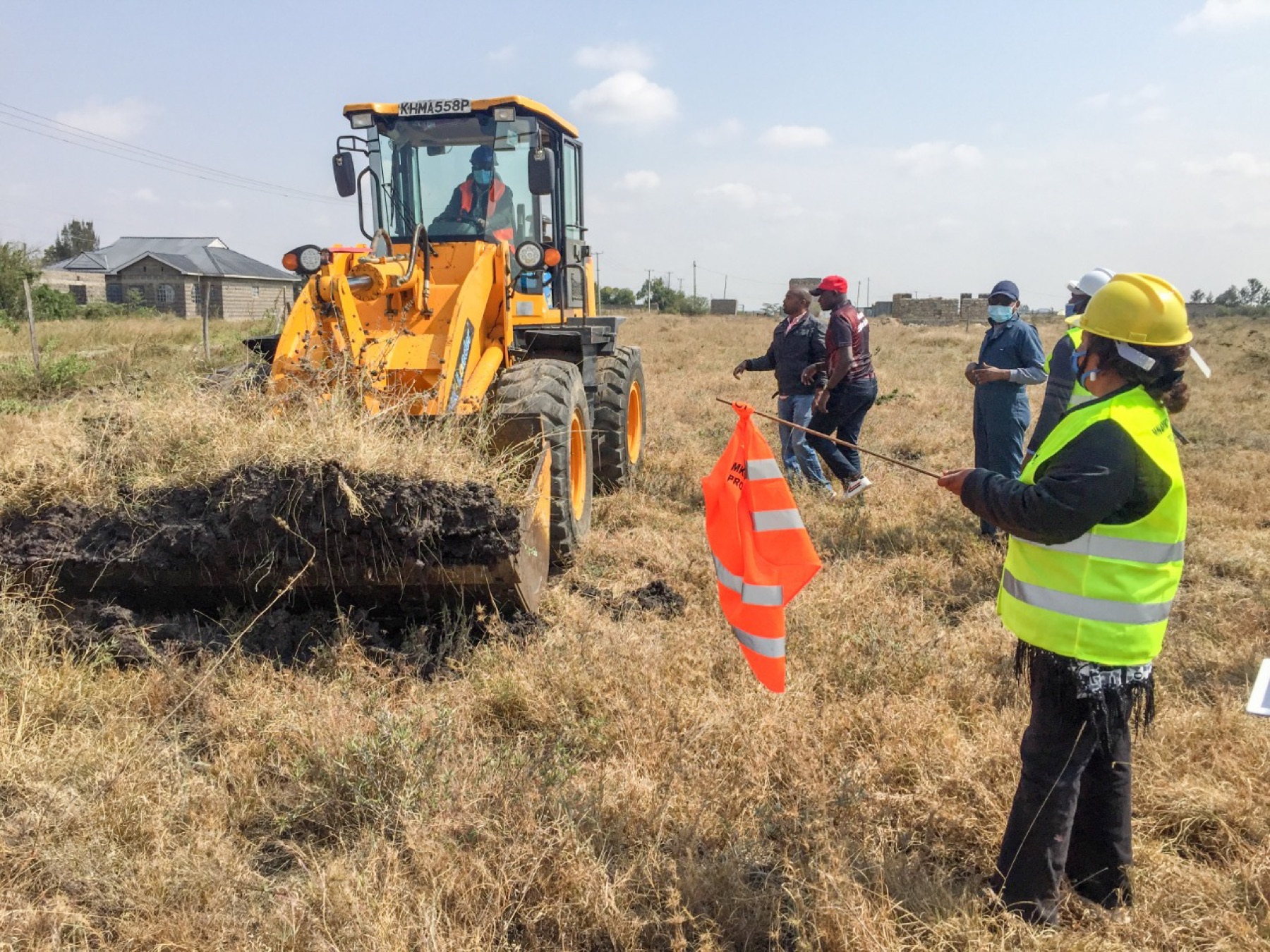
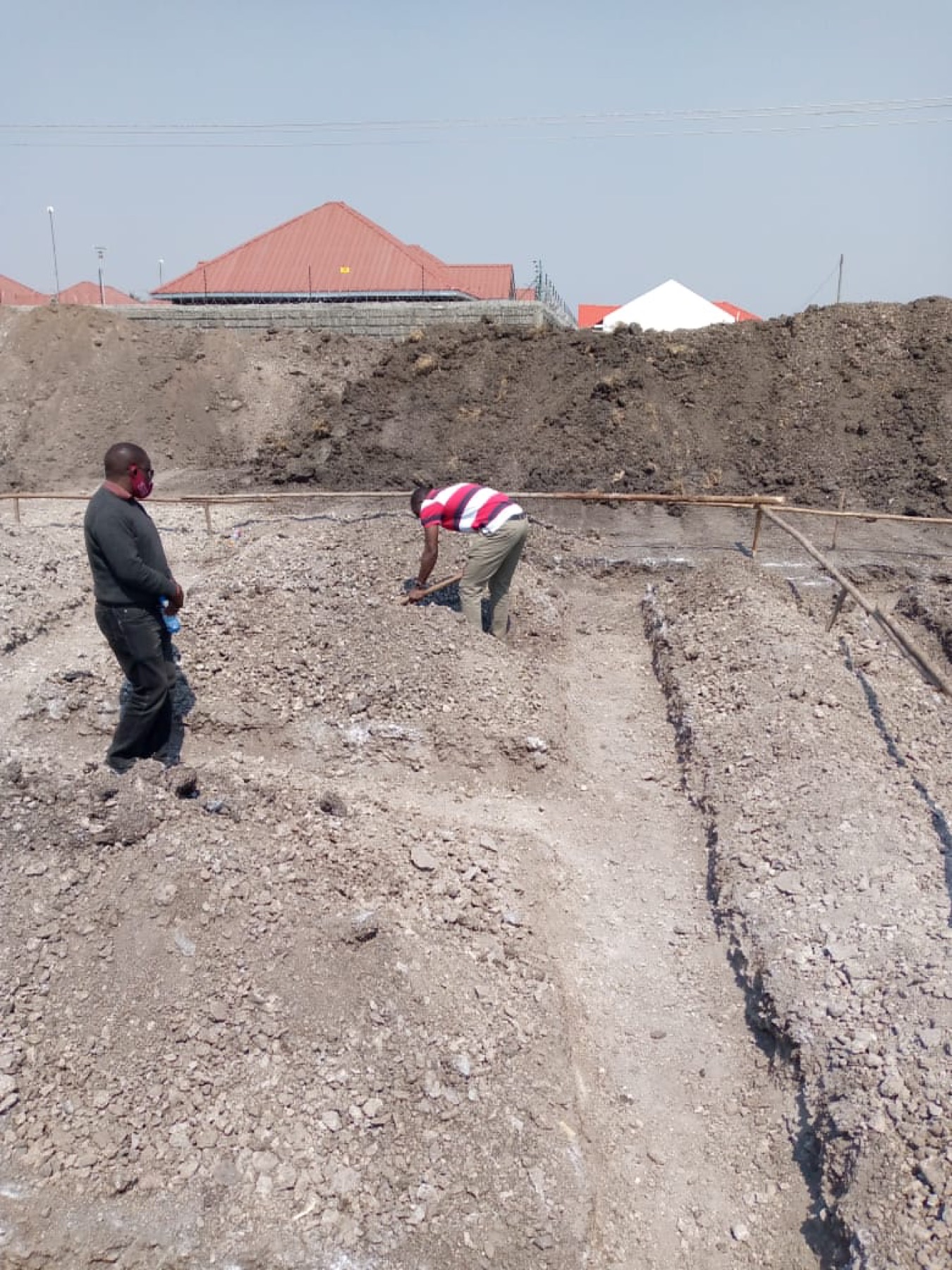
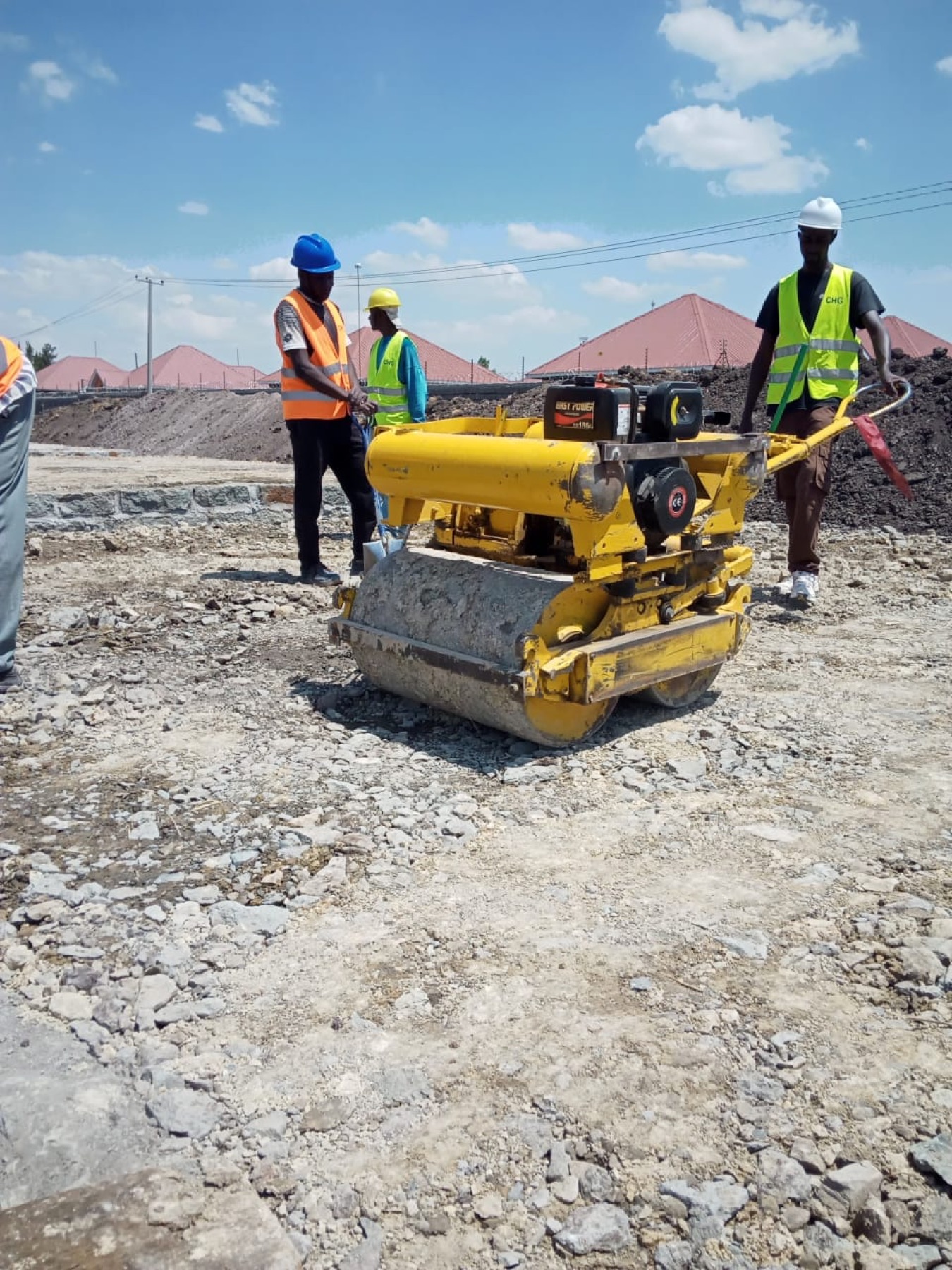
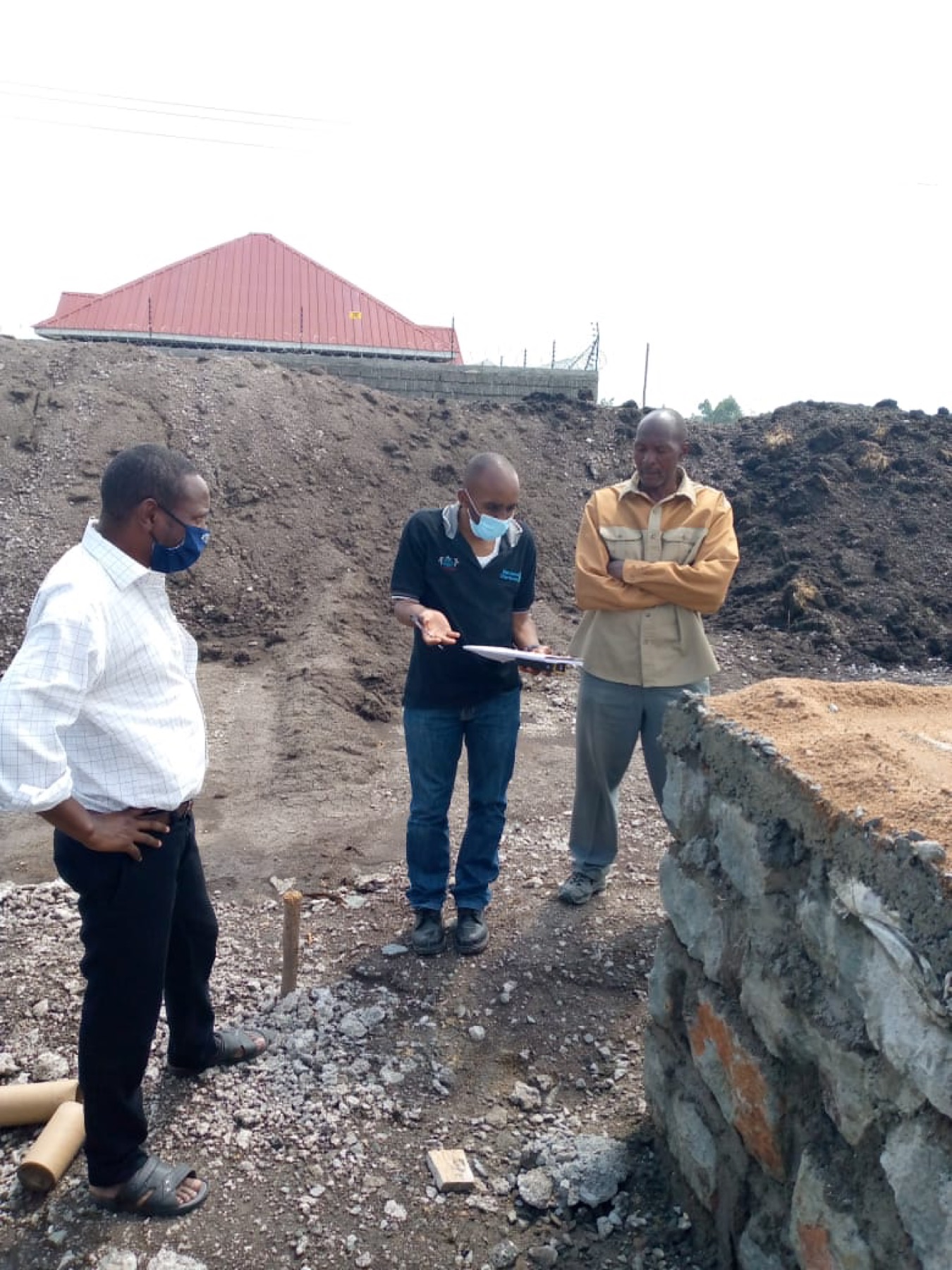
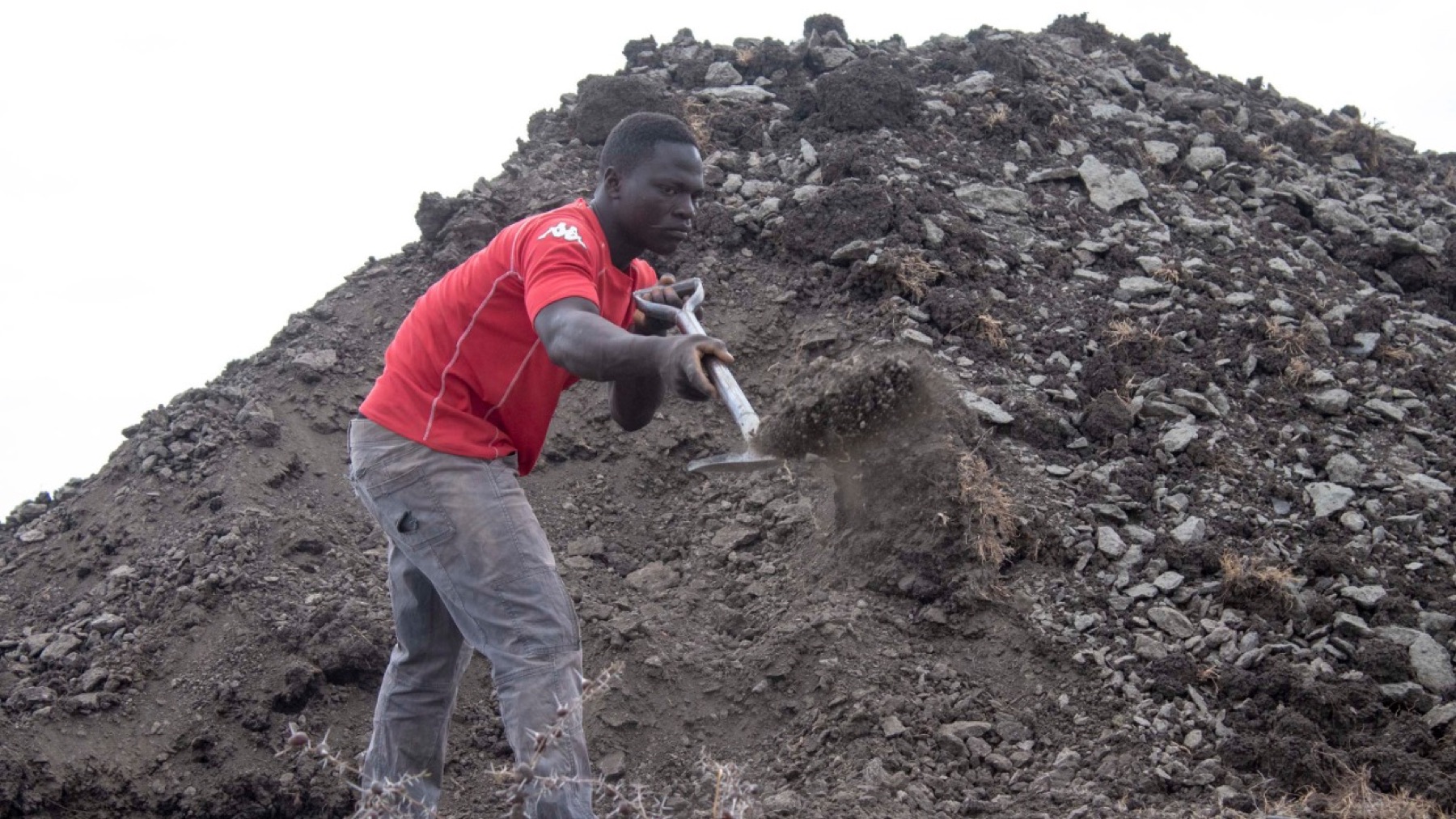
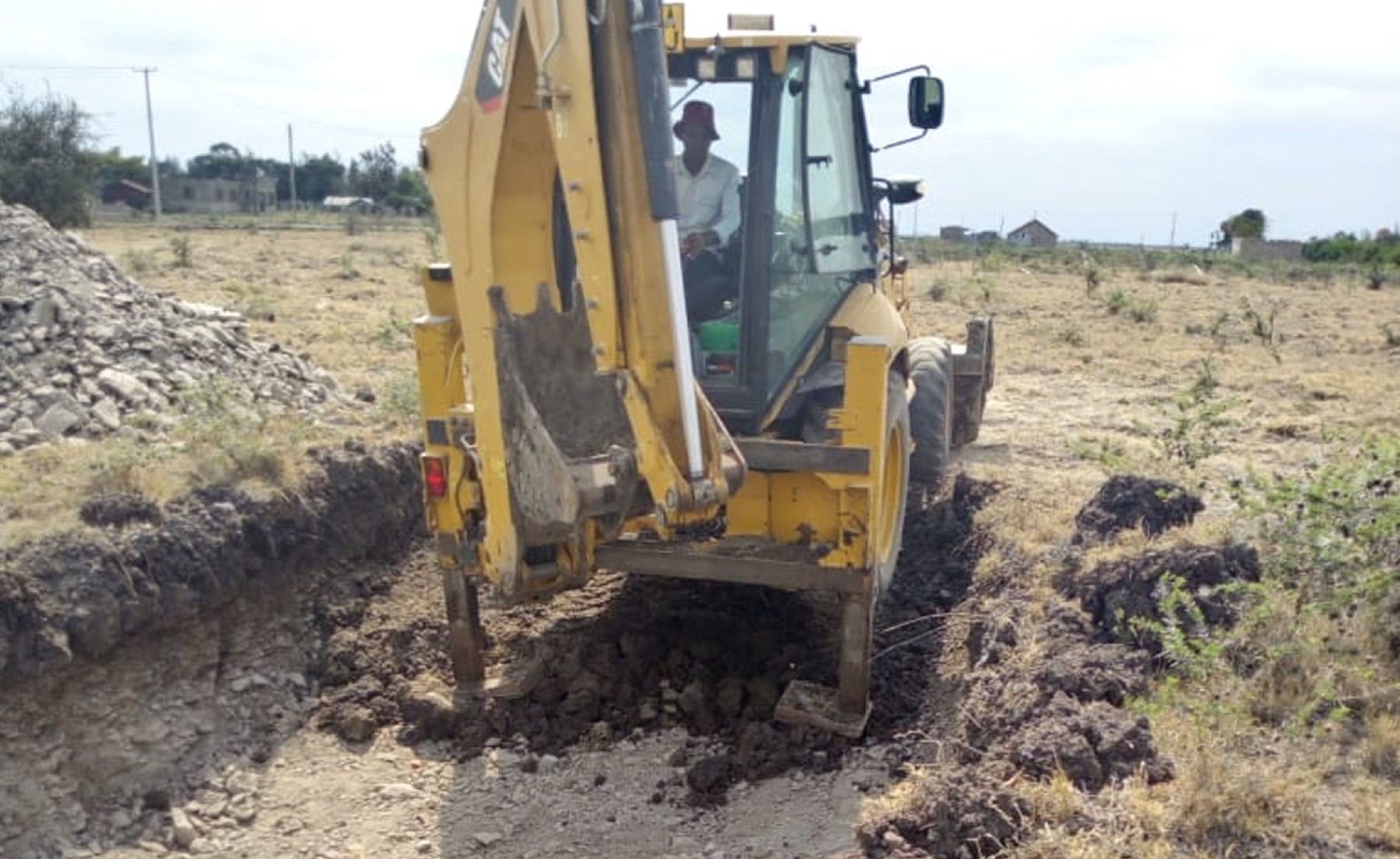
At the beginning of the current construction phase experienced workers were brought in to use the heavy equipment needed to push the black cotton soil to the edge of the site - the huge mound you will see in the background of many of the photographs. In line with our commitment to sustainability the soil has not been removed in lorries but will be recycled.
The rock is, of course, a great asset when building strong foundations!
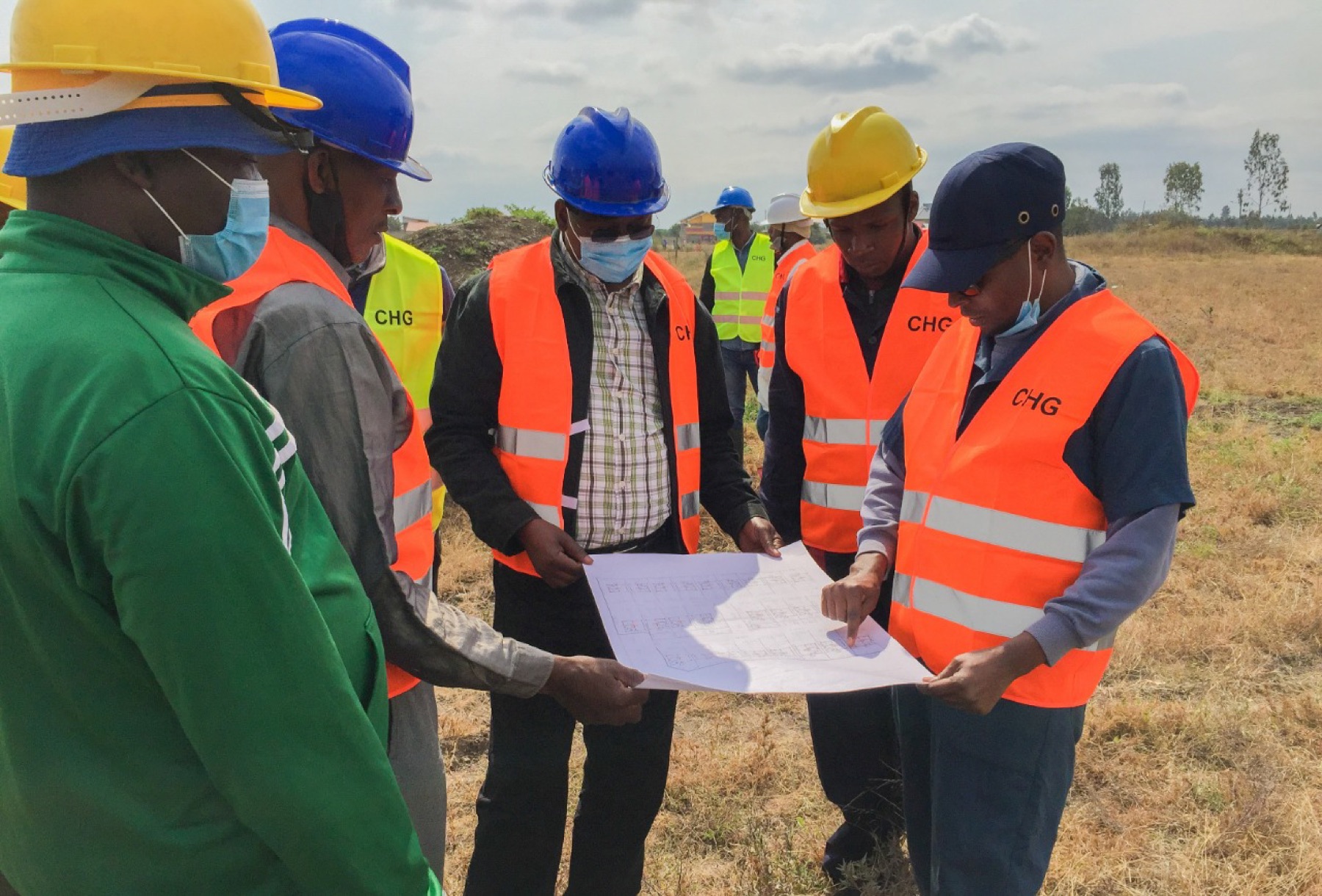
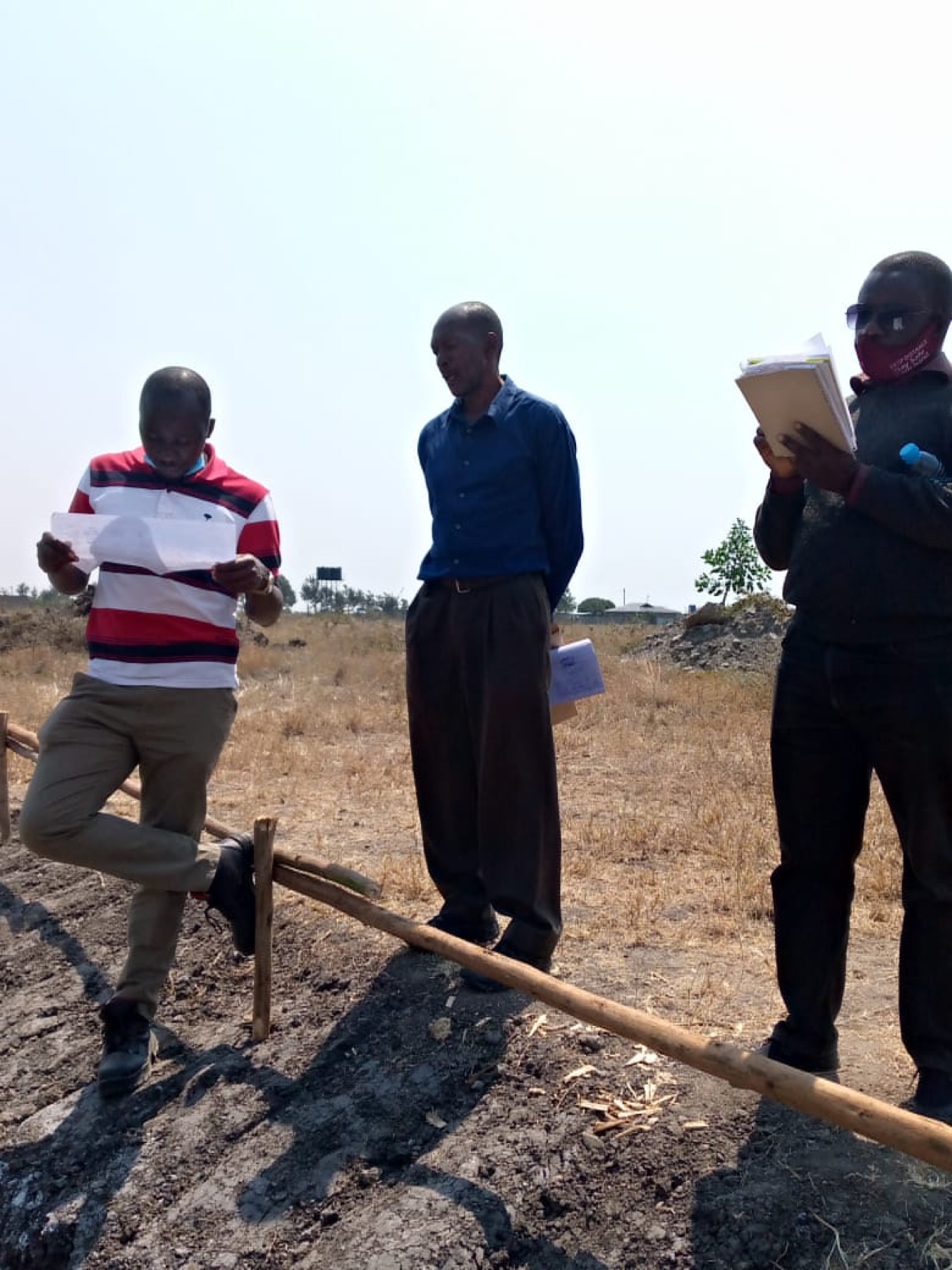
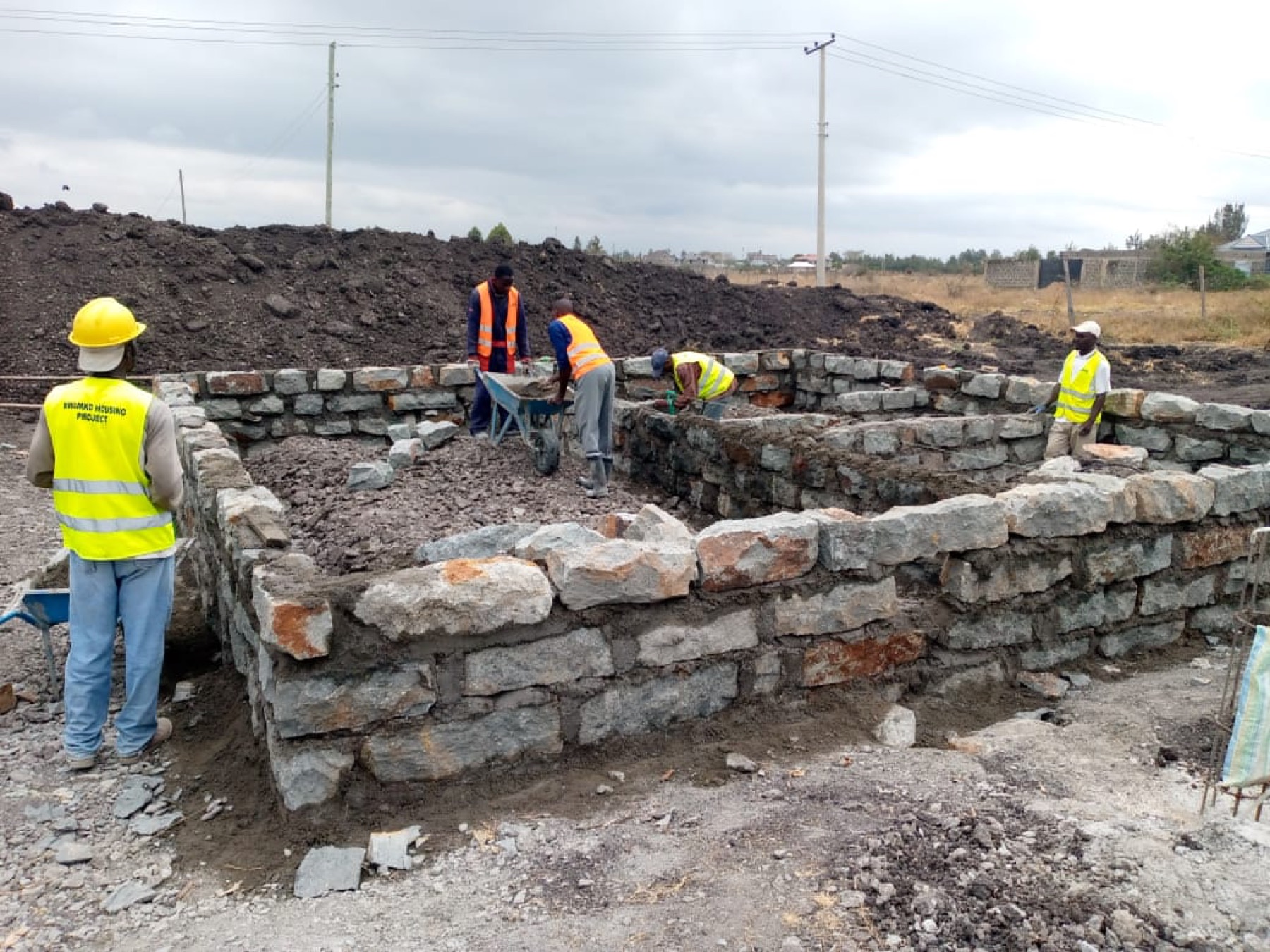
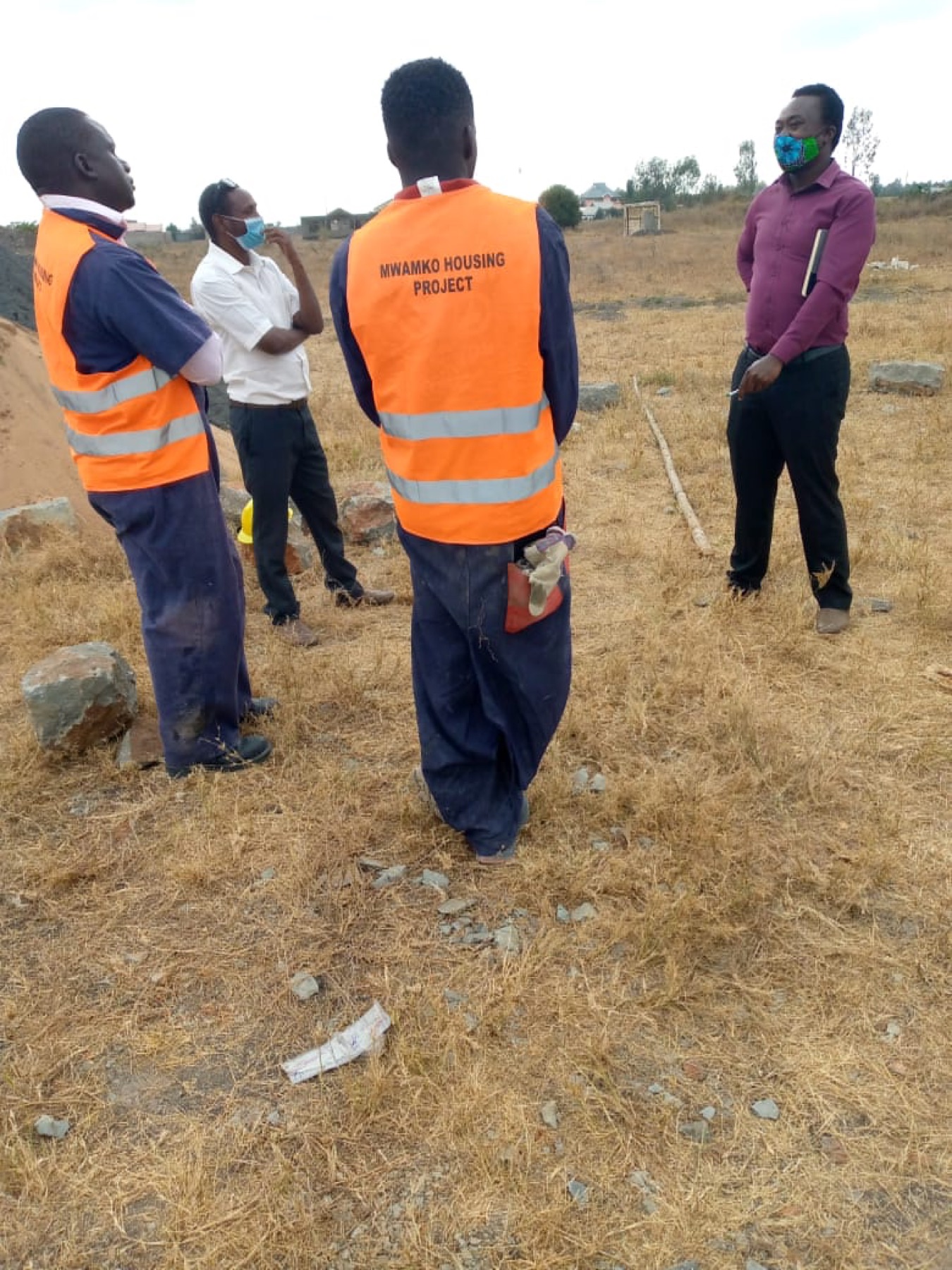
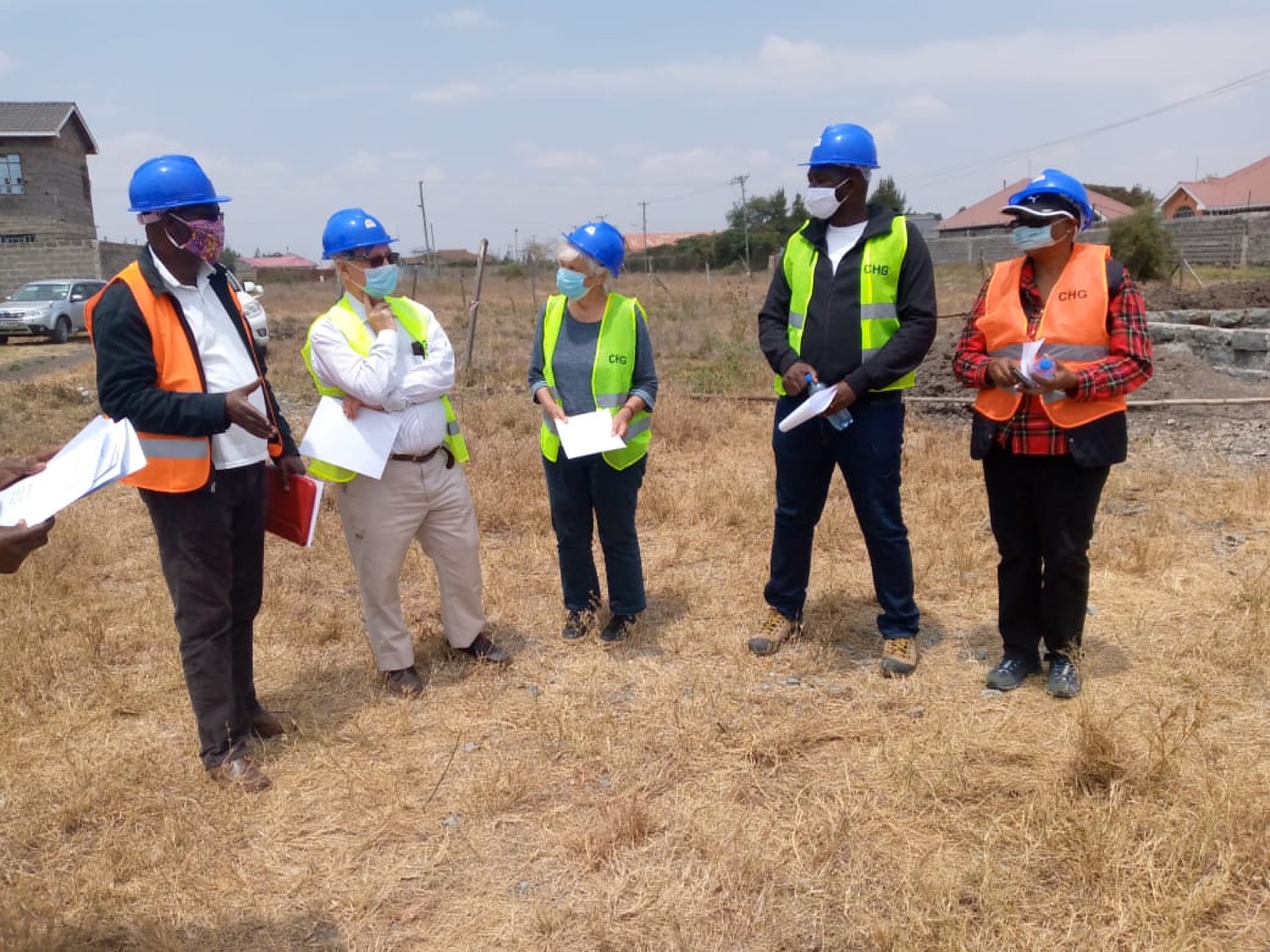
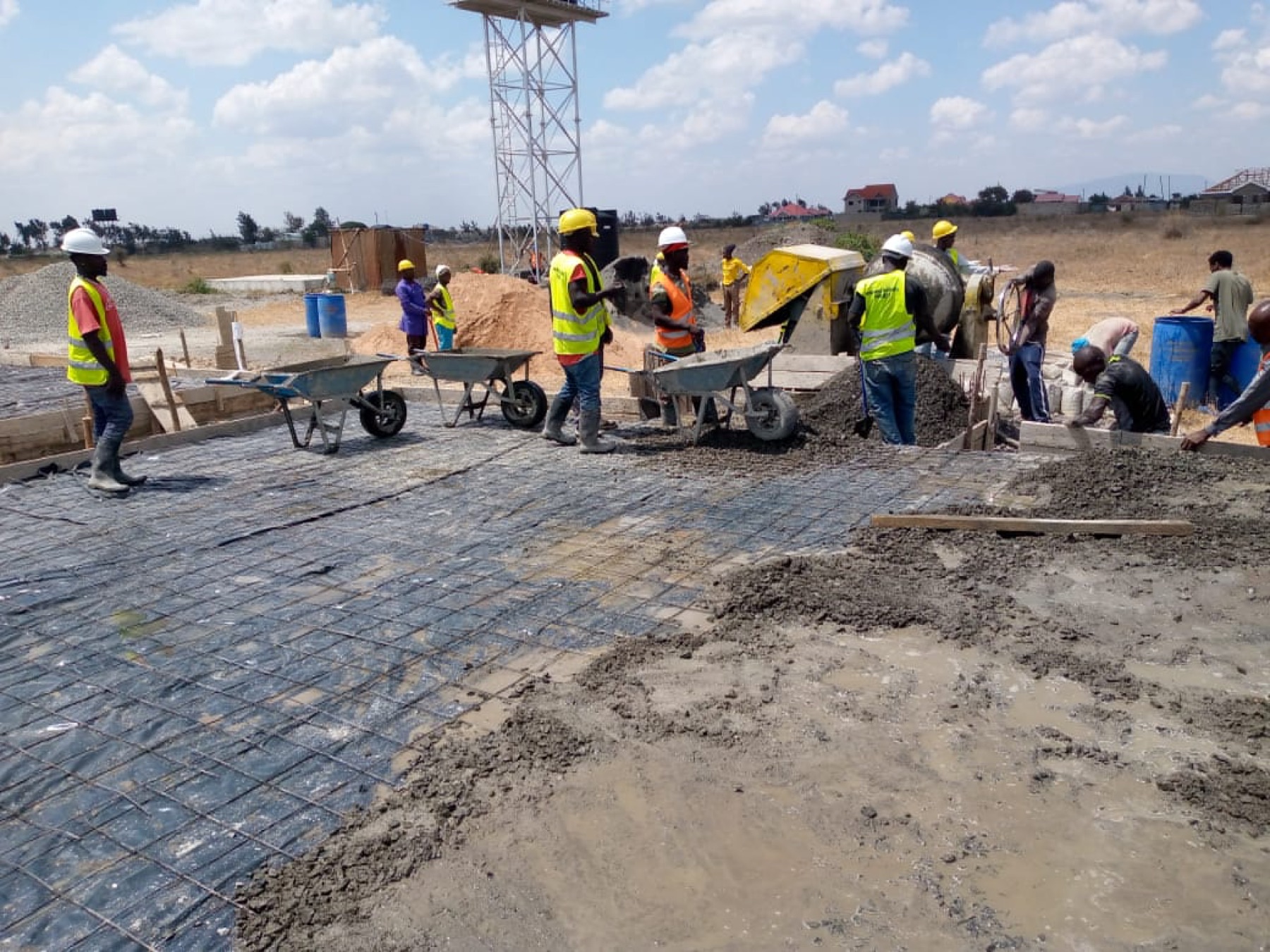
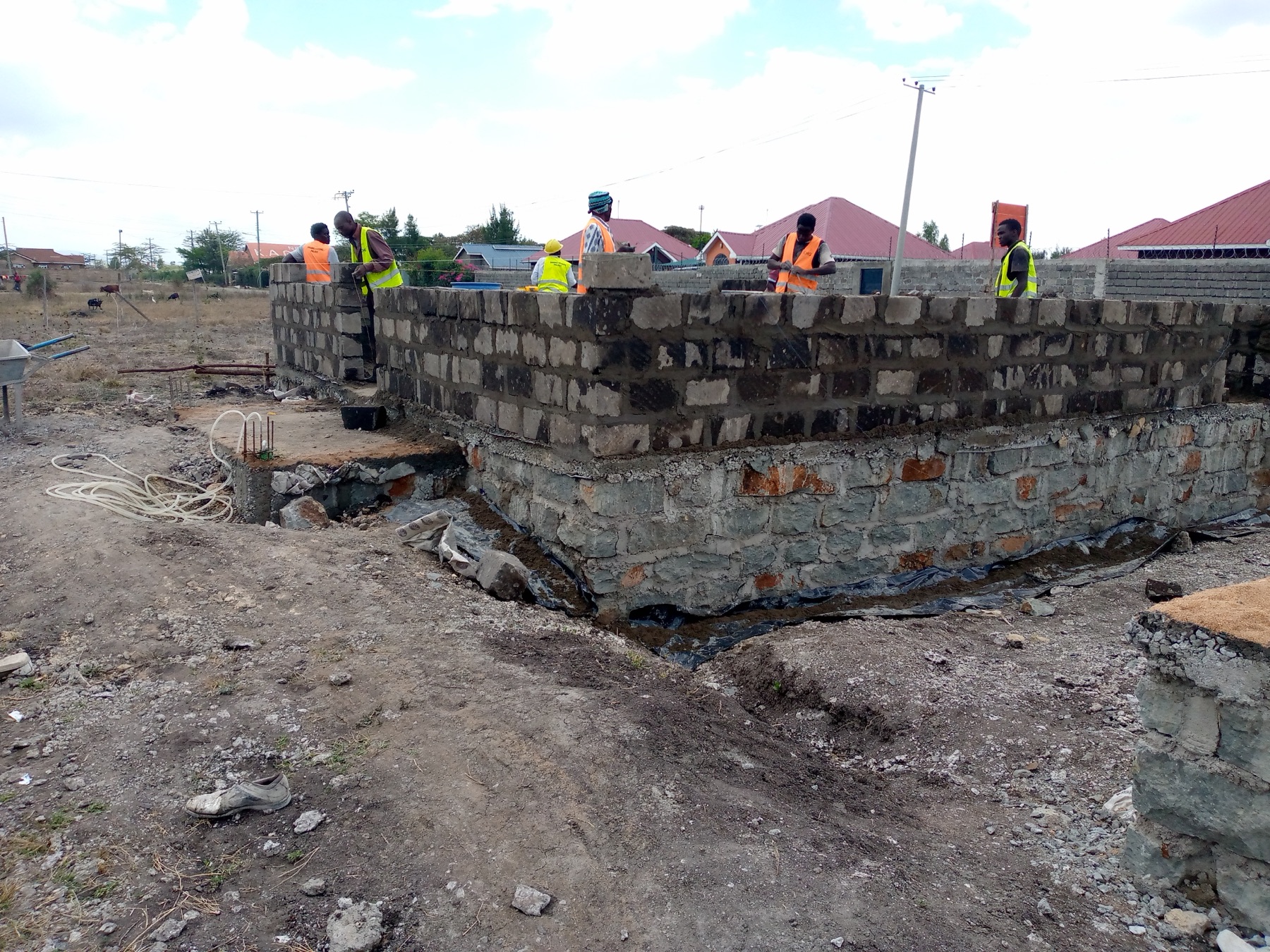
The Project Manager is at the site daily, two MWAMKO members are First Aiders and one of them is always present when there is work on site. The Safety Officer is a CHG intern and is on the site full-time during any works. The MWAMKO members are set up in two separate teams working at different times.
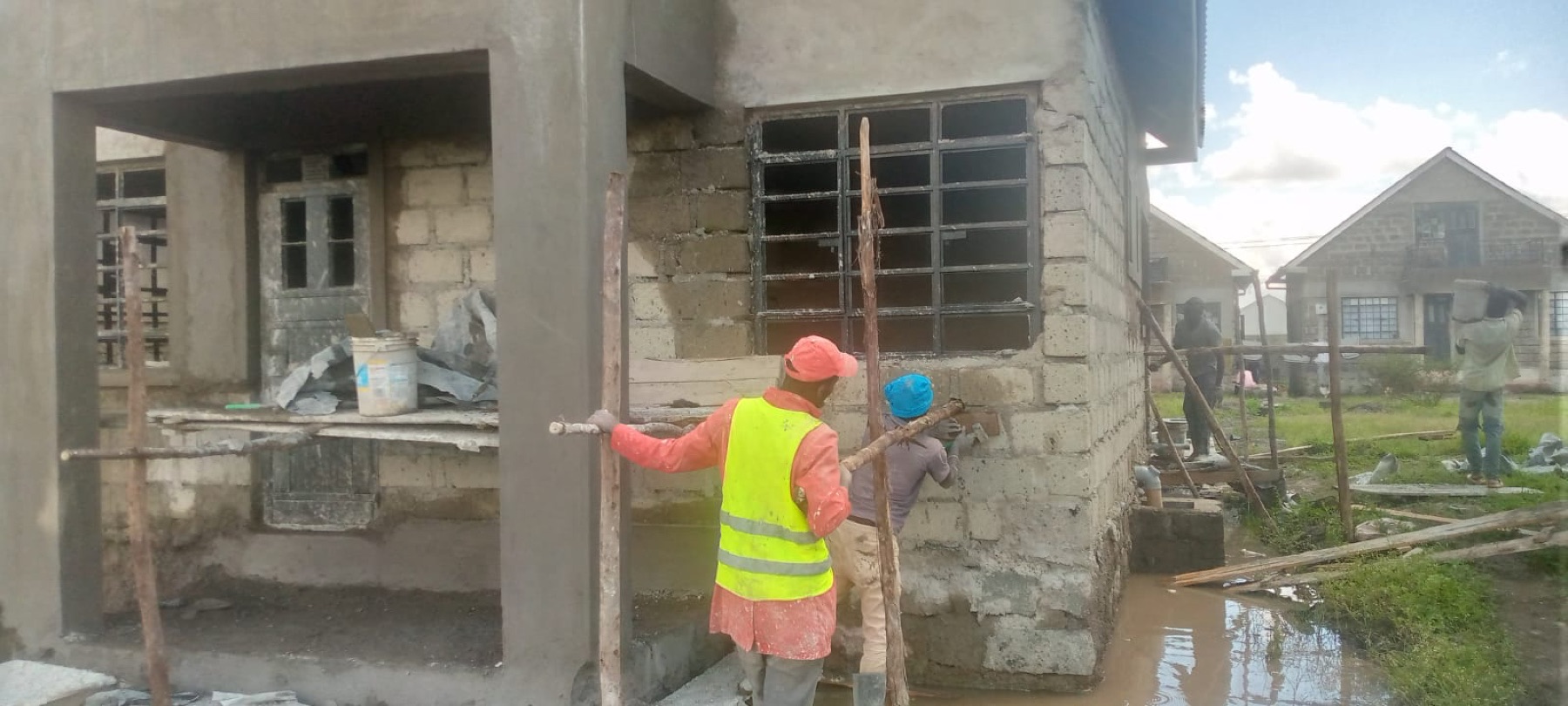
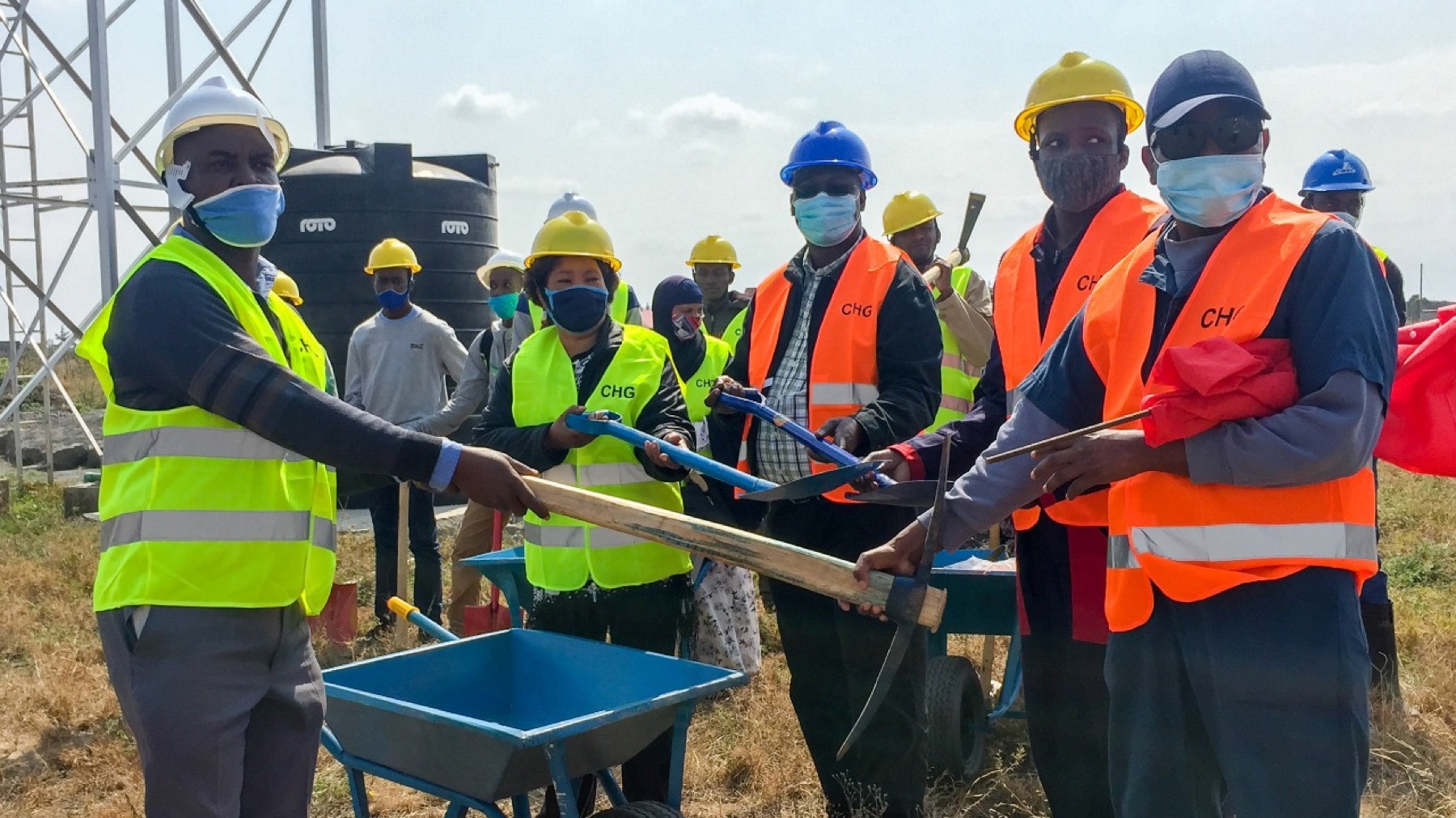
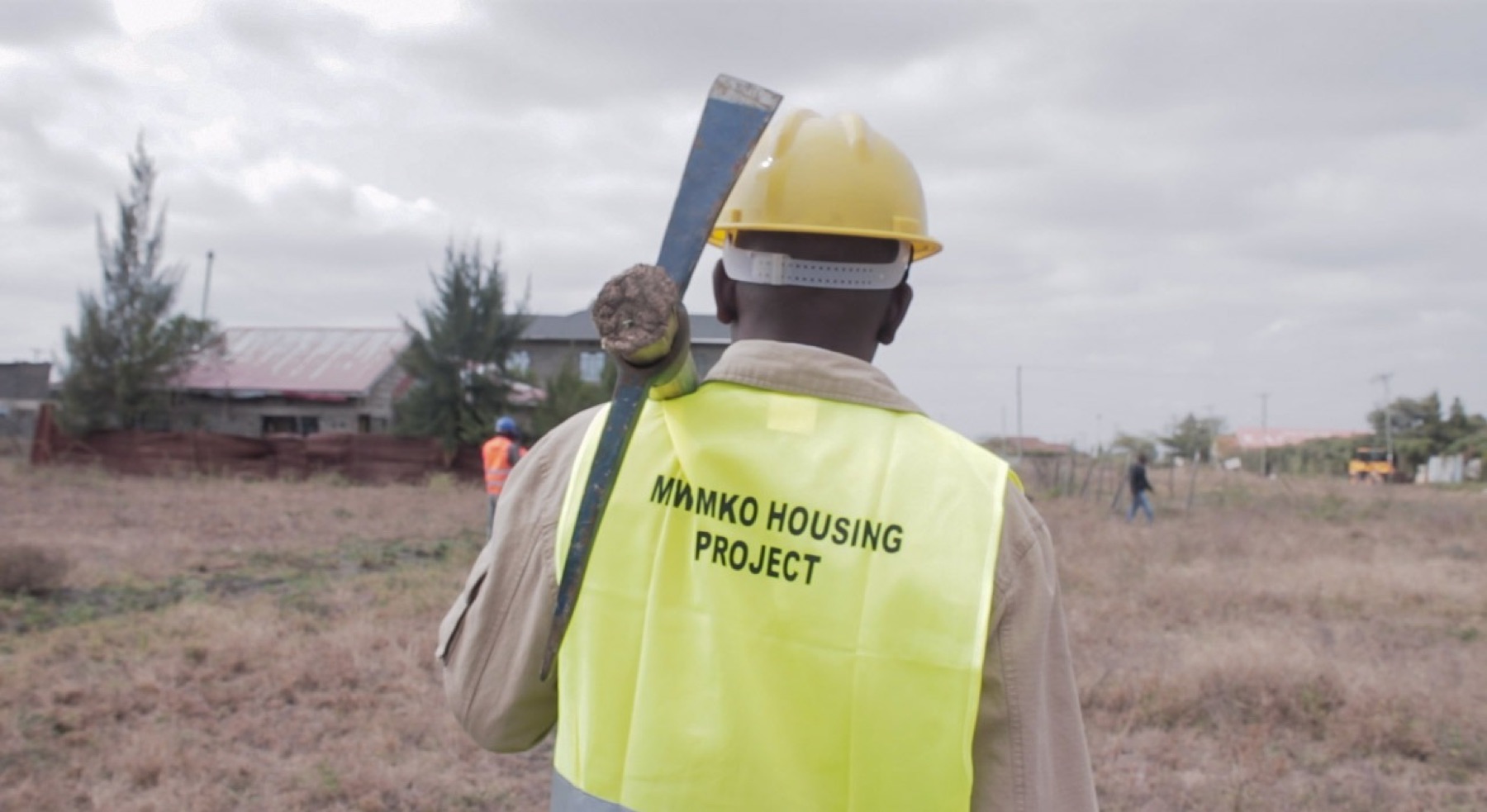
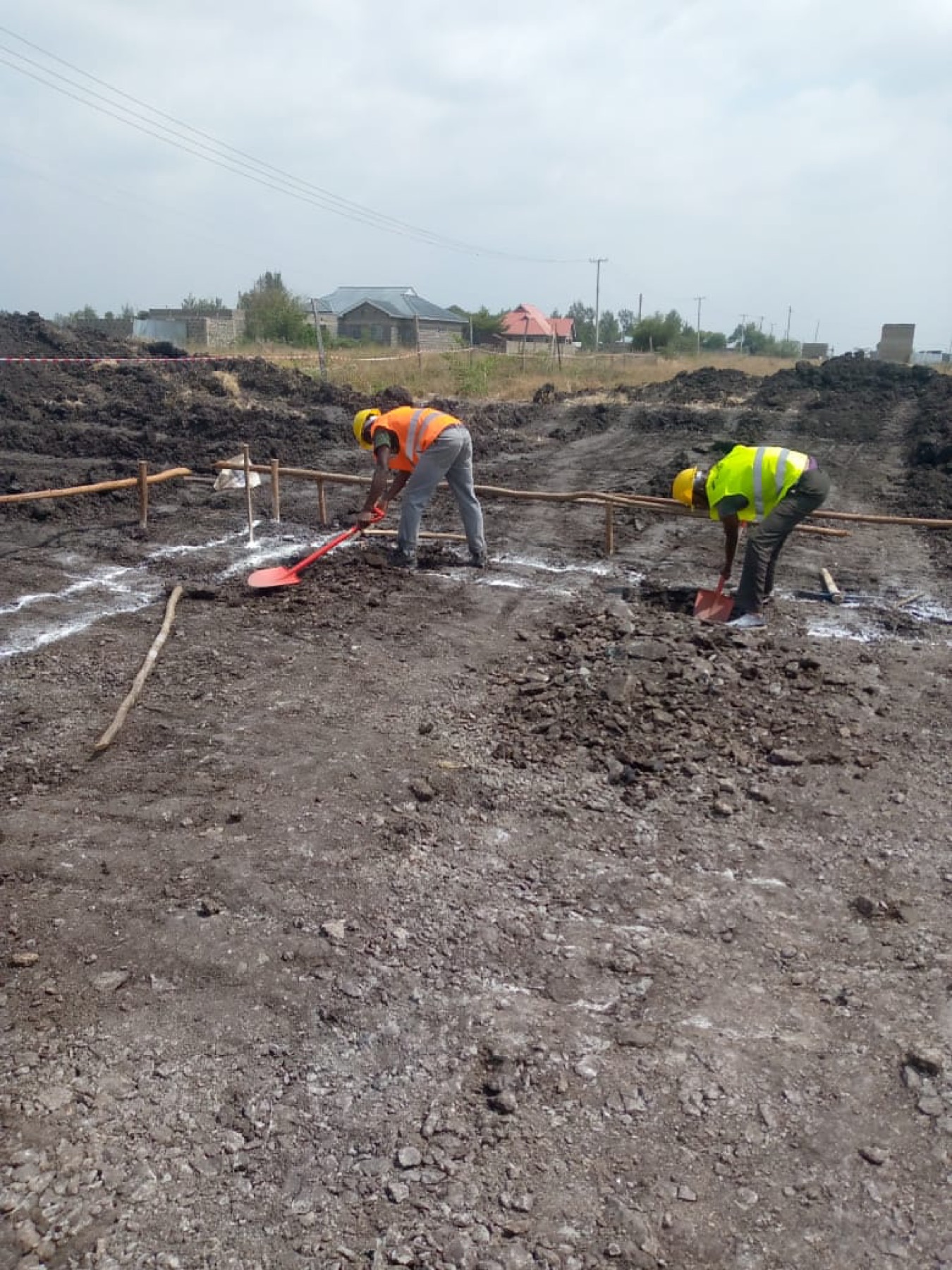
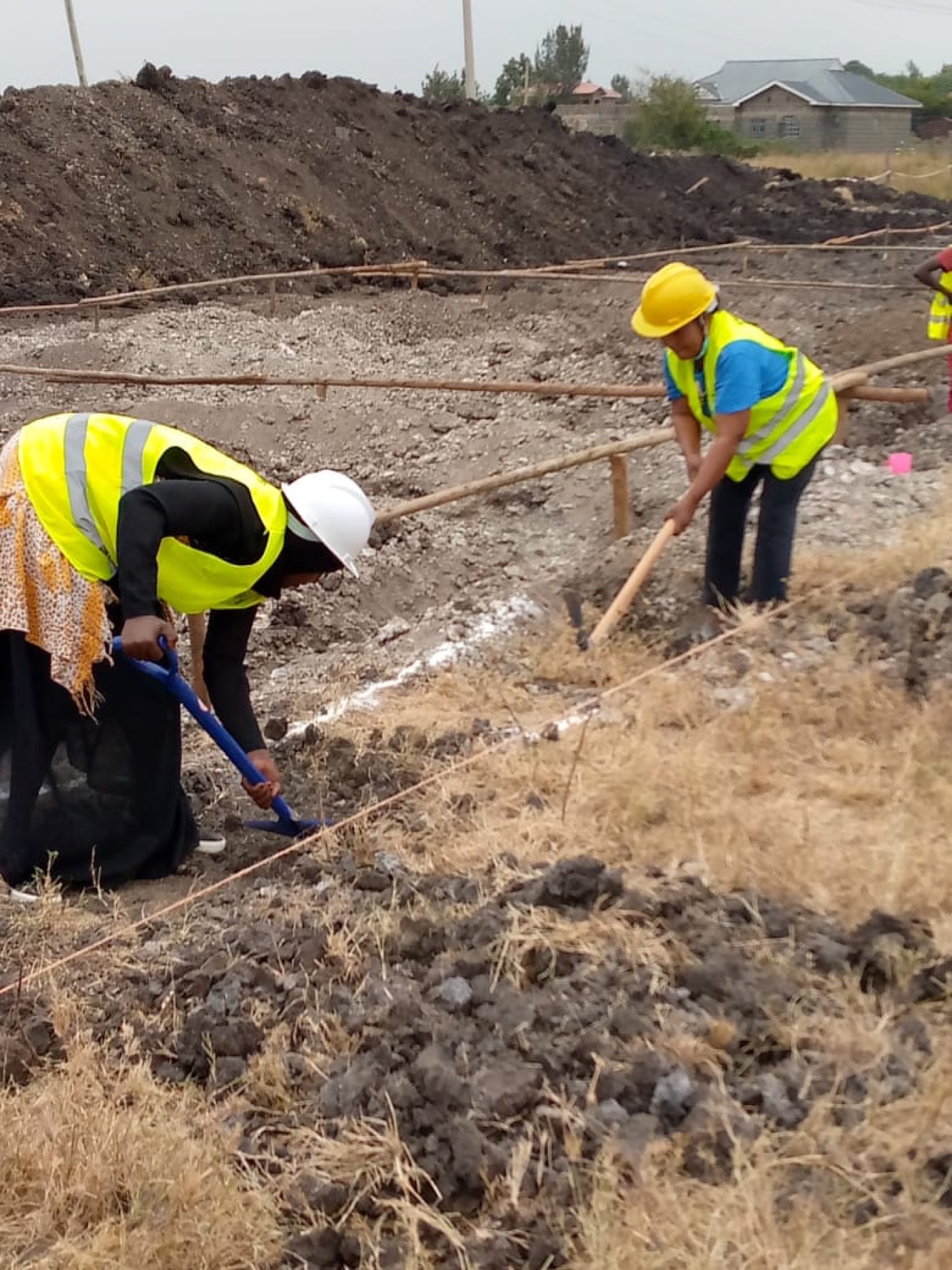
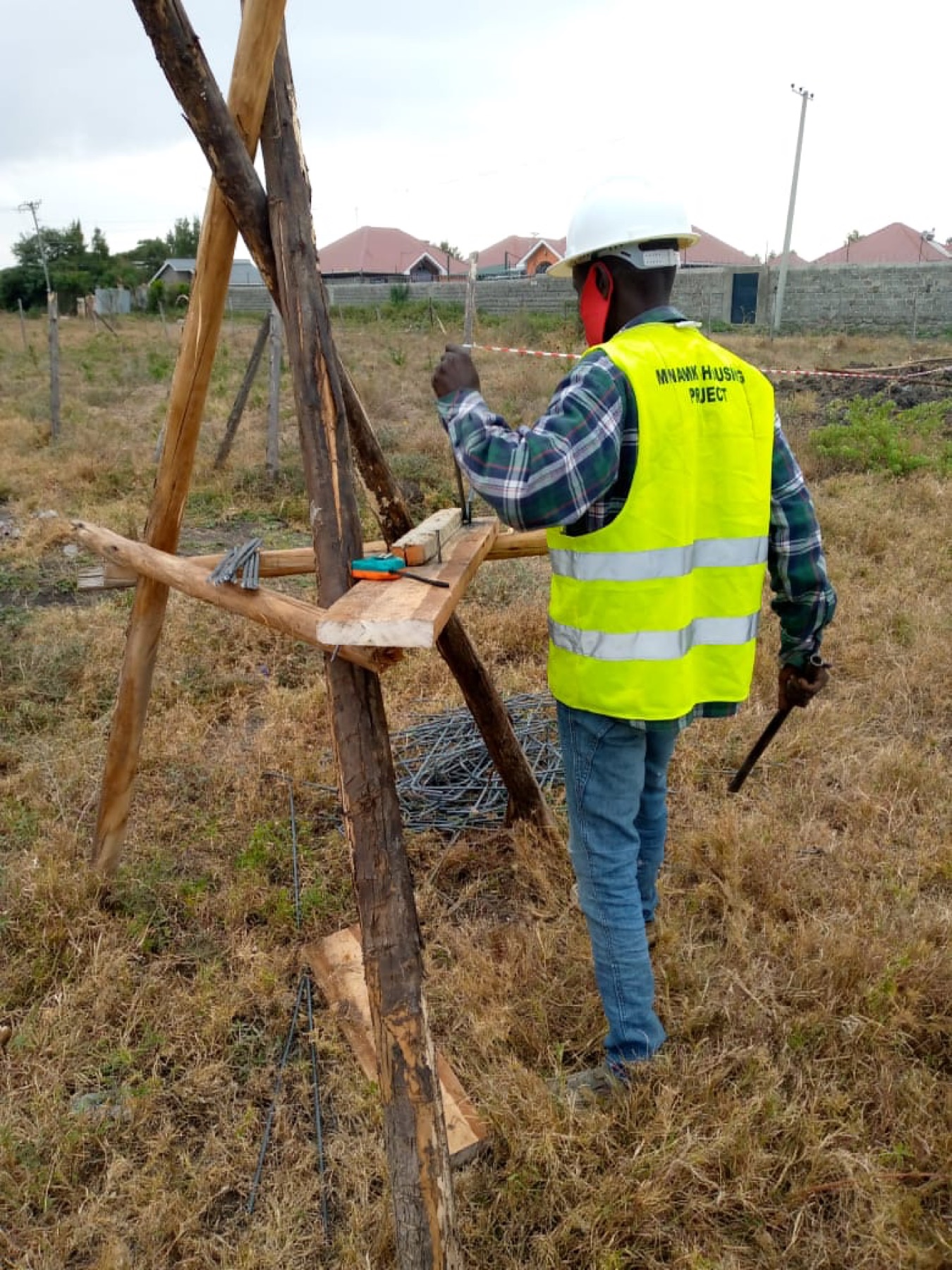
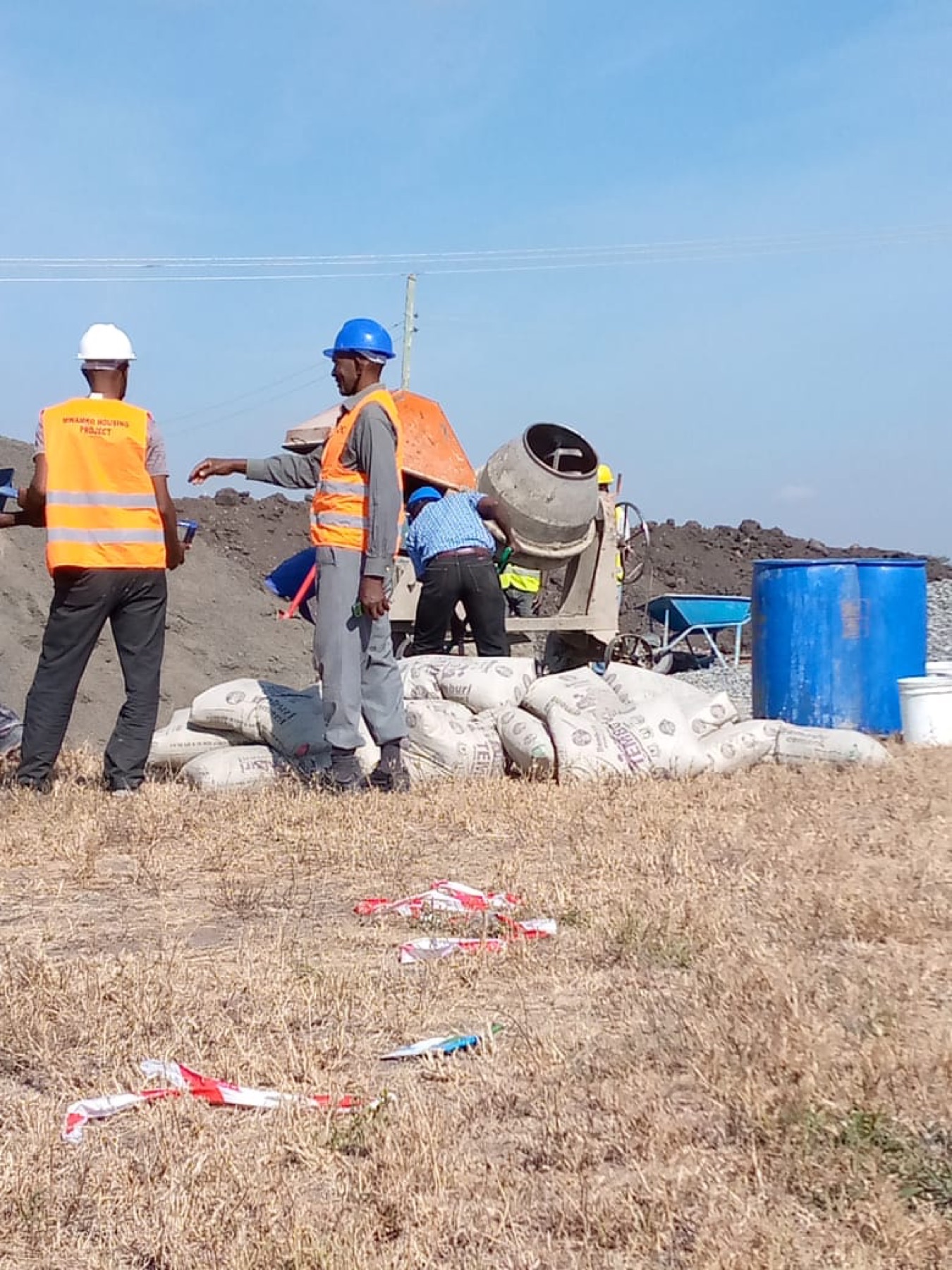
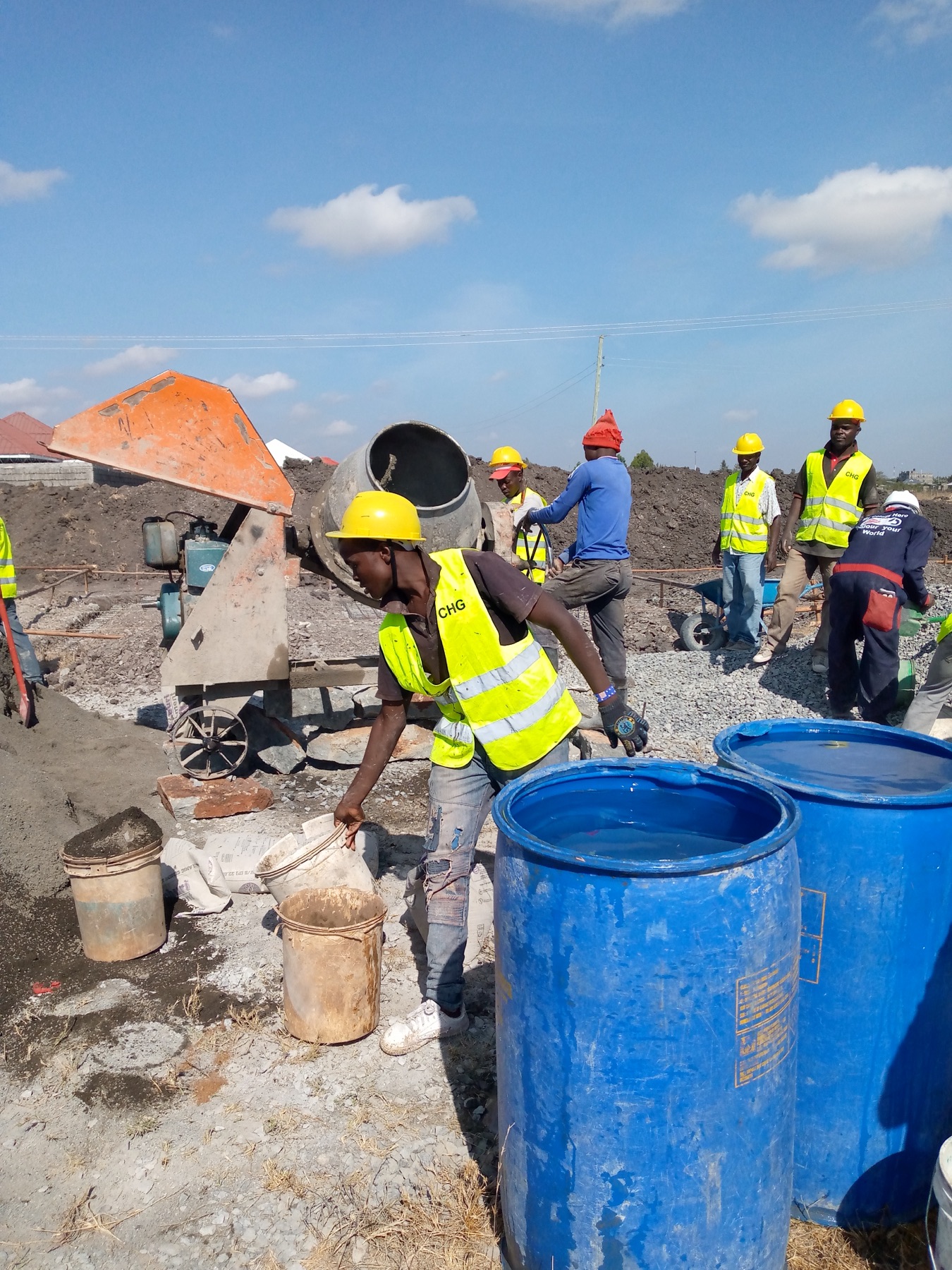
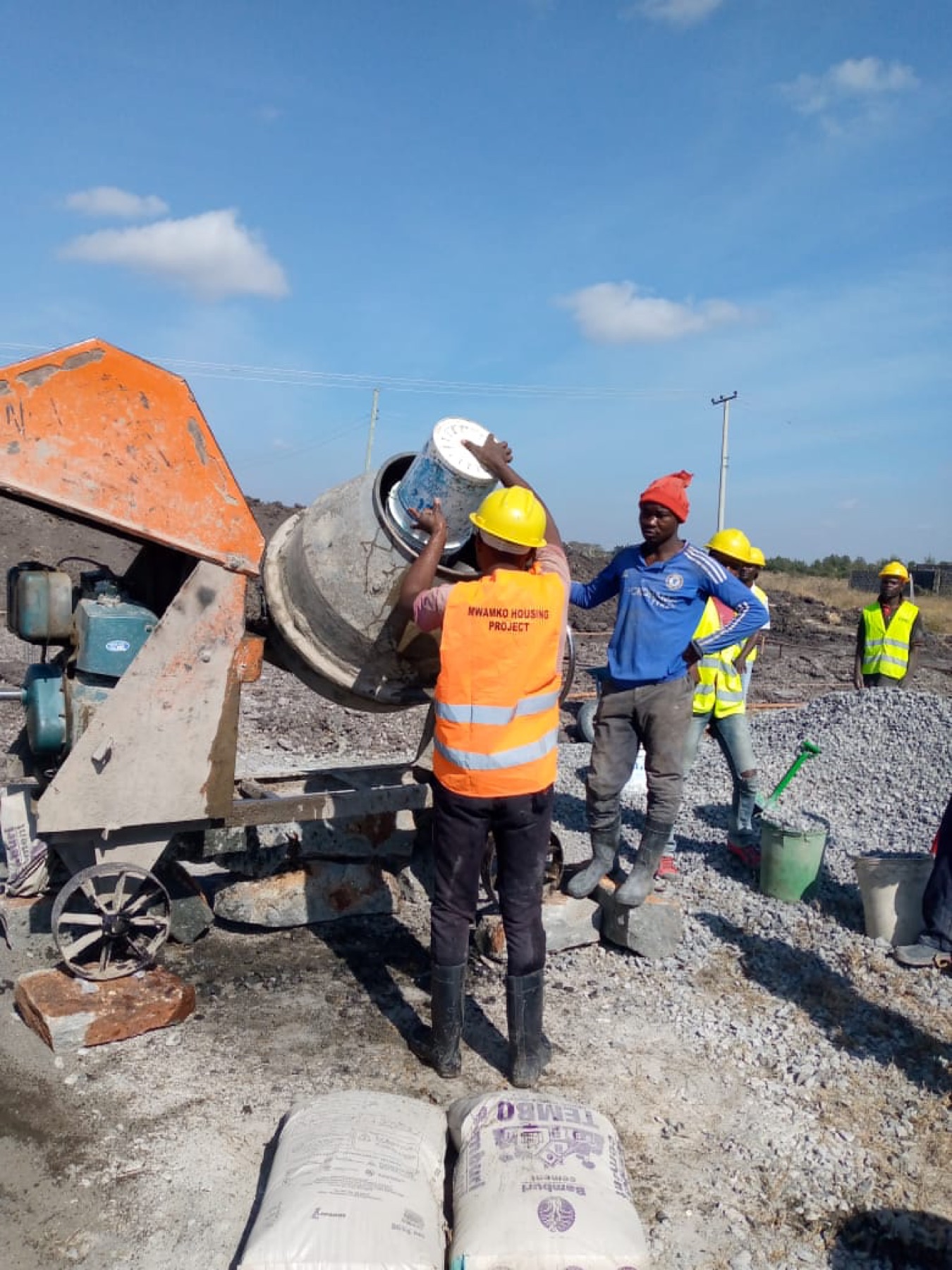
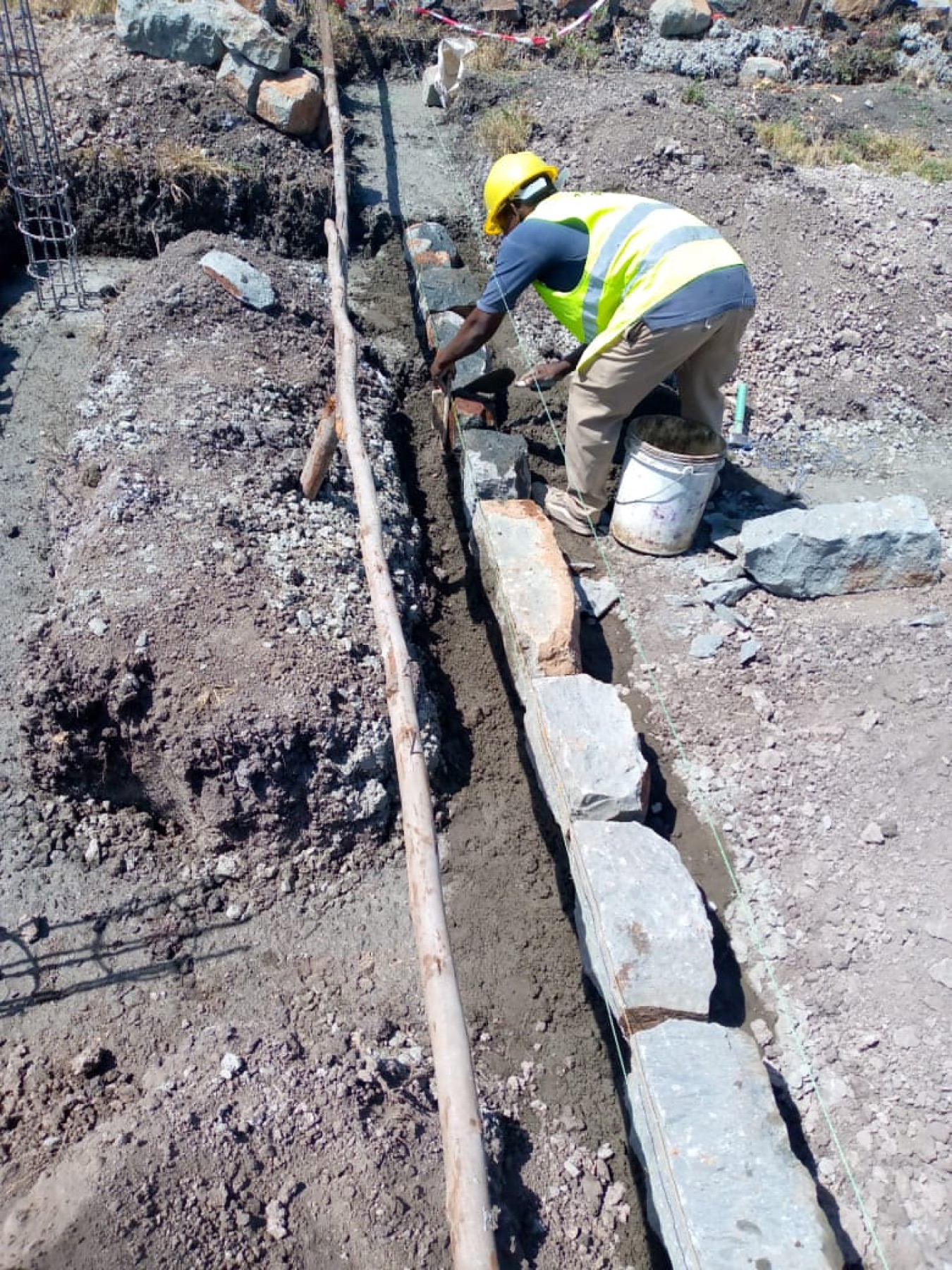
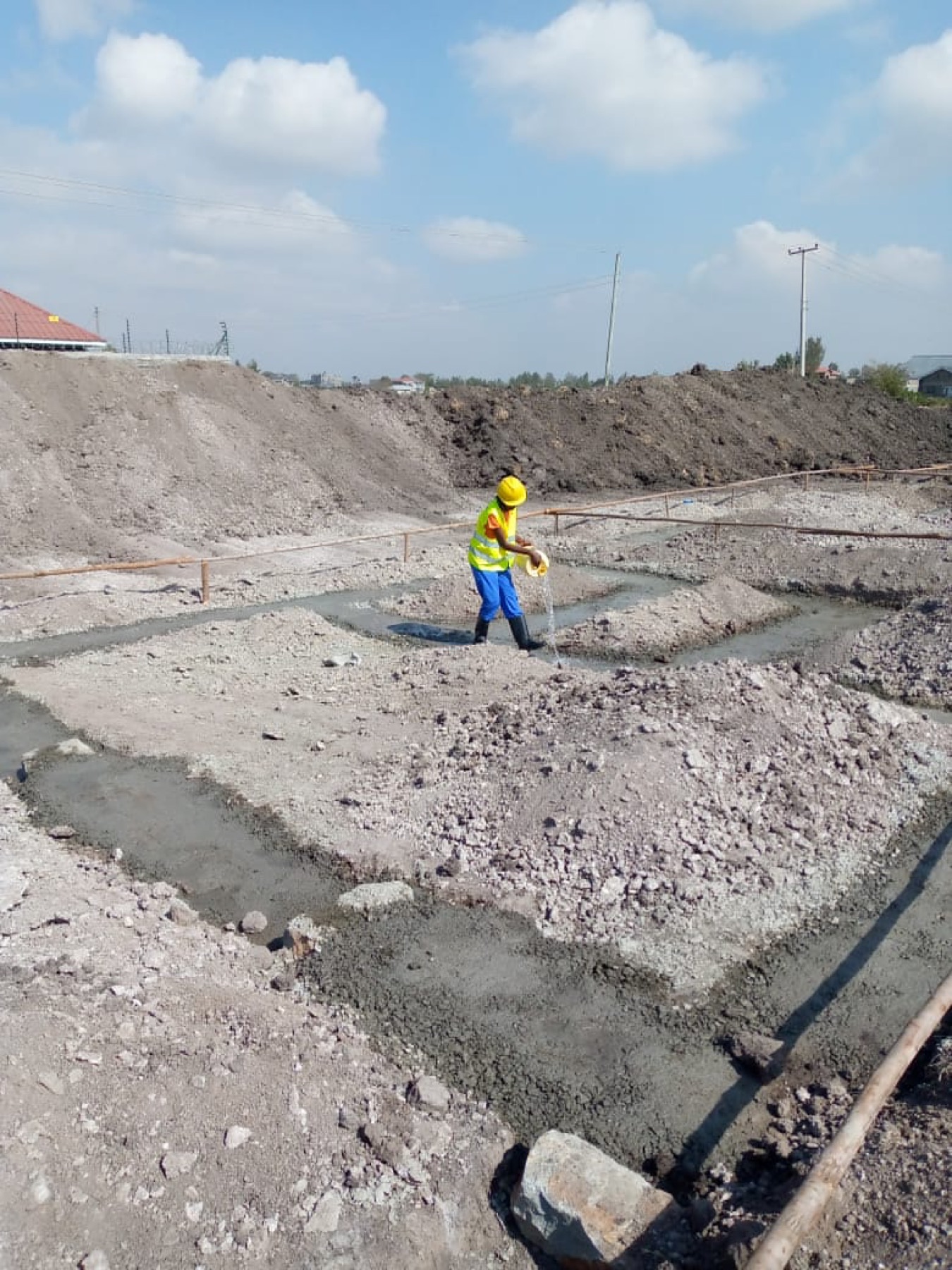
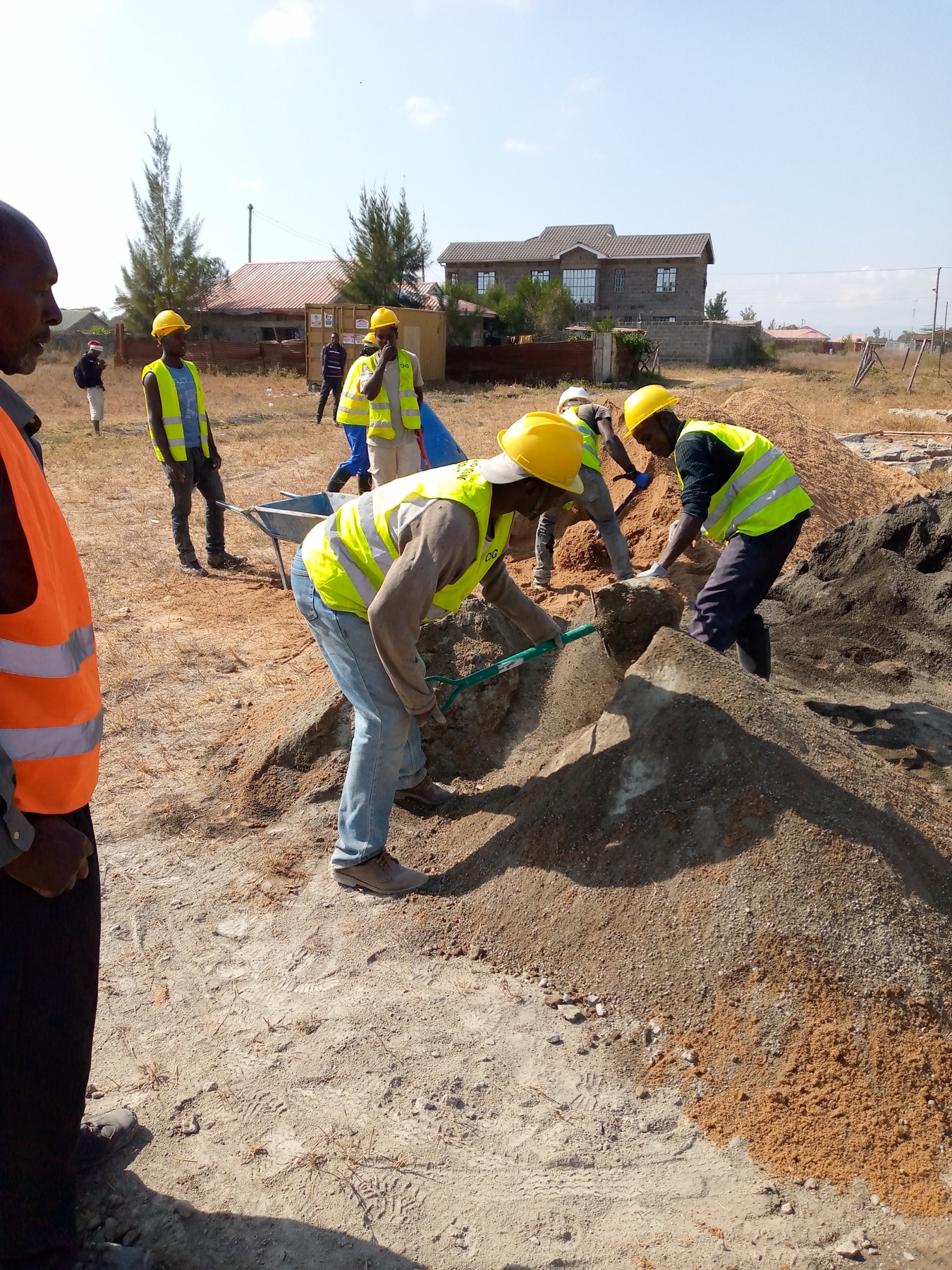
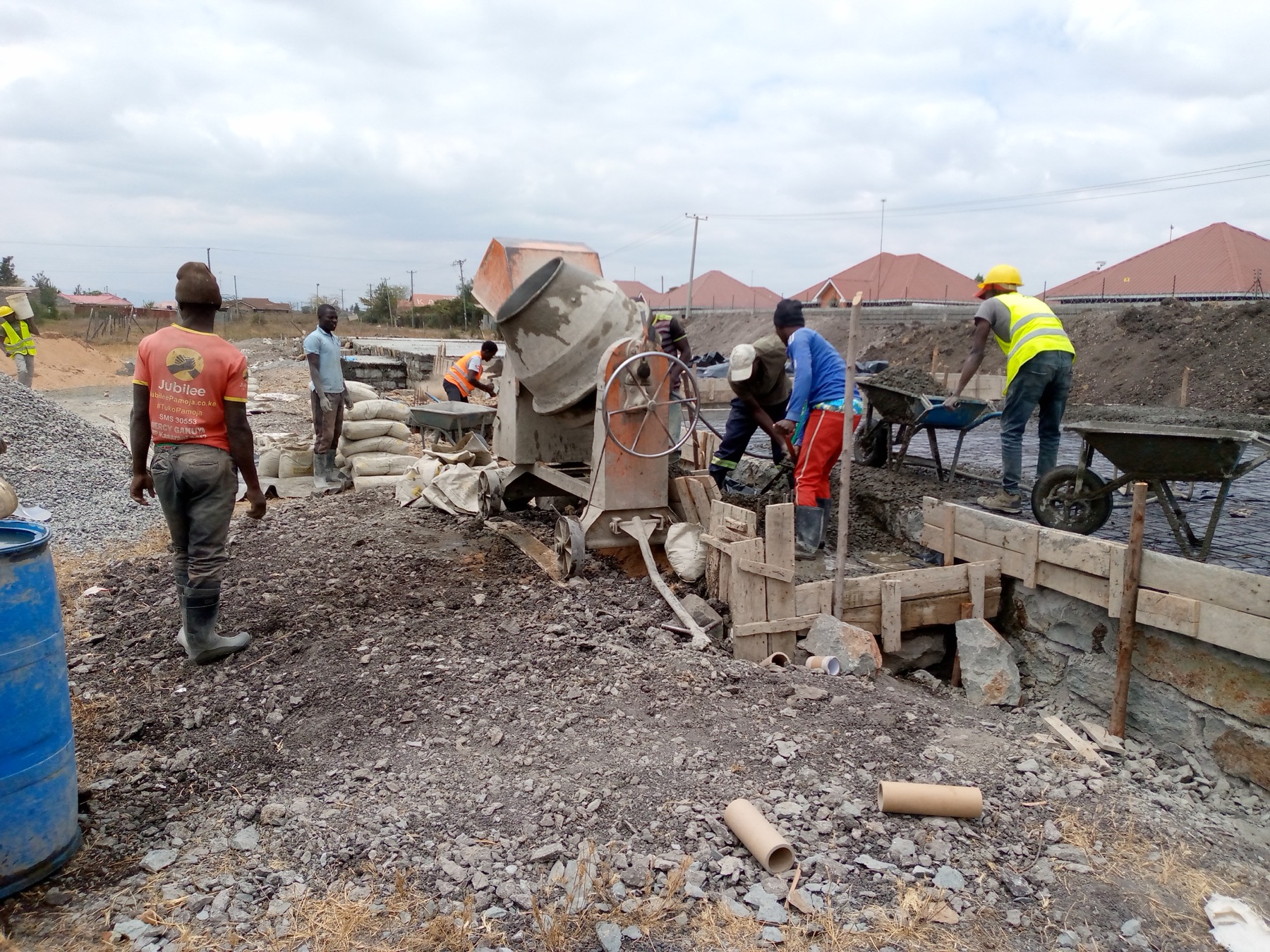
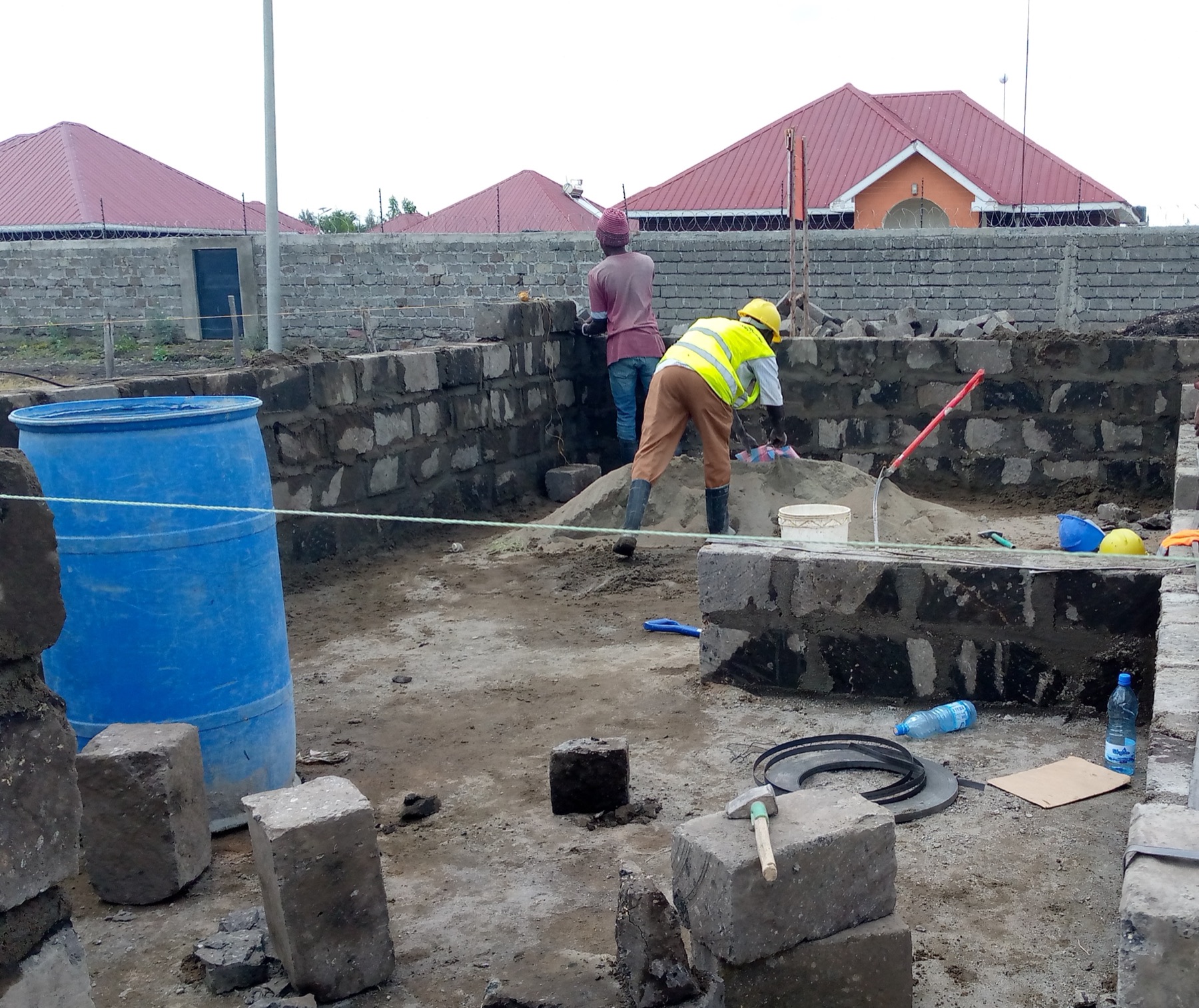
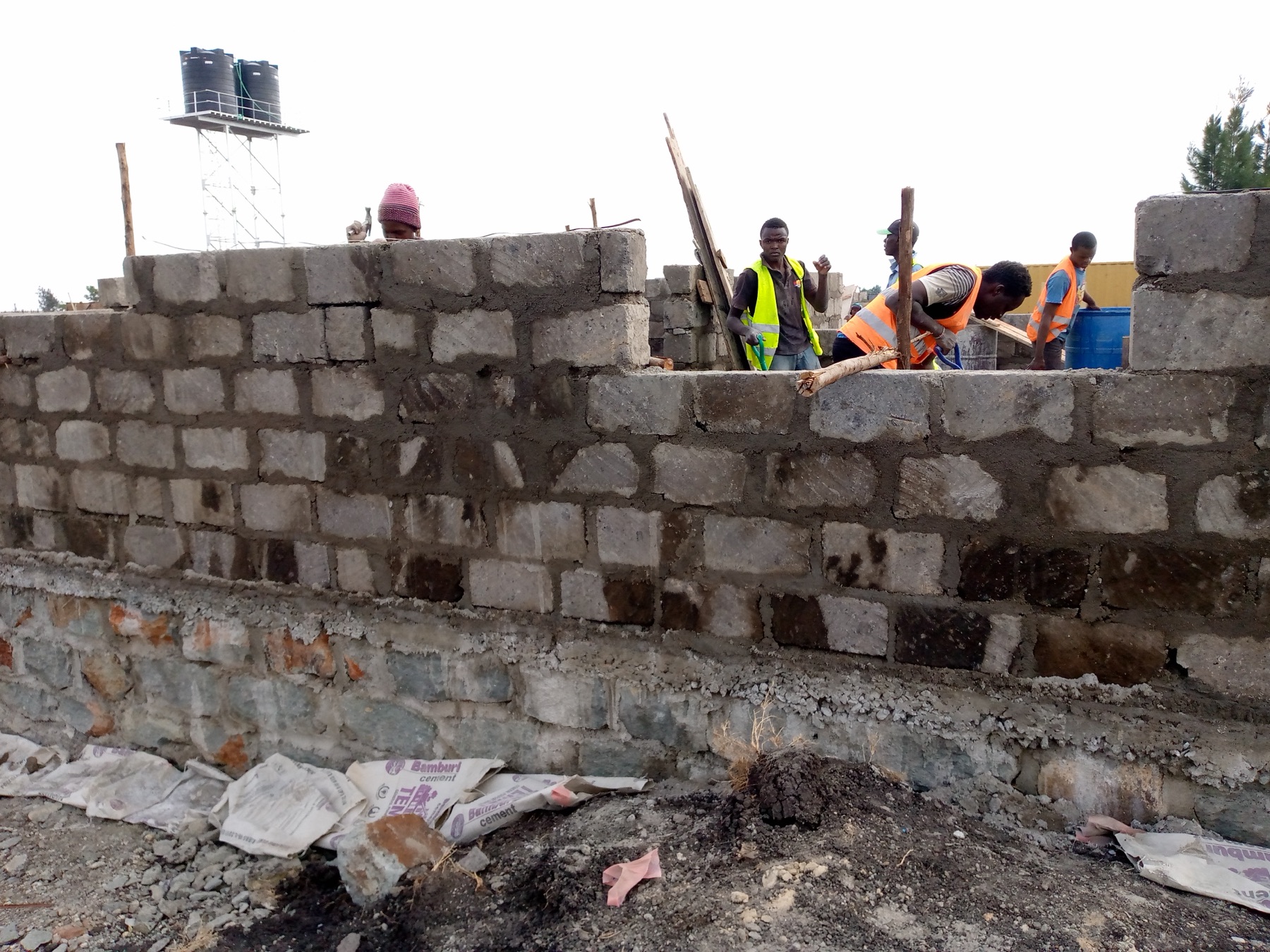
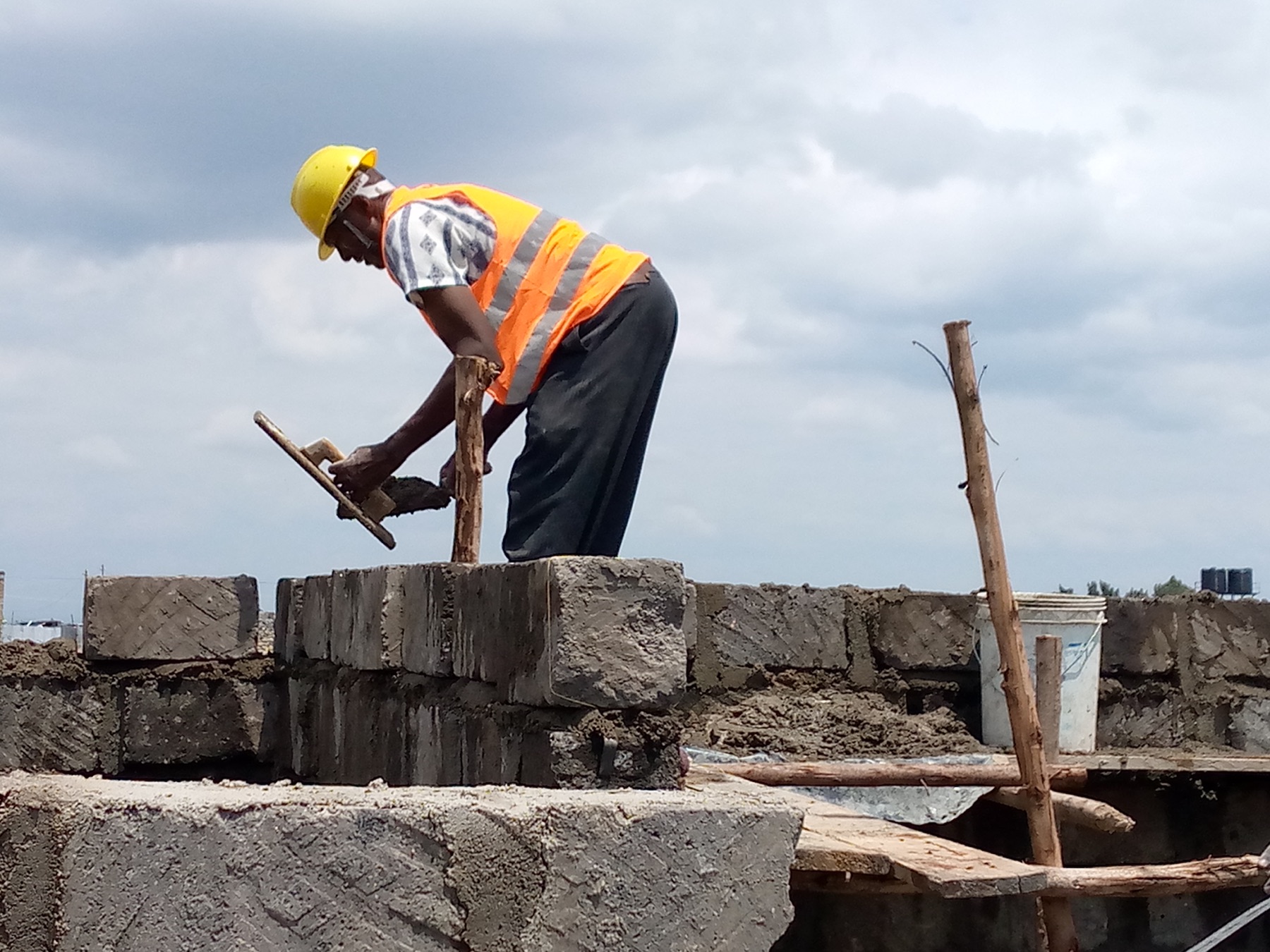
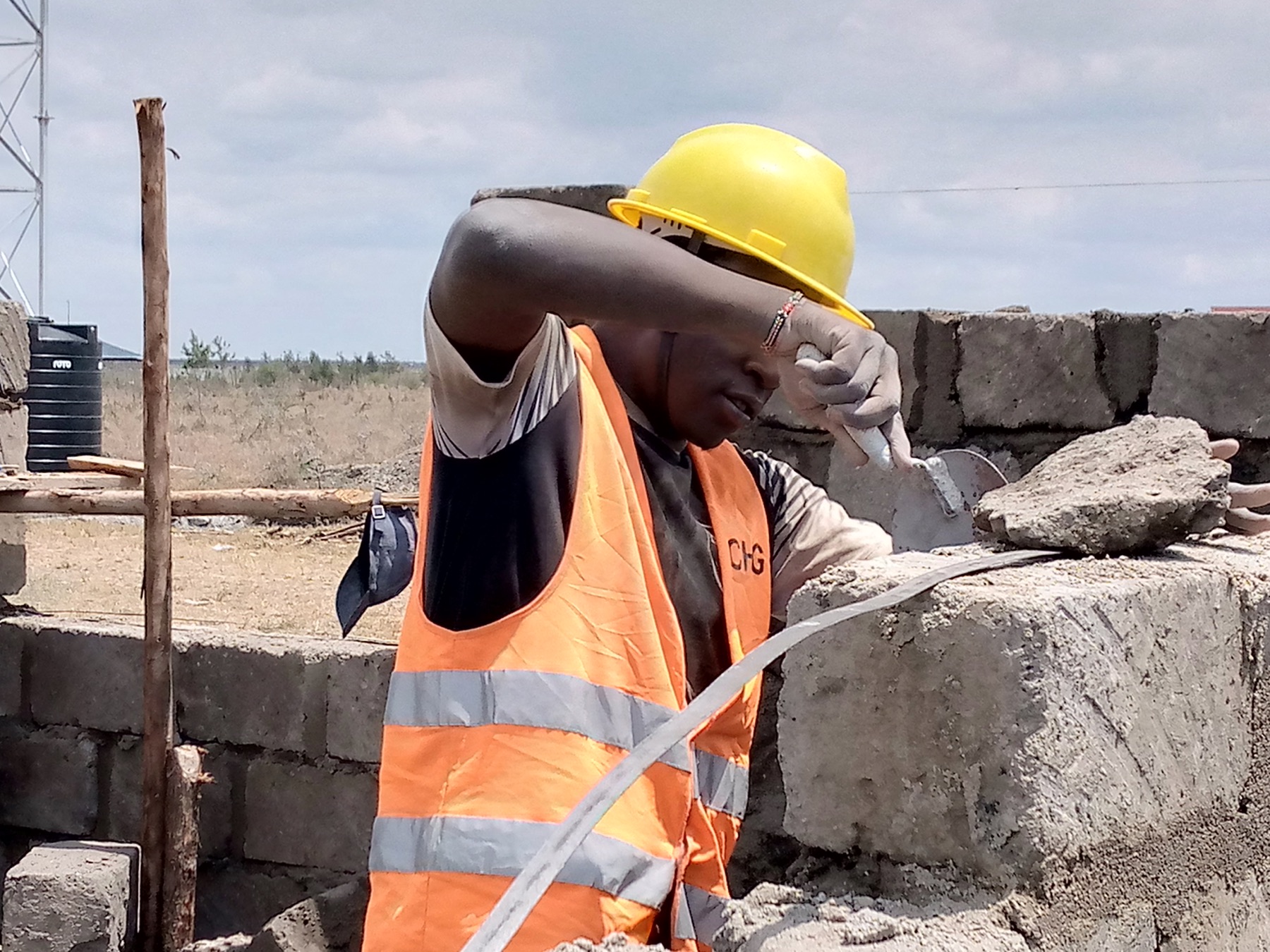
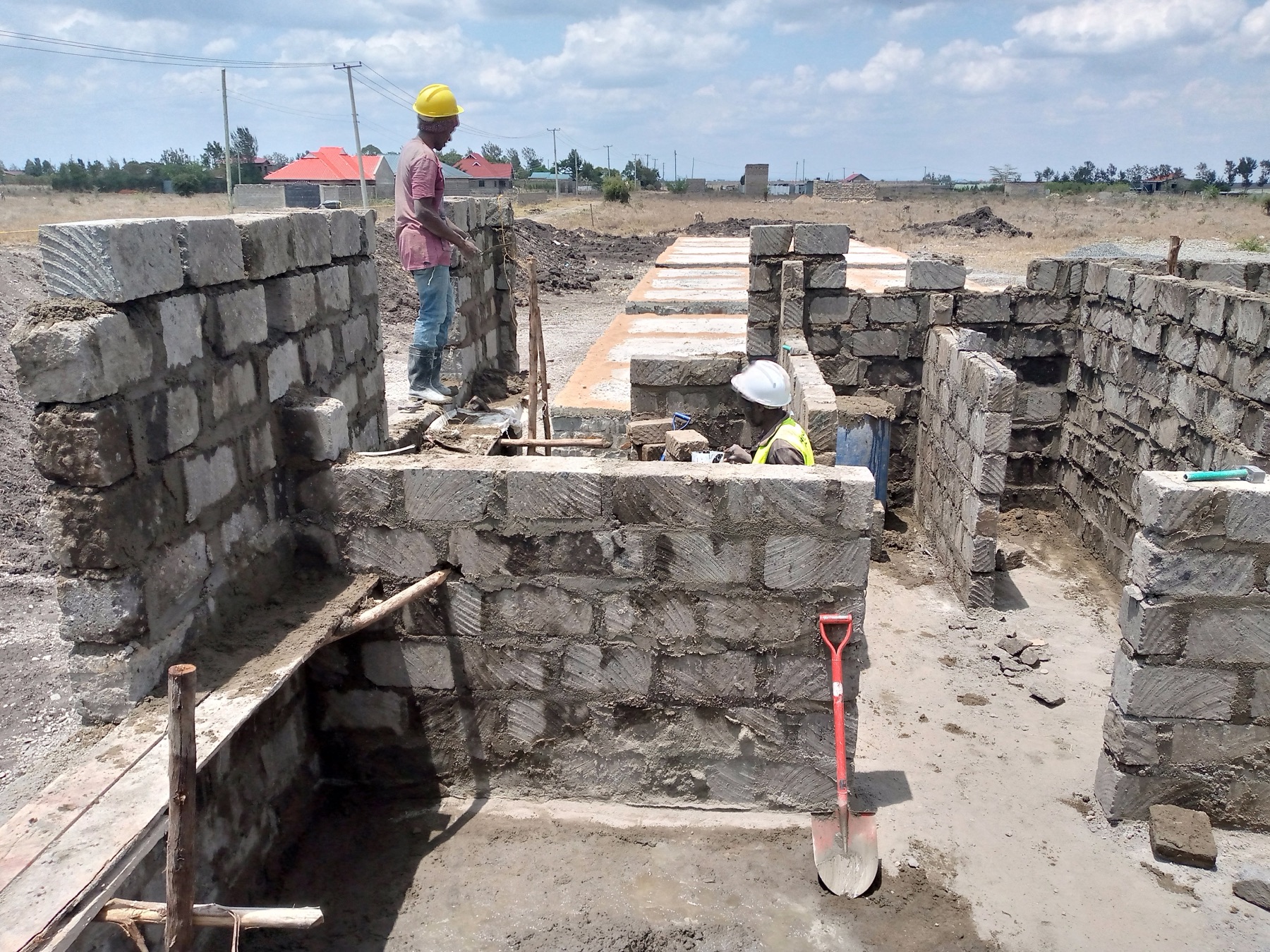
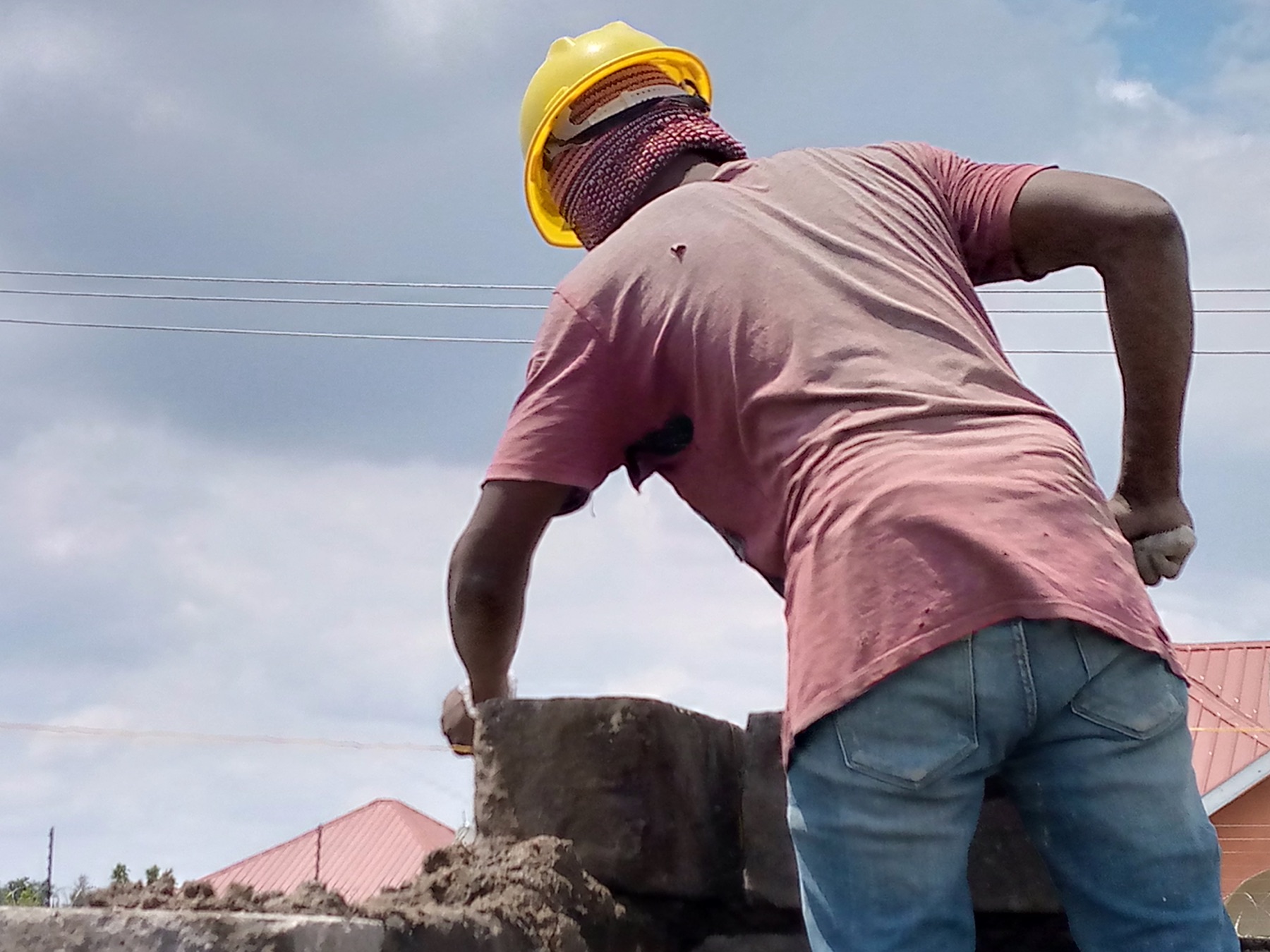
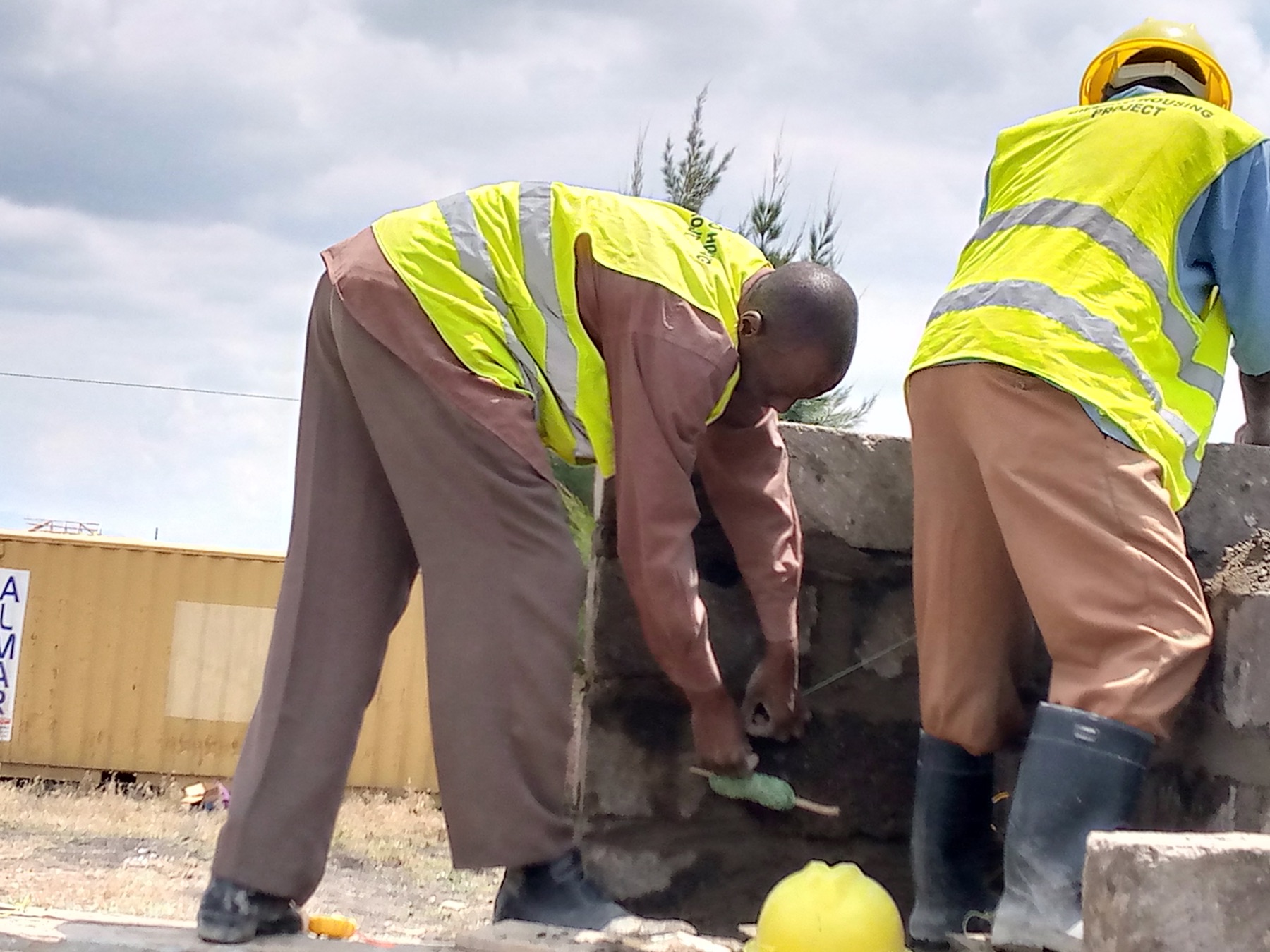
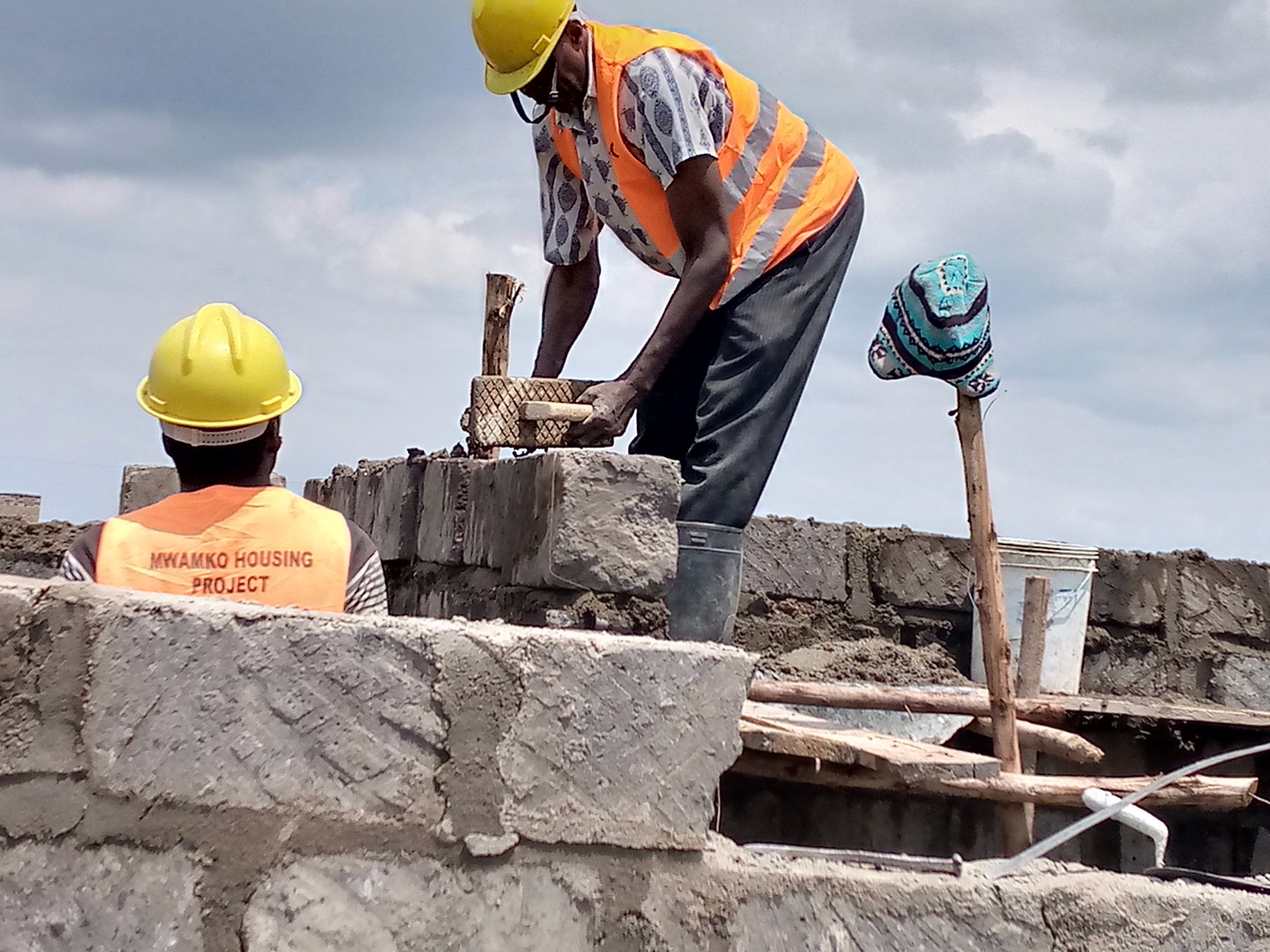
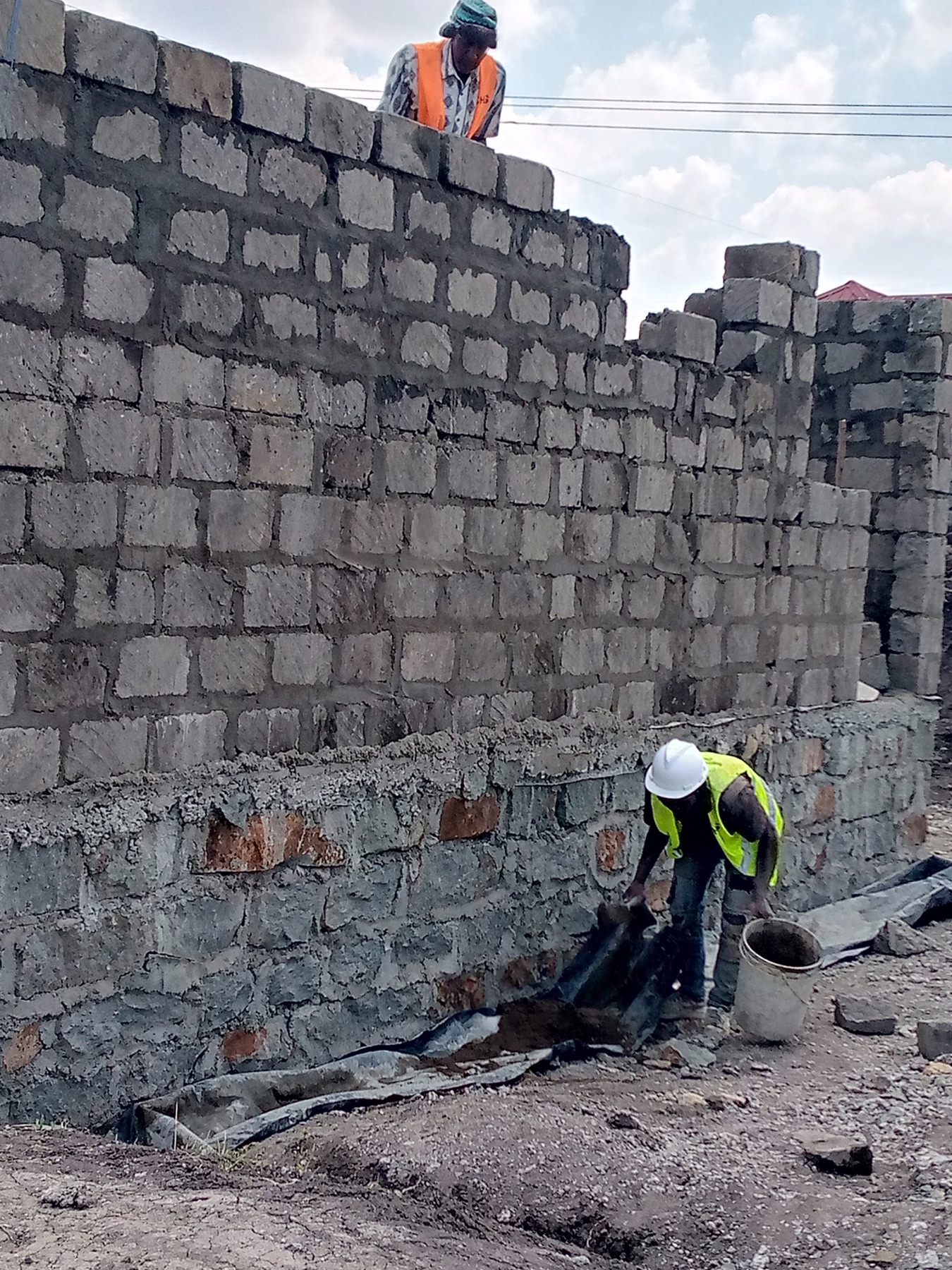
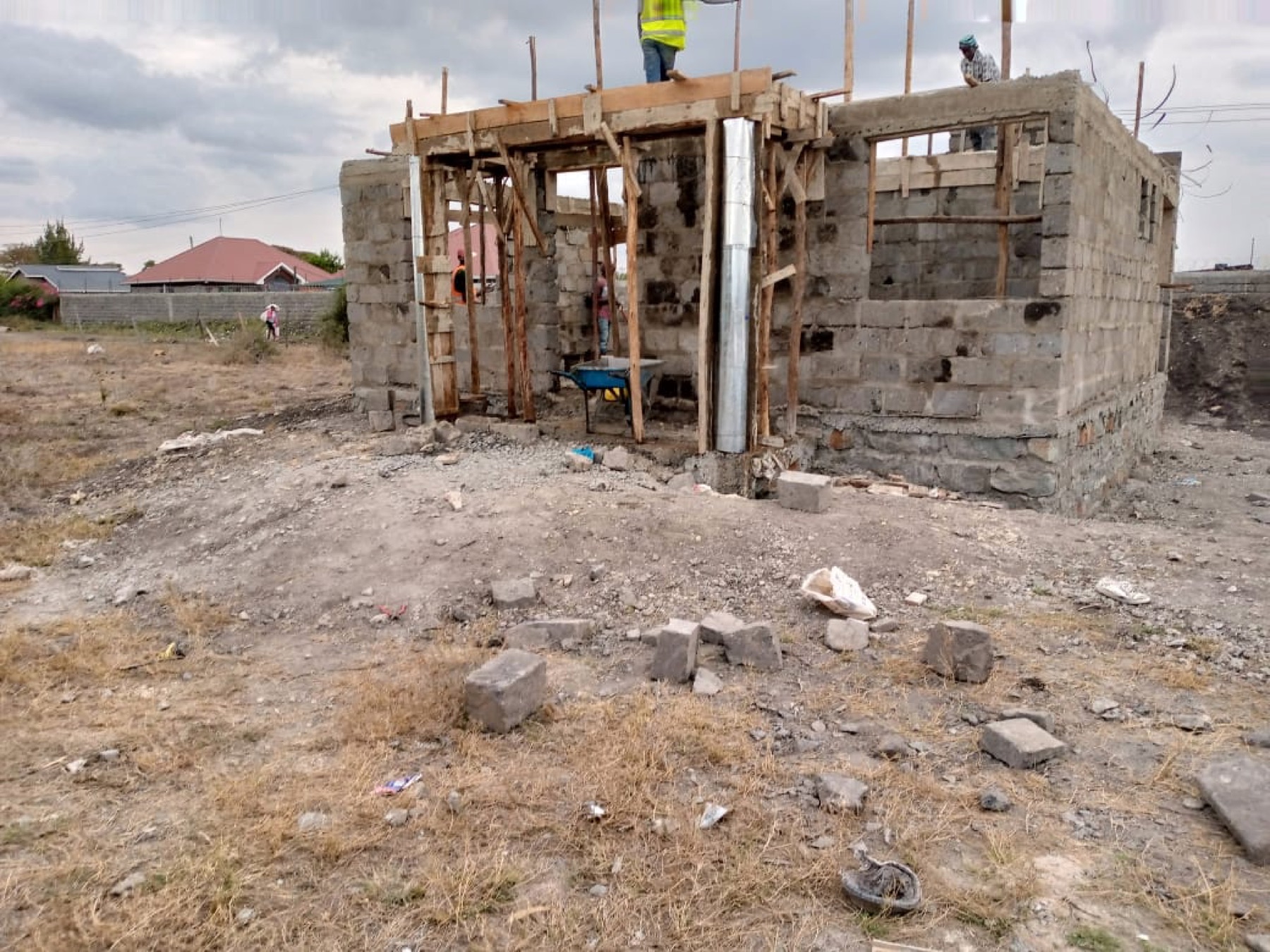
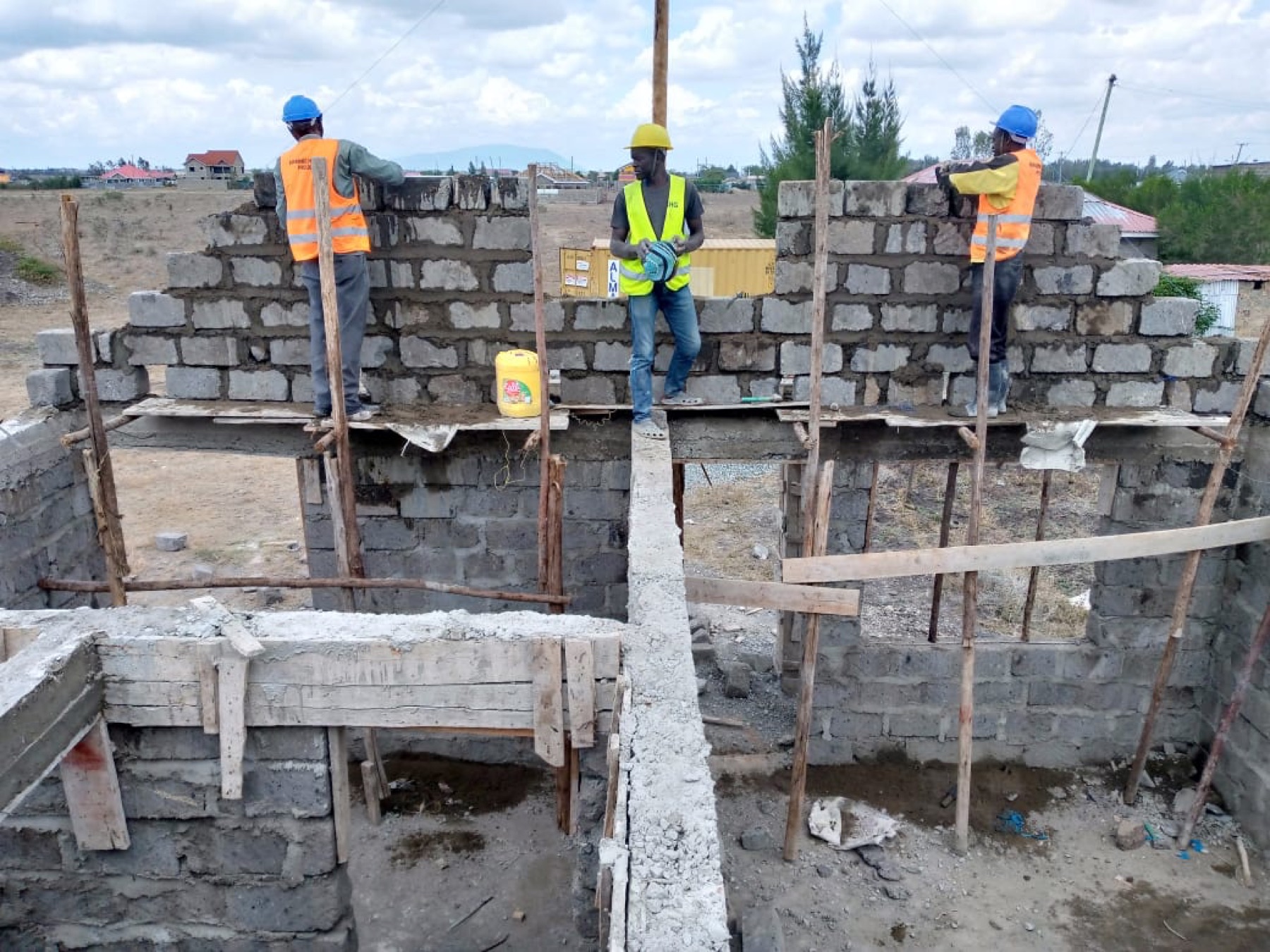
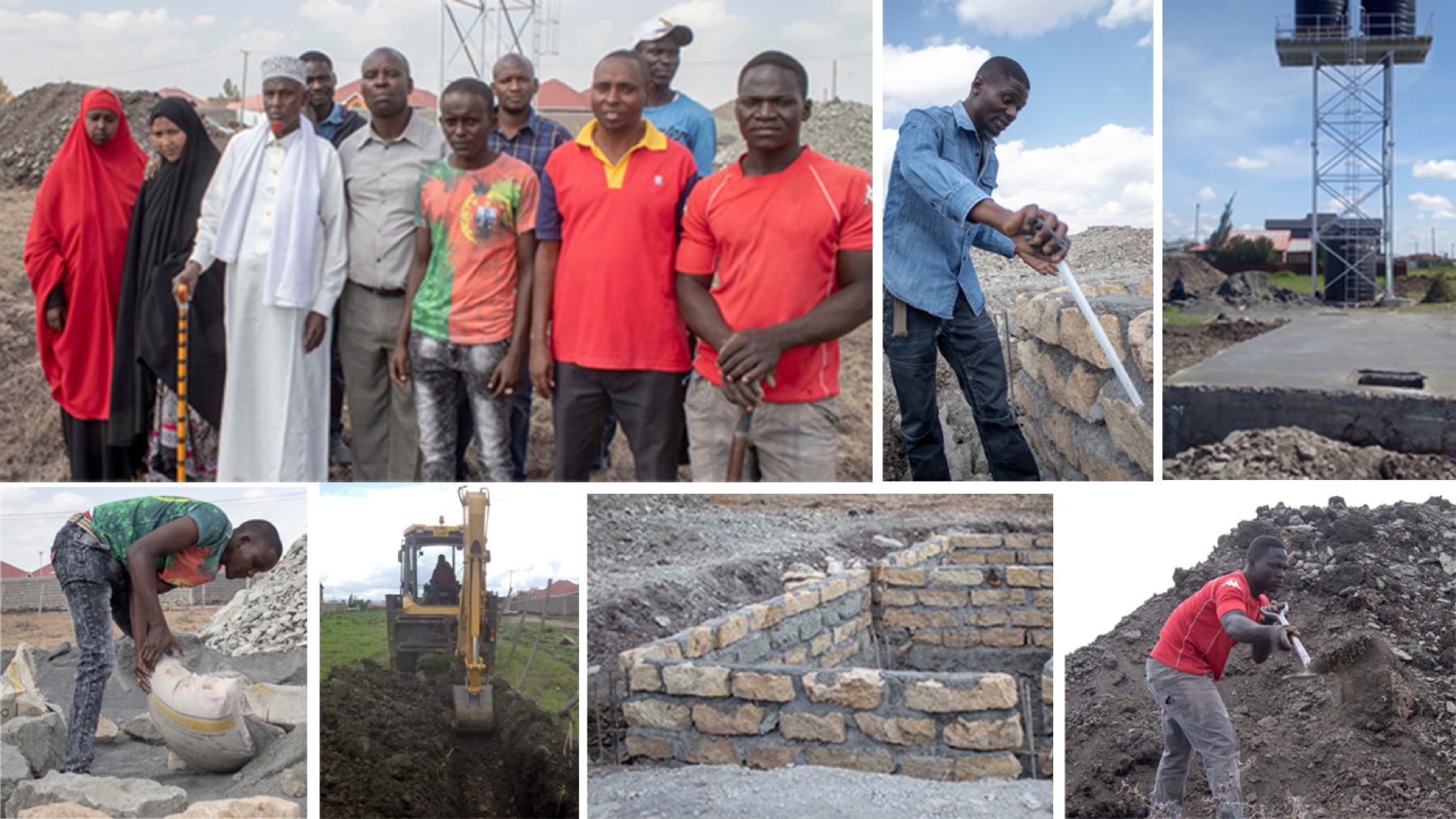
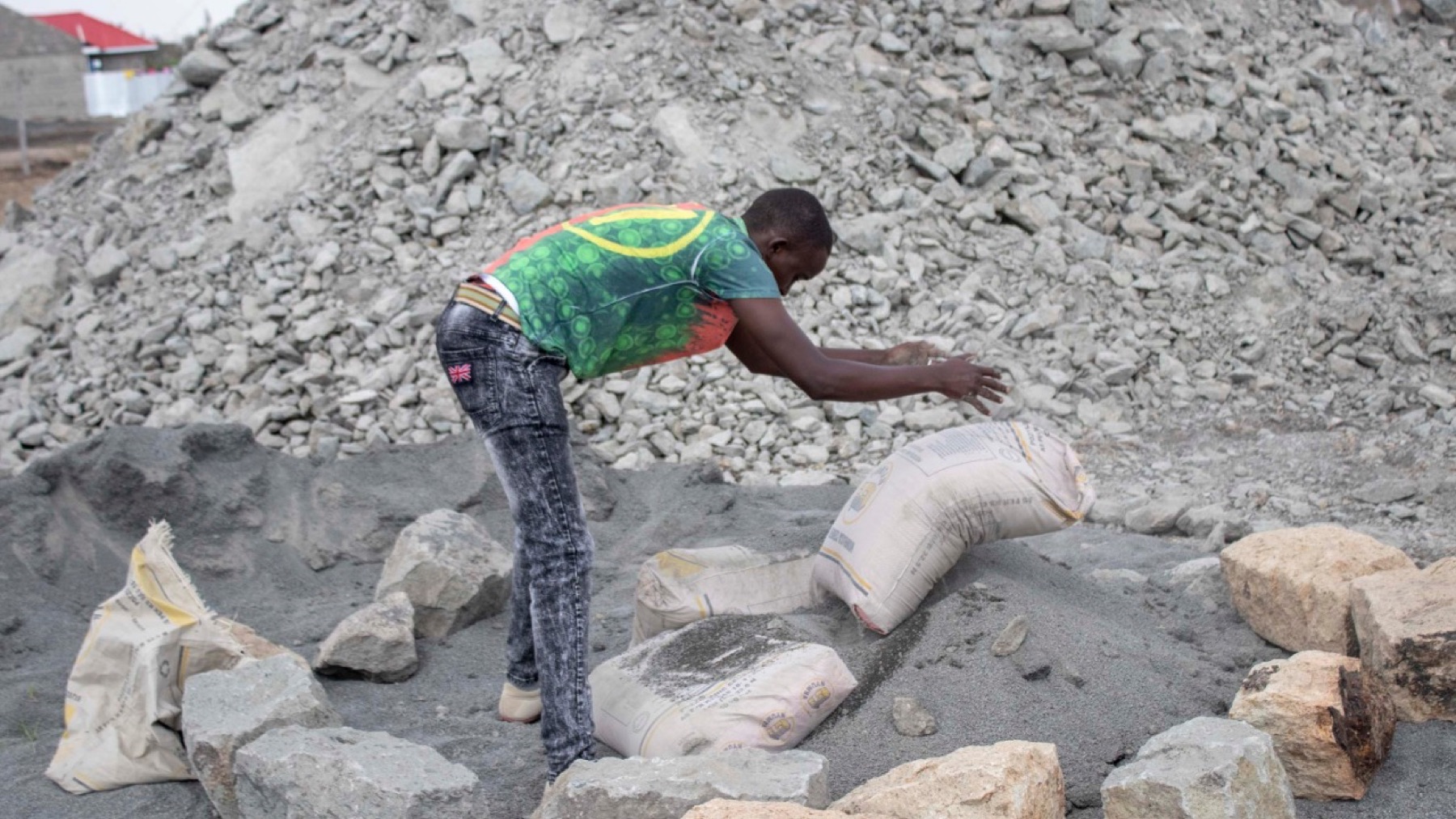
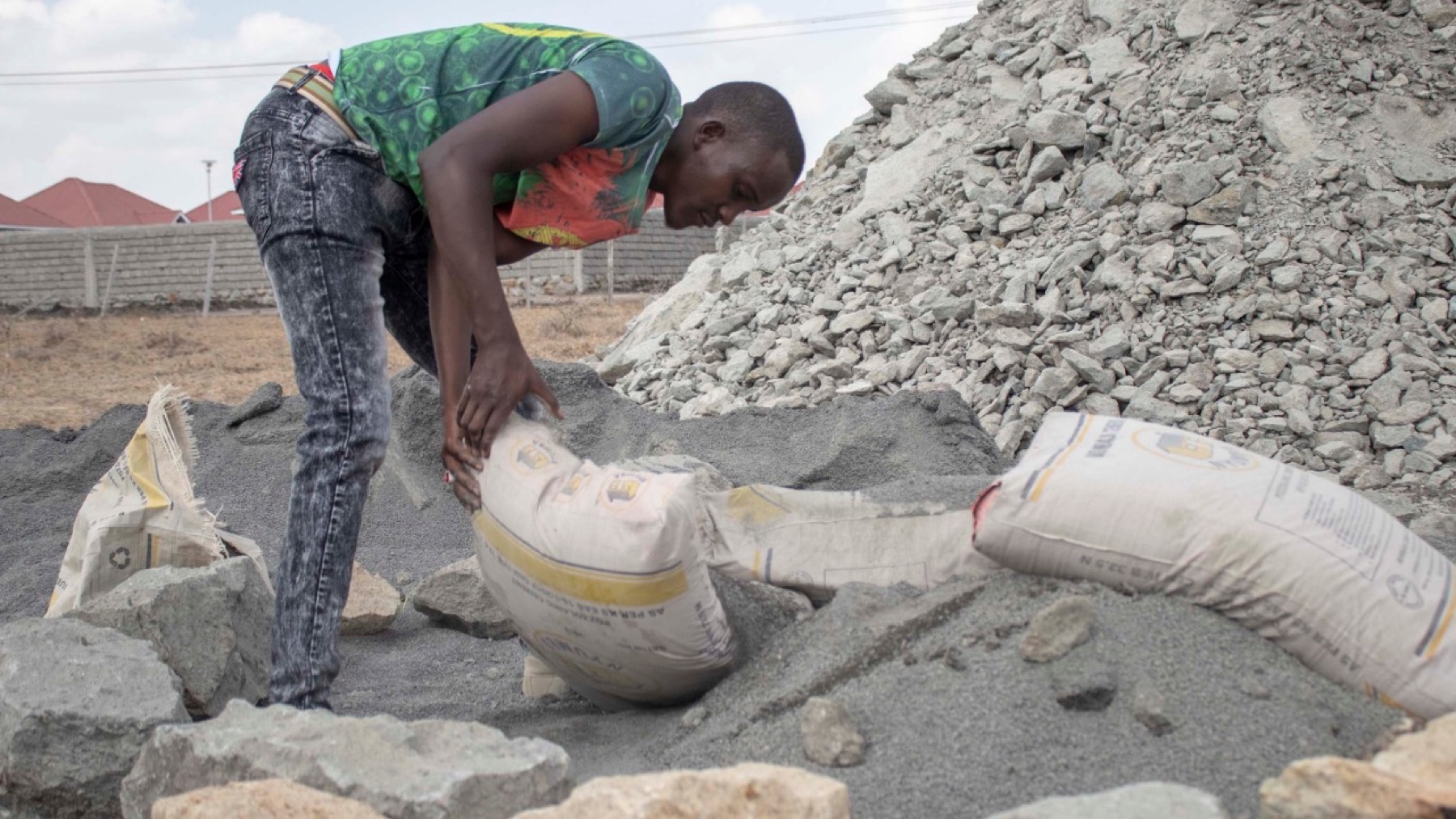
The essence of these pictures is to show the MWAMKO members hard at work. The skilled tradesmen in the group and the successful trainees are great assets. This is a community-based project but members are not…
The essence of these pictures is to show the MWAMKO members hard at work. The skilled tradesmen in the group and the successful trainees are great assets. This is a community-based project but members are not involved in work demanding levels and types of construction skills beyond those they have.
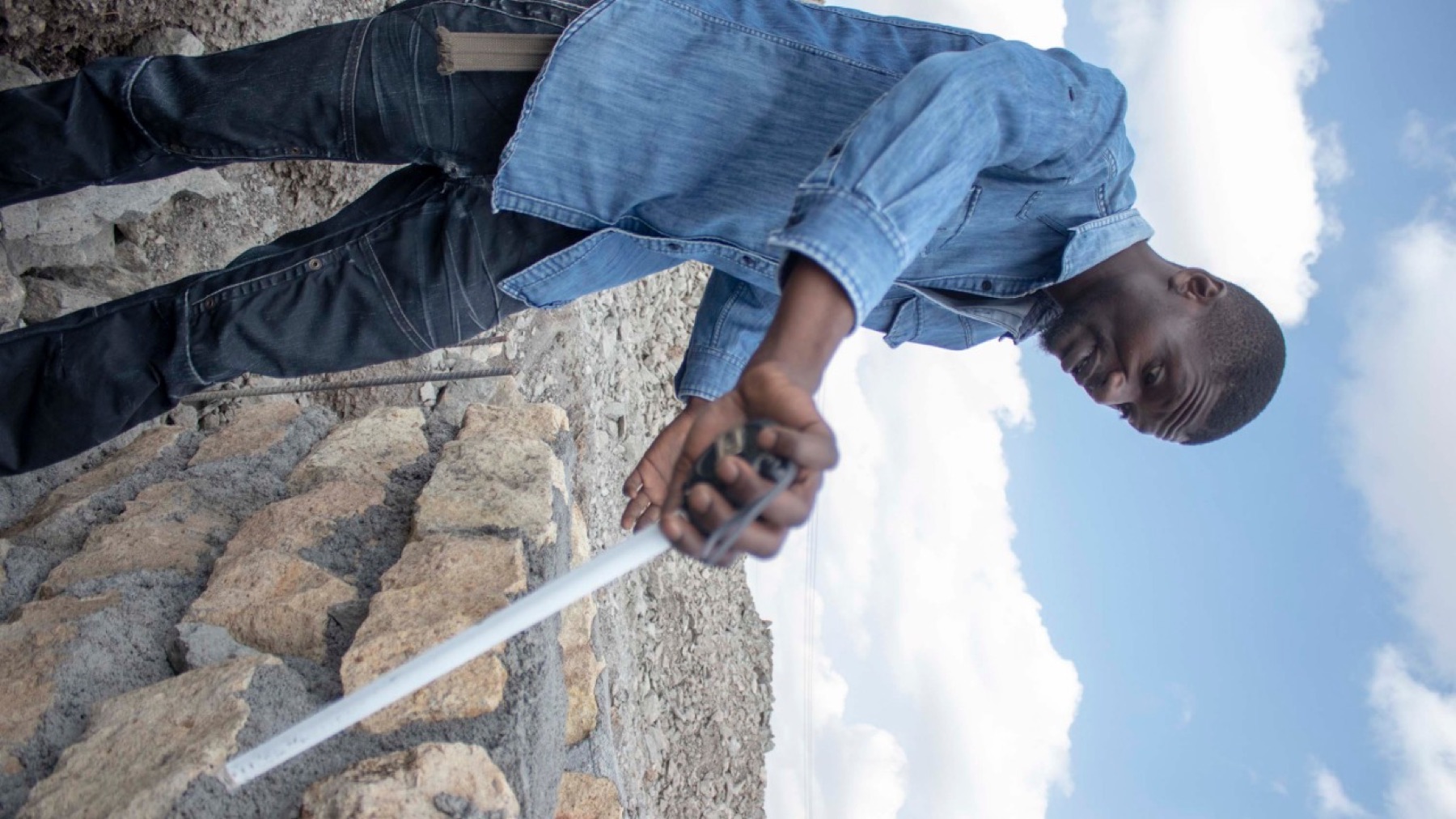
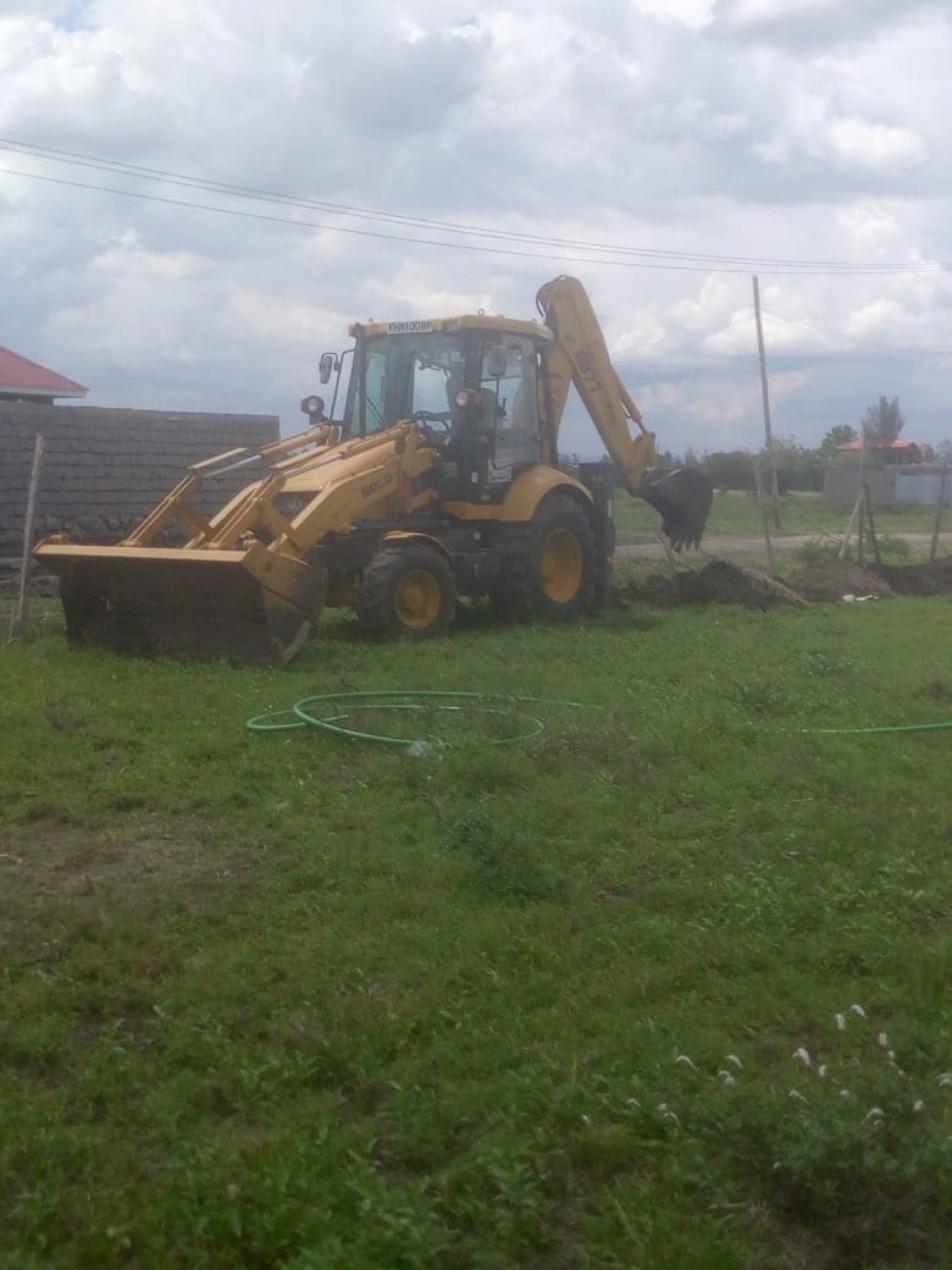
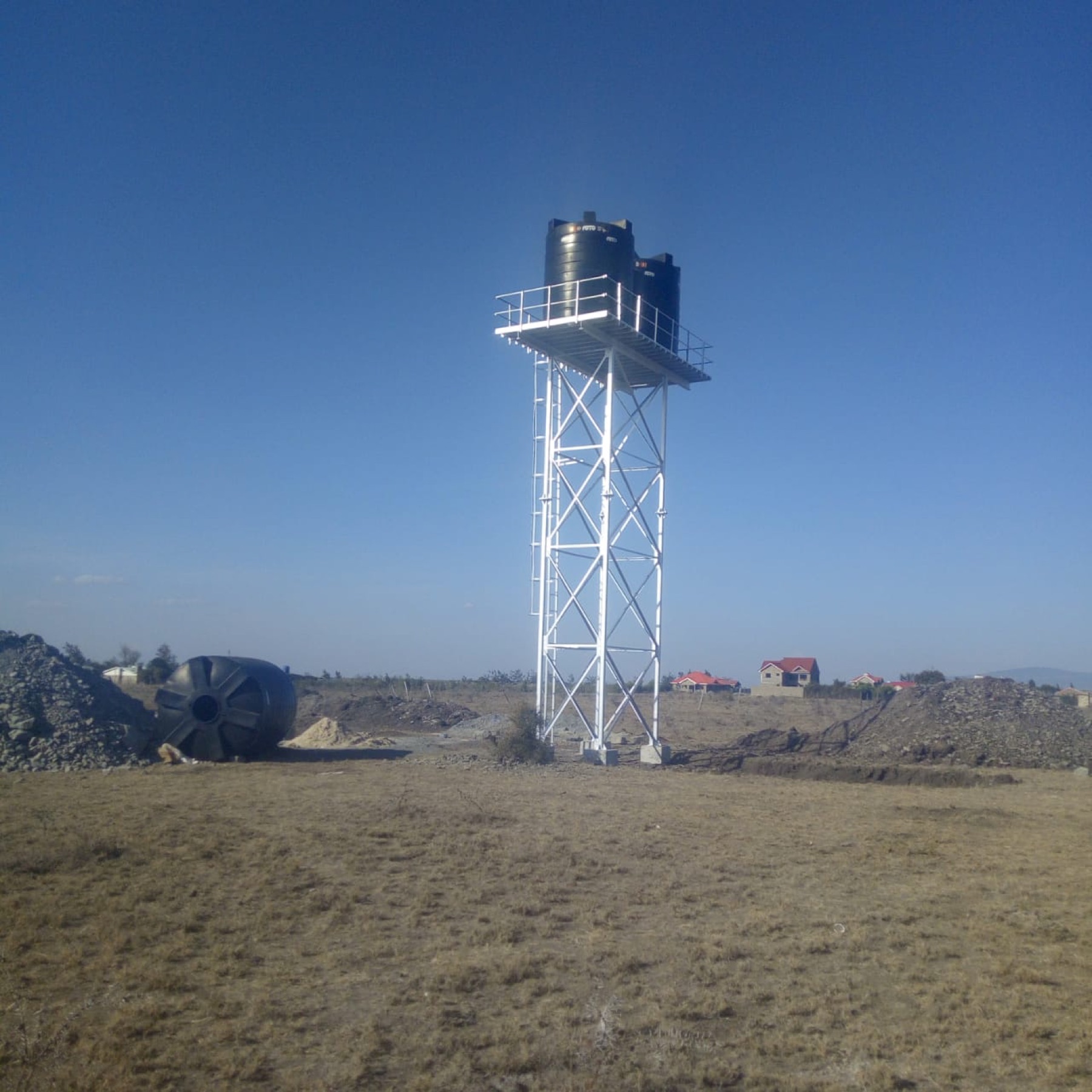
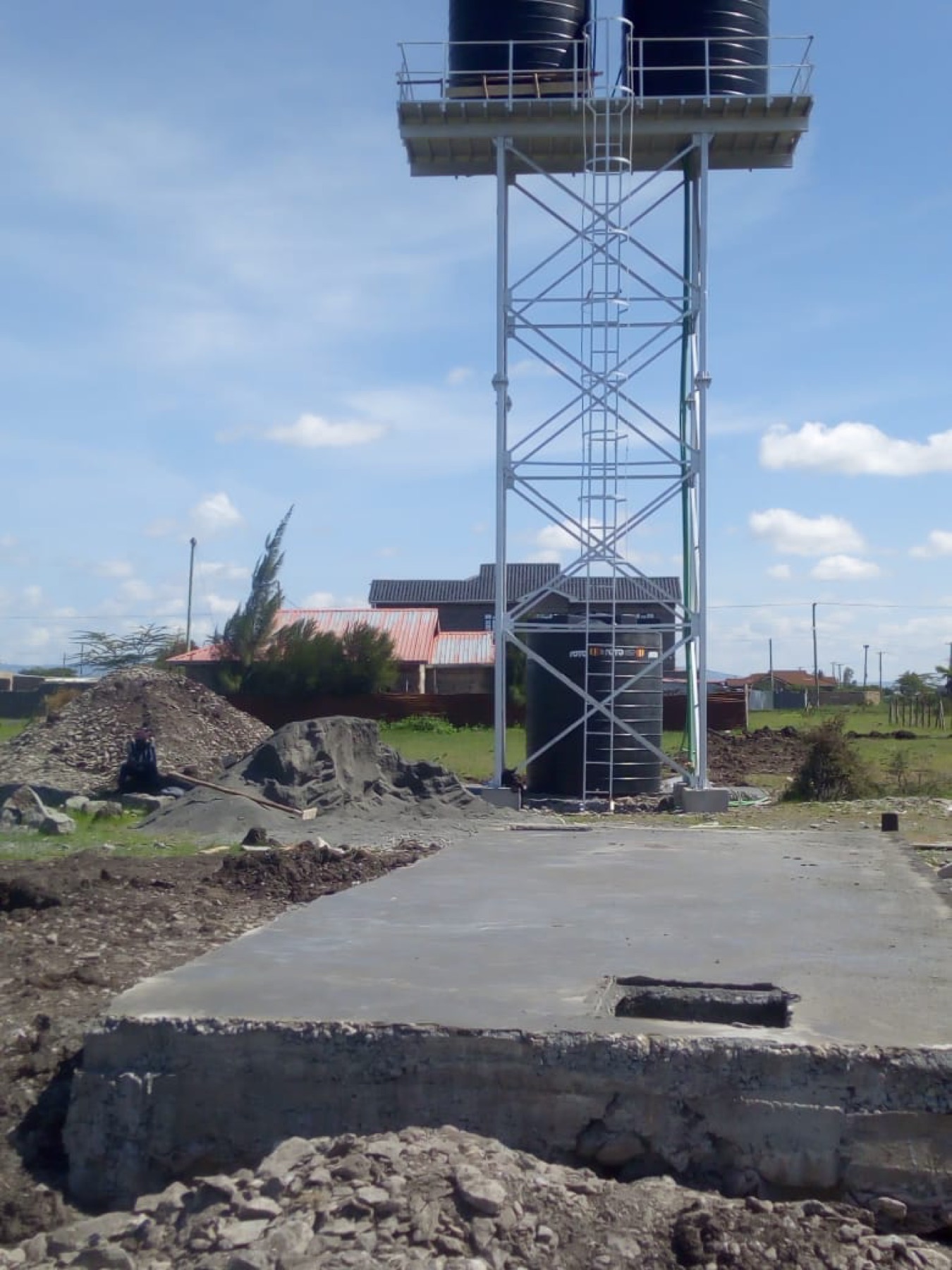
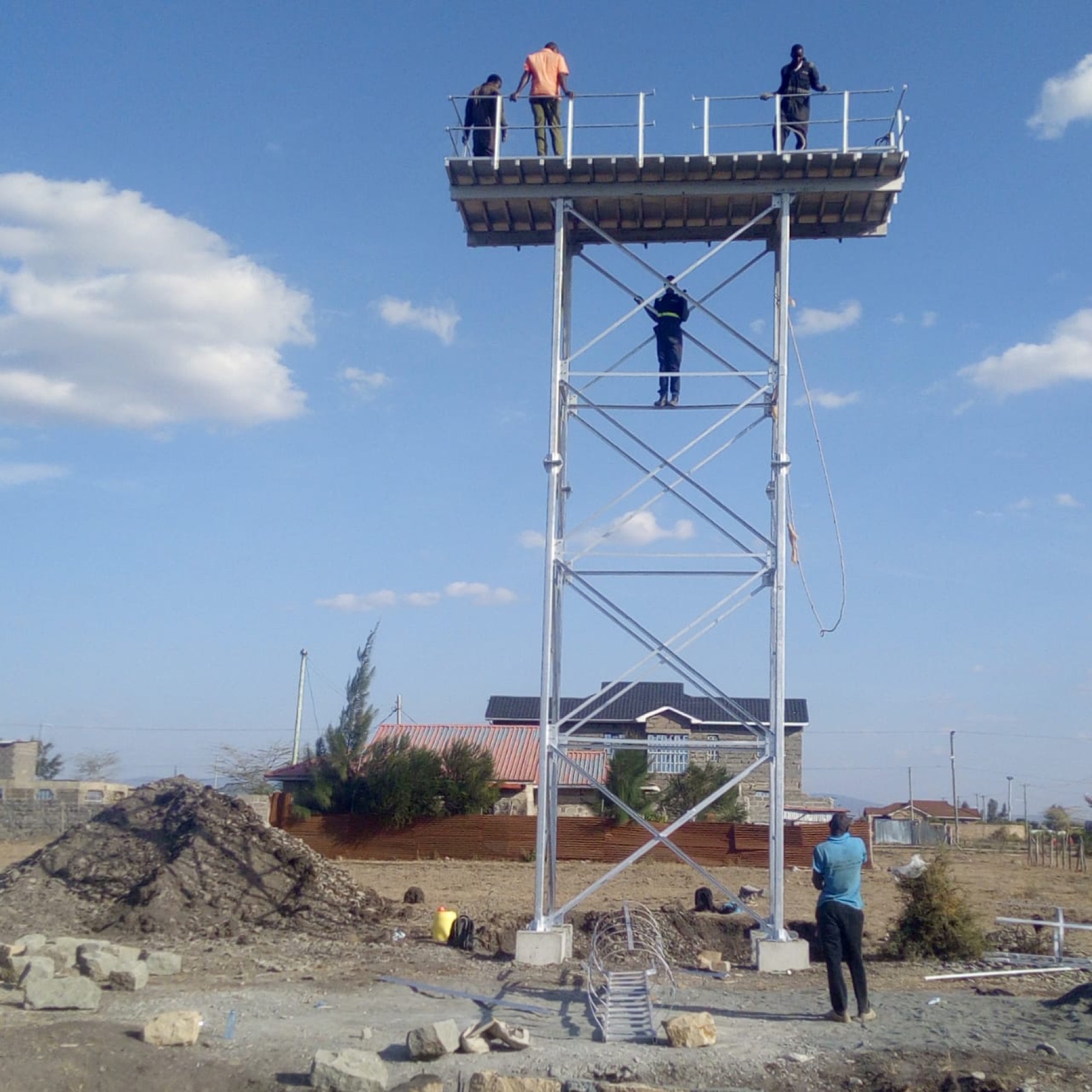
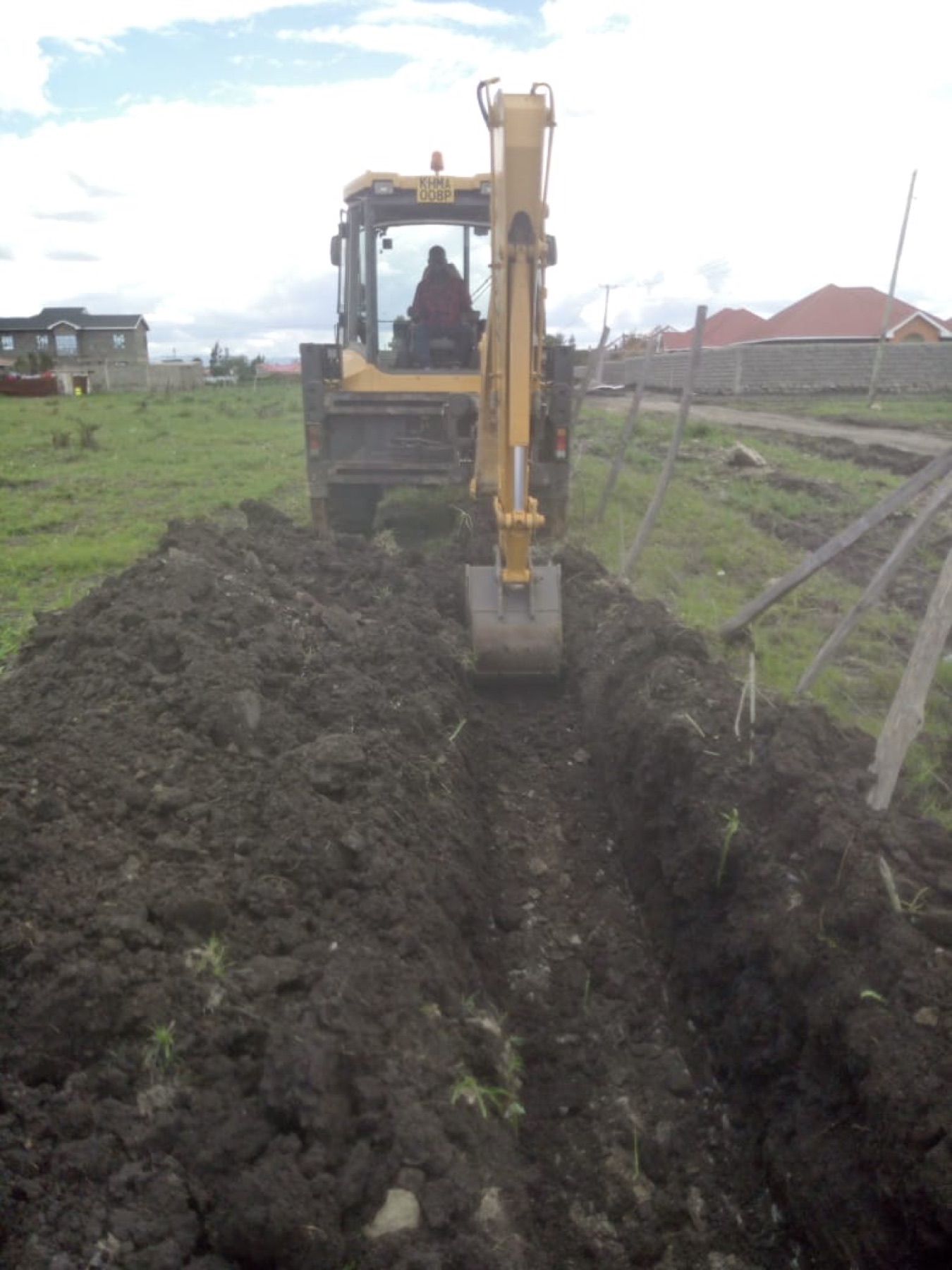
Contractors are hired specifically to do those jobs. So far this has been for tasks involving mechanical digging work ready for the septic tank and water tower erection, and for constructing the water tower itself and installing the water tanks. Laying water pipes for the houses has been done by the members under the direction of a trained plumber in MWAMKO, as seen in the later set of photos.
Installing a water supply to the site and to the houses as well as building the underground septic tank were essential works, allowing building phase of the project to get under way. All this was made possible because of the generosity of the Kenya Lotto and the Church of the Latter Day Saints in response to submissions from CHG (Kenya) for the water and sanitation infrastructure.
The project is entering a new phase. Two acres of land with secure title were bought some time ago, thanks to generous donations, large and small, in response to fundraising appeals by CHT. Then the house…
The project is entering a new phase. Two acres of land with secure title were bought some time ago, thanks to generous donations, large and small, in response to fundraising appeals by CHT. Then the house design site layout were developed and planning permission was granted.
We were about to appeal for funds at the end of 2018 in order to dig a borehole for a supply of clean water when suddenly new Nairobi regulations were introduced. These restricted the number of boreholes permitted in a given area and we were not allowed to dig our own. This setback has in fact turned out well for us because we are able to access water by connecting to a nearby borehole and paying for metered use.
After intense scrutiny of their proposal a grant has been won by CHG, our partners in Nairobi, awarded by the Kenyan branch of the Church of Jesus Christ of the Latter Day Saints. This is to cover the costs of connecting to the borehole and of constructing all the water and sewerage infrastructure in readiness for the houses. The direct involvement of the members of the families who will benefit from the project was deemed a very positive aspect of the grant application.
Now, we are delighted to report that contractors have moved in to start this work. Although we will always include as much self-build by the community as possible, our site stands on about 45cm of black cotton soil on top of solid rock. Any thought of digging out for a septic tank down through nearly 4 metres of rock by hand was rendered unnecessary because the grant covers contractors and machinery for the work to be done.
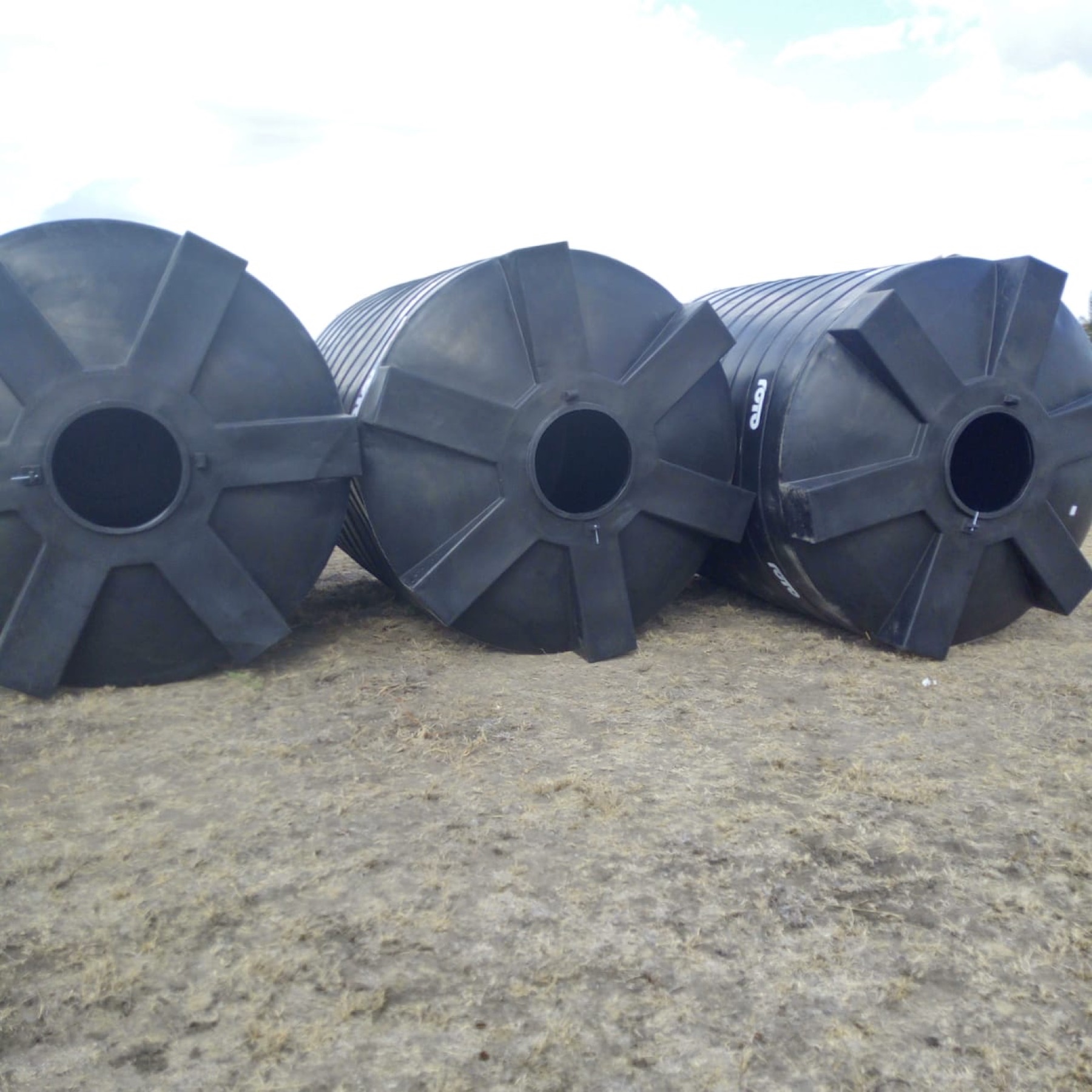
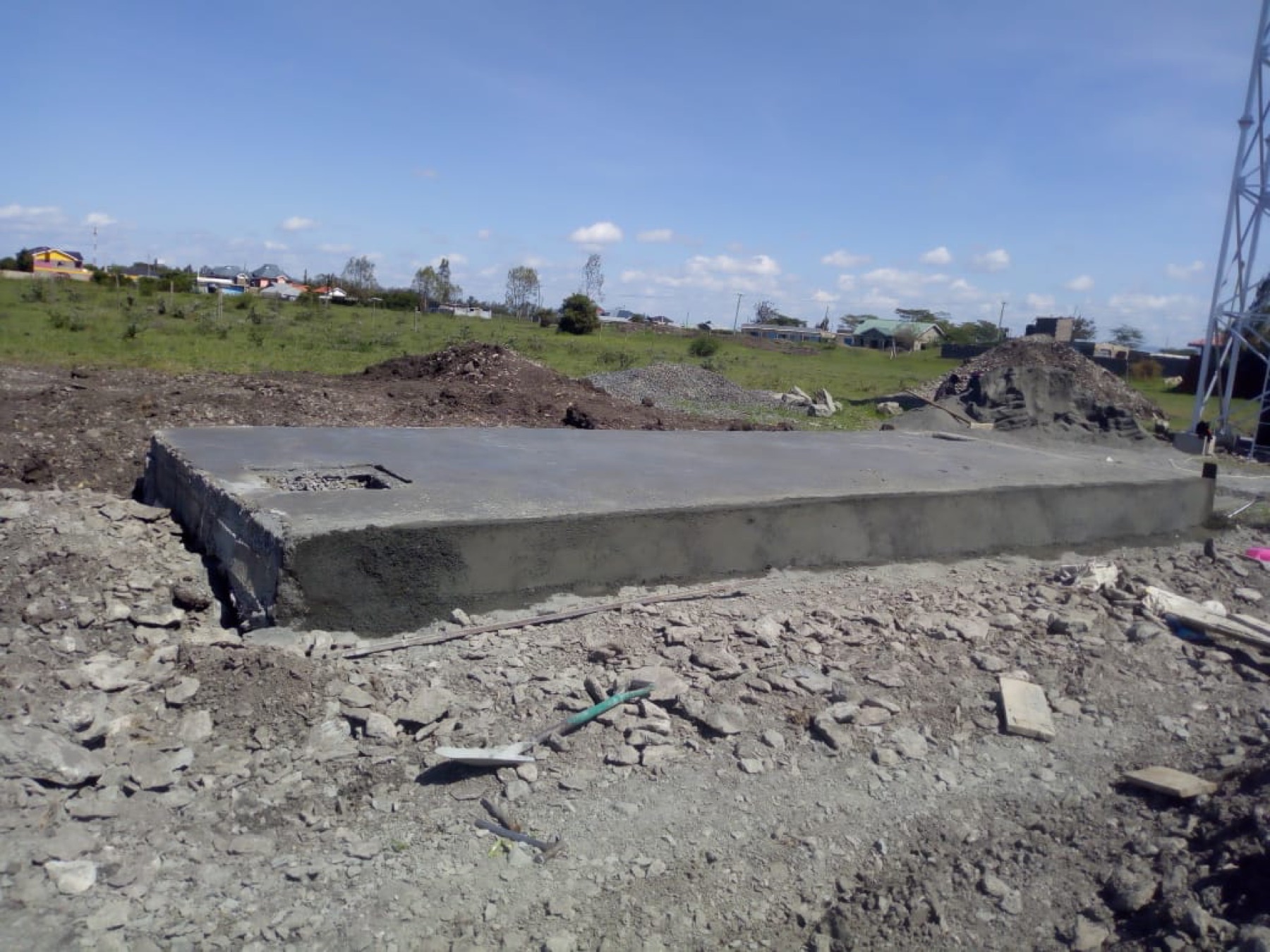
In order to have running water to the houses huge water storage tanks are needed, also a tower to put them on and a pump to get the water up to the tanks. Thanks to CHG winning another grant, this time from the Kenya Lotto, specifically for purchasing and installing the water tanks and tower, another contractor is moving on site this coming week to install the tower.
These two grants for water and sanitation total approximately £15,000.
CHG's Project Manager, paid from CHT funds, is on site every day to supervise the contractors and handle paperwork. The site is guarded at night.
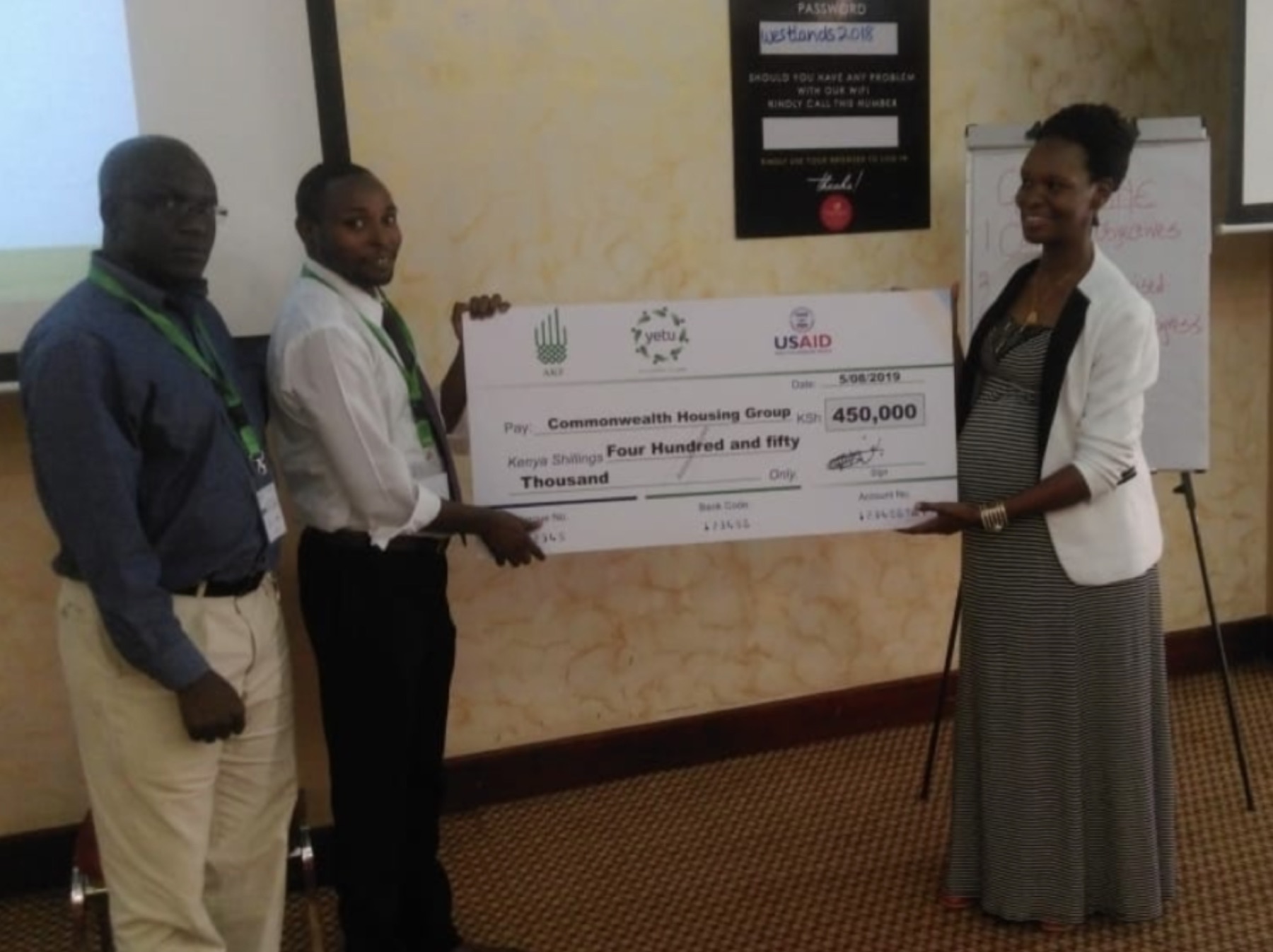
Commonwealth Housing Group (Kenya) has just been declared runner-up in all three rounds of the competition for best fundraising by a small charity in Kenya, both in cash and in kind. As a result they have won…
Commonwealth Housing Group (Kenya) has just been declared runner-up in all three rounds of the competition for best fundraising by a small charity in Kenya, both in cash and in kind. As a result they have won for CHG funds:
and all this is thanks to the tremendous work being done by the CHG team in Nairobi.
This was a prize for fundraising – the fundraising itself drew in the equivalent of £3170. Thus, public donations and prize money add up to the sterling equivalent of £8,345 to go towards buying building blocks for the houses.
Robert is one the people who generously help CHG with their time and skills. In Robert's case this is as voluntary Project Assistant, most recently providing his technical expertise and administrative experience to the crowdfunding efforts whose success led to the Yetu awards.
Cheques totalling 200,000 ksh won by CHG in the two earlier rounds had been presented earlier by a Yetu representative
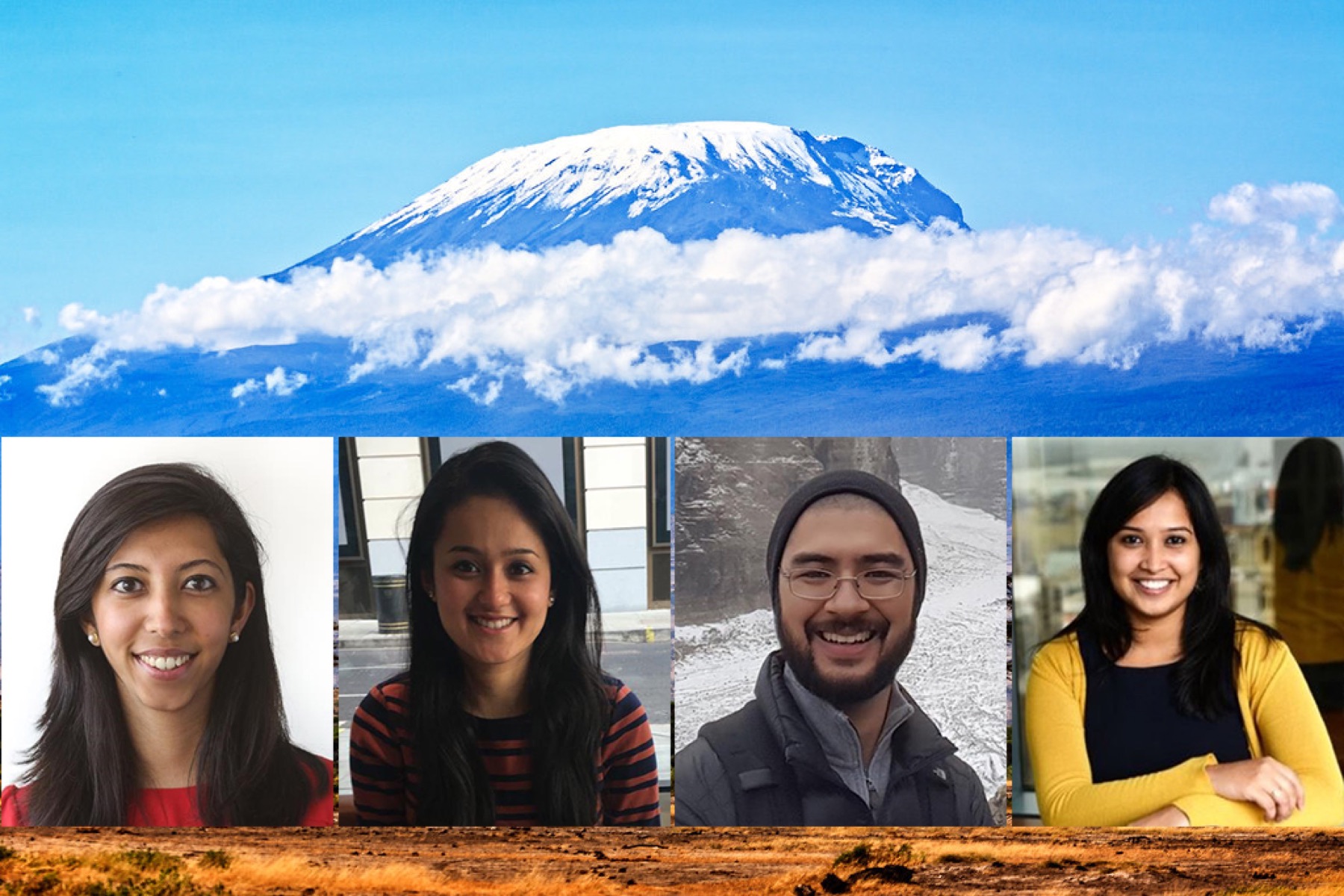
On 10th August 2019 Aashna Puri and three friends travelled to Tanzania and climbed Mount Kilimanjaro, Africa's highest mountain. Once they had organised their trip they generously decided to dedicate their…
On 10th August 2019 Aashna Puri and three friends travelled to Tanzania and climbed Mount Kilimanjaro, Africa's highest mountain. Once they had organised their trip they generously decided to dedicate their climb to raising funds for CHT, towards our appeal for the significant funds needed for the next stage of our project - actually building the houses! Their climb up - and down again -took seven days altogether, in high altitude conditions of cold and thinning levels of oxygen.
Aashna and her friends were successful and would like to thank you all for your support. Kilimanjaro which was an incredible and both physically and mentally challenging experience. She is happy to report that they all summited Uhuru Peak (although at different times)!
And thanks to so many kind supporters they succeeded in raising £3,858.
From the outset, the Commonwealth Housing Trust project in Korogocho, Nairobi, was conceived as a potential model for supporting people living in slums who wanted to work together to help themselves to secure…
From the outset, the Commonwealth Housing Trust project in Korogocho, Nairobi, was conceived as a potential model for supporting people living in slums who wanted to work together to help themselves to secure decent housing which they could afford. The project has steadily progressed and evolved over many years, with a lot of hard work by everyone involved; the families of the community group in Korogocho, known as MWAMKO; the Commonwealth Housing Group committee (CHG) in Kenya; the originators of the project, the Commonwealth Housing Trust (CHT) and its founder chairman, the late Clifford Dann, and of course the current board of Trustees chaired by Professor Graham Chase. Both our CHT Chairmen have been Past Presidents of the Royal Institution of Chartered Surveyors.
As a test of our community housing model, the project is increasingly meeting with success. Donations, grants and support in kind, some listed on our donations page, mean that we are now moving forward ever more rapidly.
The project can move as fast as funds become available. Any donation you feel able to make would have a direct and immediate impact on the building programme.